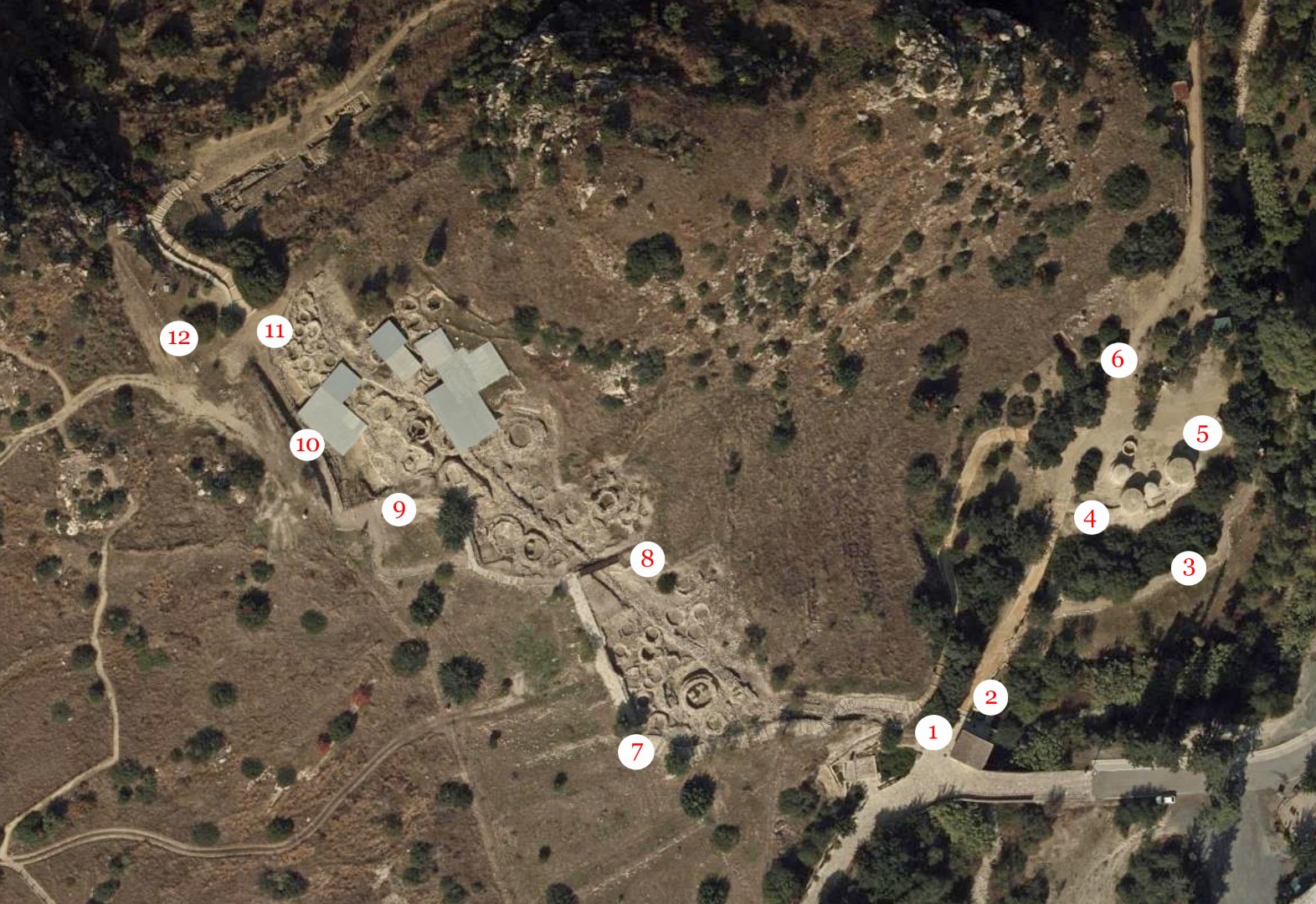
DESCRIPTION:
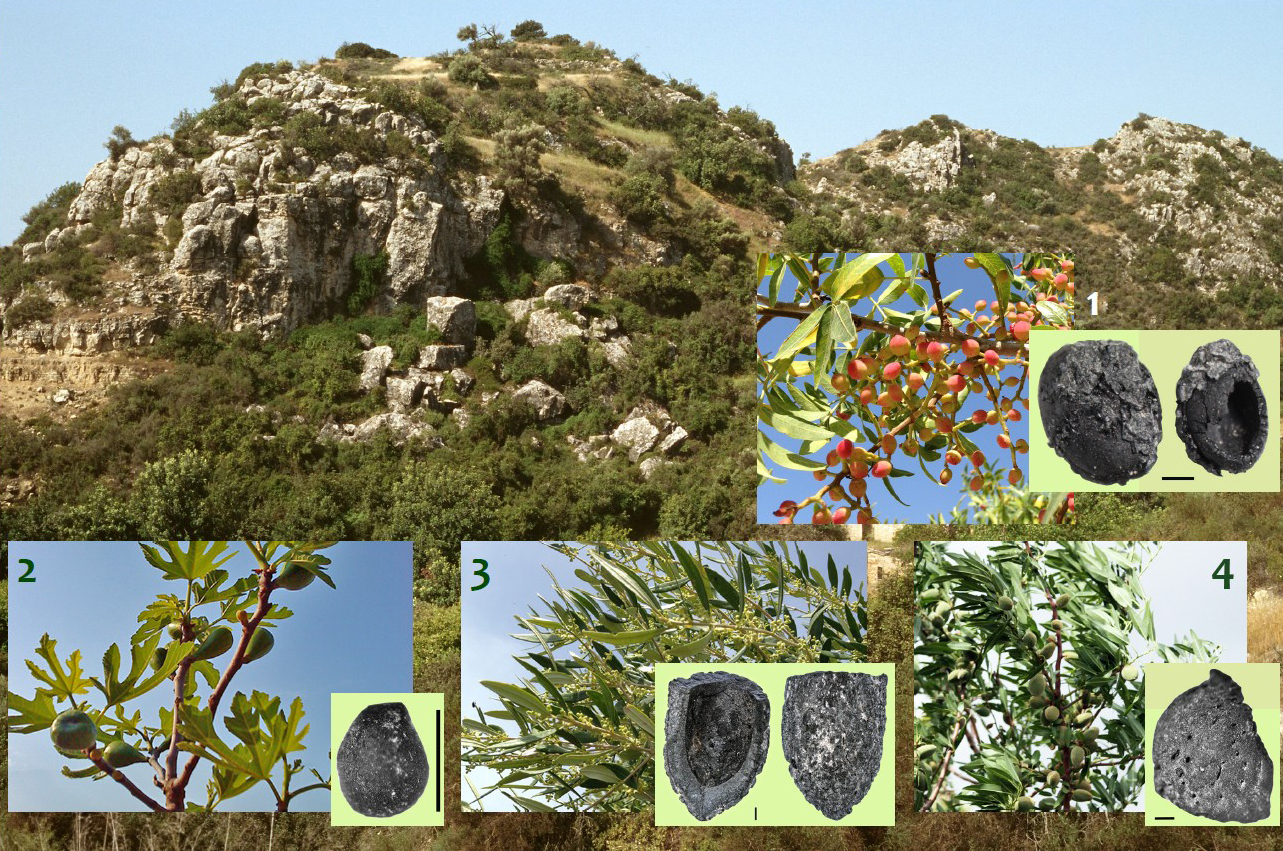
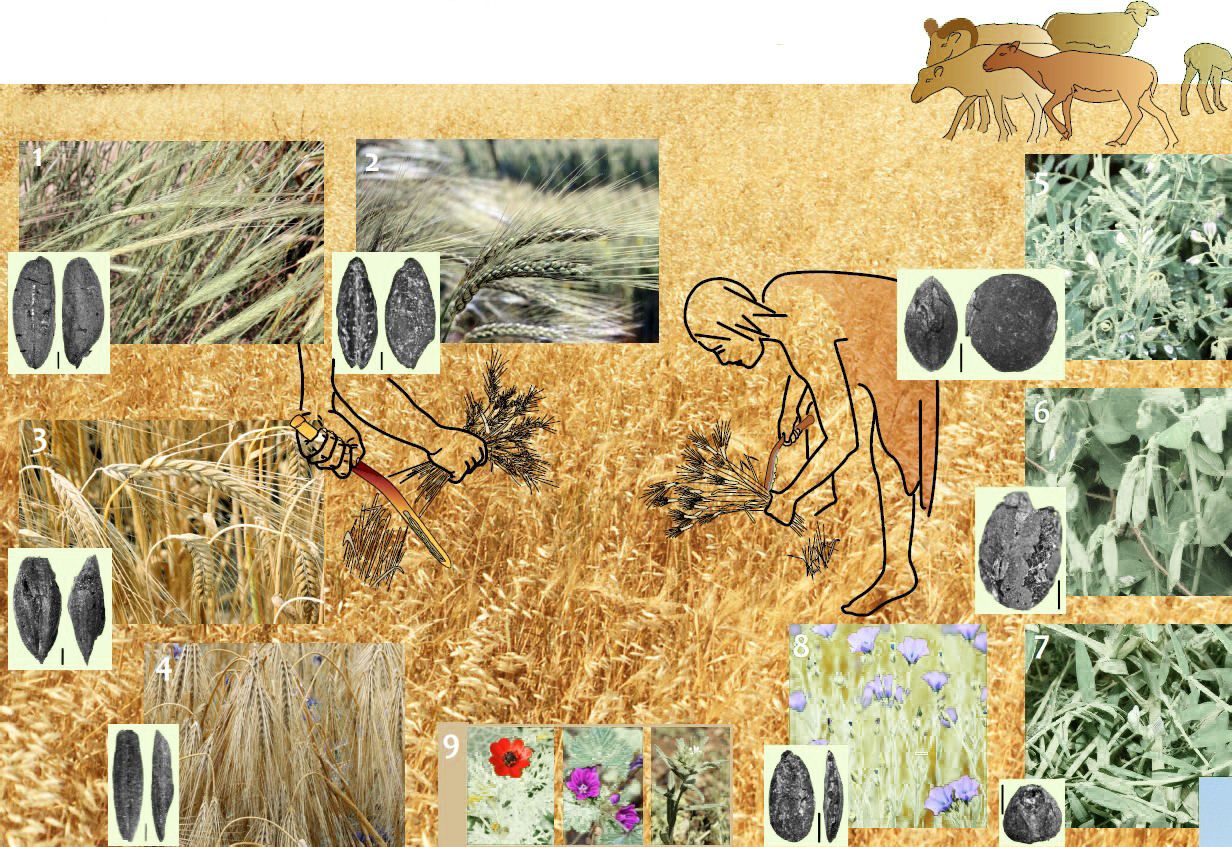
The villagers cultivated cereals, mostly wheat (einkorn and emmer), compared to barley, pulses (lentils, peas, and bitter vetch), and flax, a plant that provides both fibres from the stem and an edible oil from the seeds. They also collected fruit from wild trees (pistachio, figs, olives, and almonds).
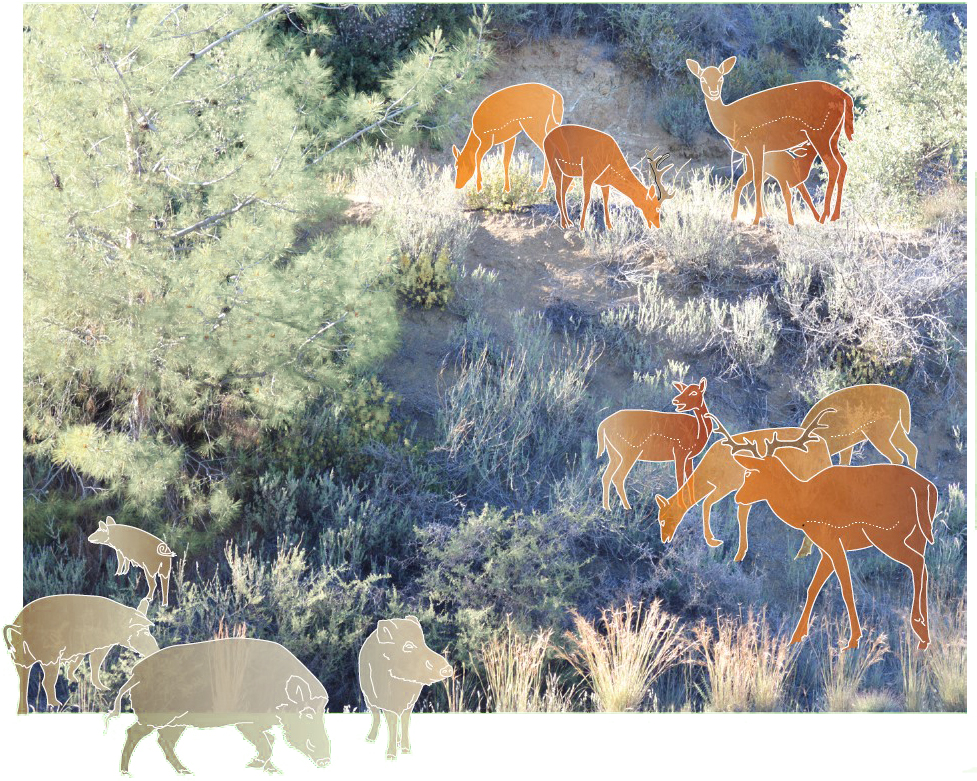
Sheep, goats, and pigs were raised outside the village, whereas fallow deer, a wild animal but easily tamed, was hunted or perhaps impounded near the site. Many were slaughtered quite young, indicating a prime interest in their meat, but there is no evidence that sheep and goat were milked. They provided bones (for tools) and probably hides (for clothing and containers), and tendons (for sewing). A few bones of dogs, foxes, cats, and mice attest to their presence around the village.
Through time, goats became scarce, and while sheep became predominant, the number of fallow deer and pigs, both animals that prefer woodland environs, decreased. This change may reflect local habitat deterioration or/and an improvement and increasing control of breeding techniques.