DESCRIPTION:
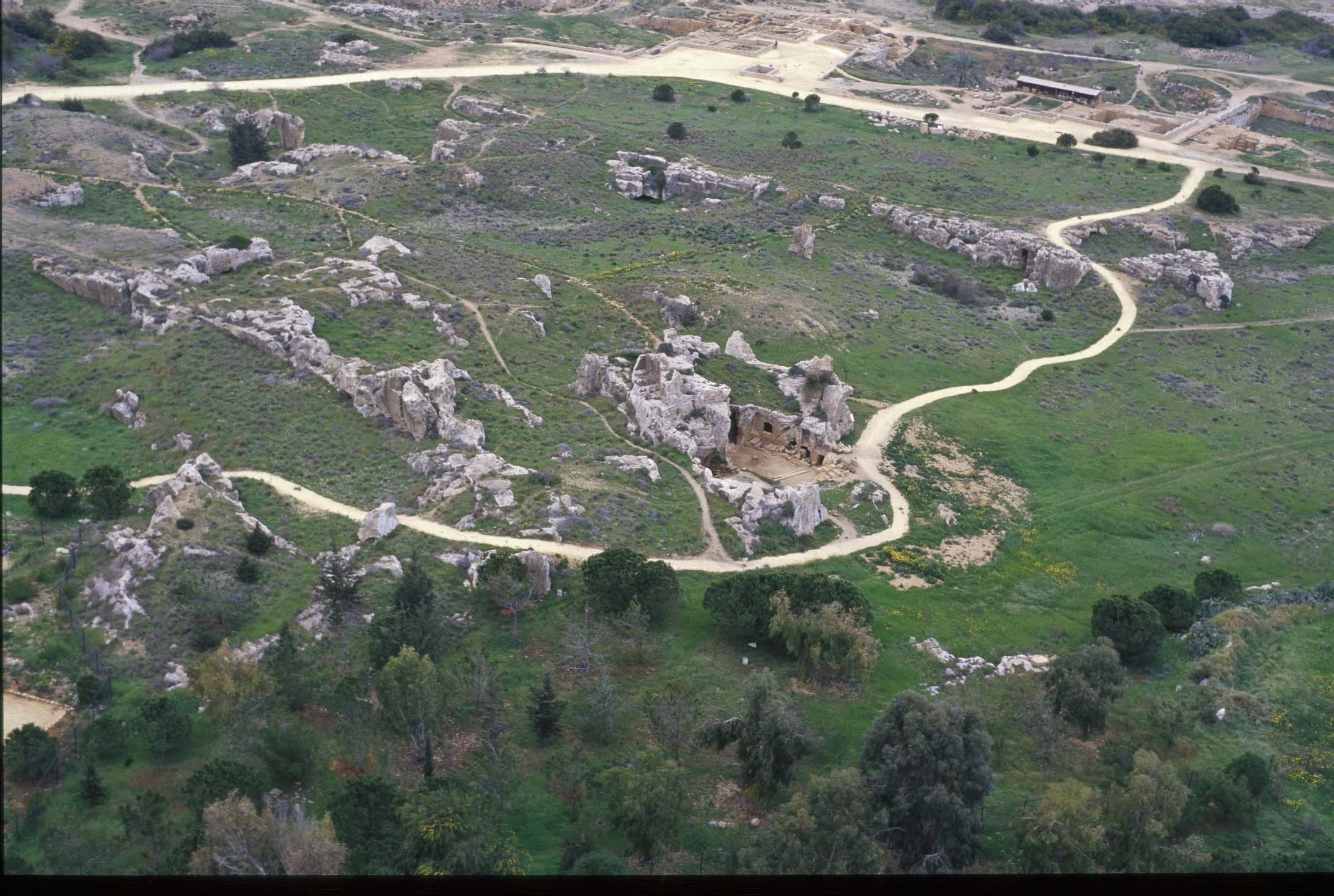
The tumulus, that is, the artificial mound, was formed from the deposition of rubble resulting from the extraction of building materials. It is the largest burial mound found in the area. Burial mounds, known in Cyprus since the Archaic period, reappear at the beginning of the Hellenistic period (the second half of the 4th century BC). This new element, which characterises the funerary architecture of the period, was introduced to the island by the Macedonians.
The surface of the tumulus is divided into burial enclosures defined by low walls. These enclosed areas, which belong to family burial plots, contain various types of tombs: chamber tombs, pit graves, ossuaries, and cenotaphs.