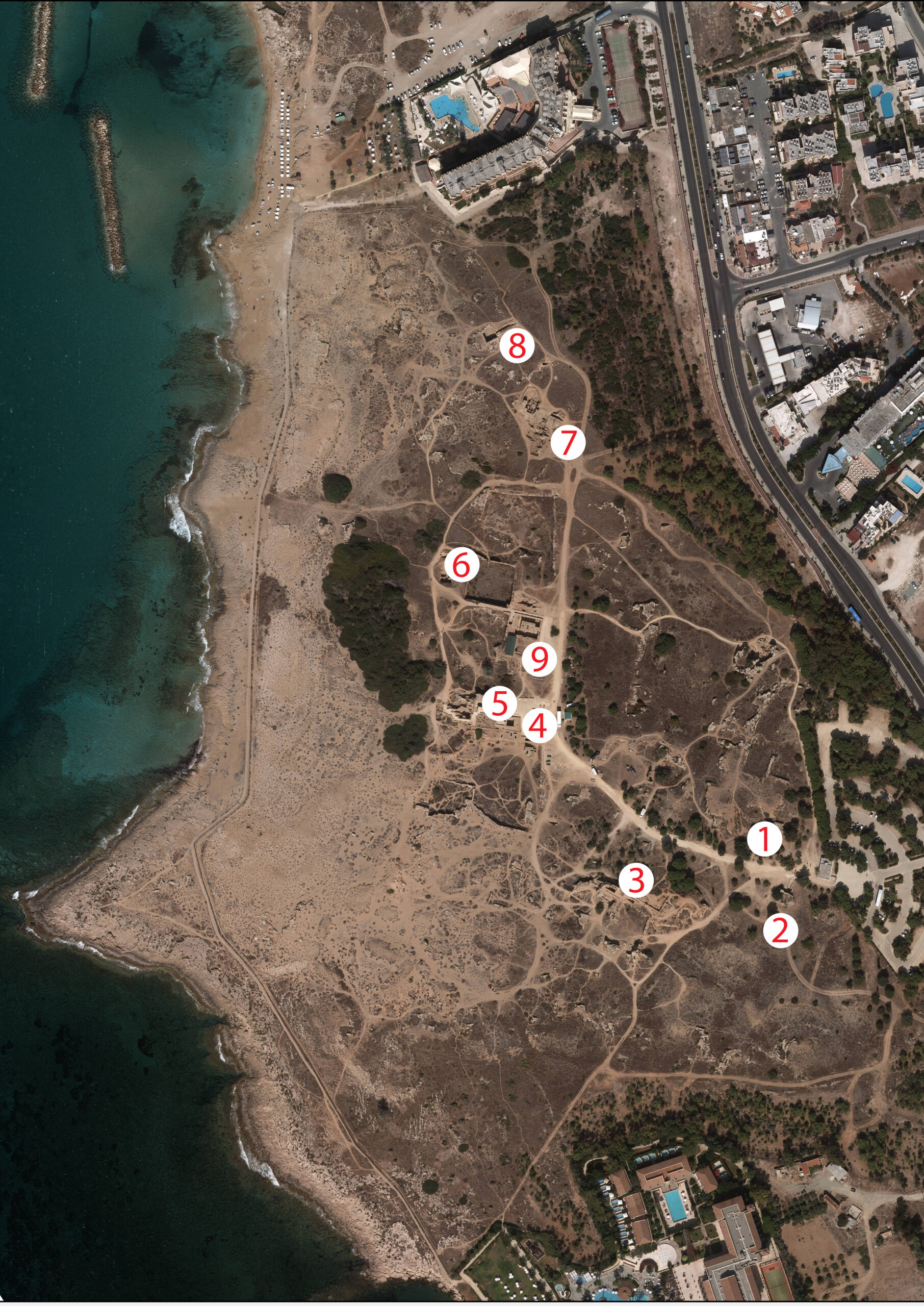
DESCRIPTION:
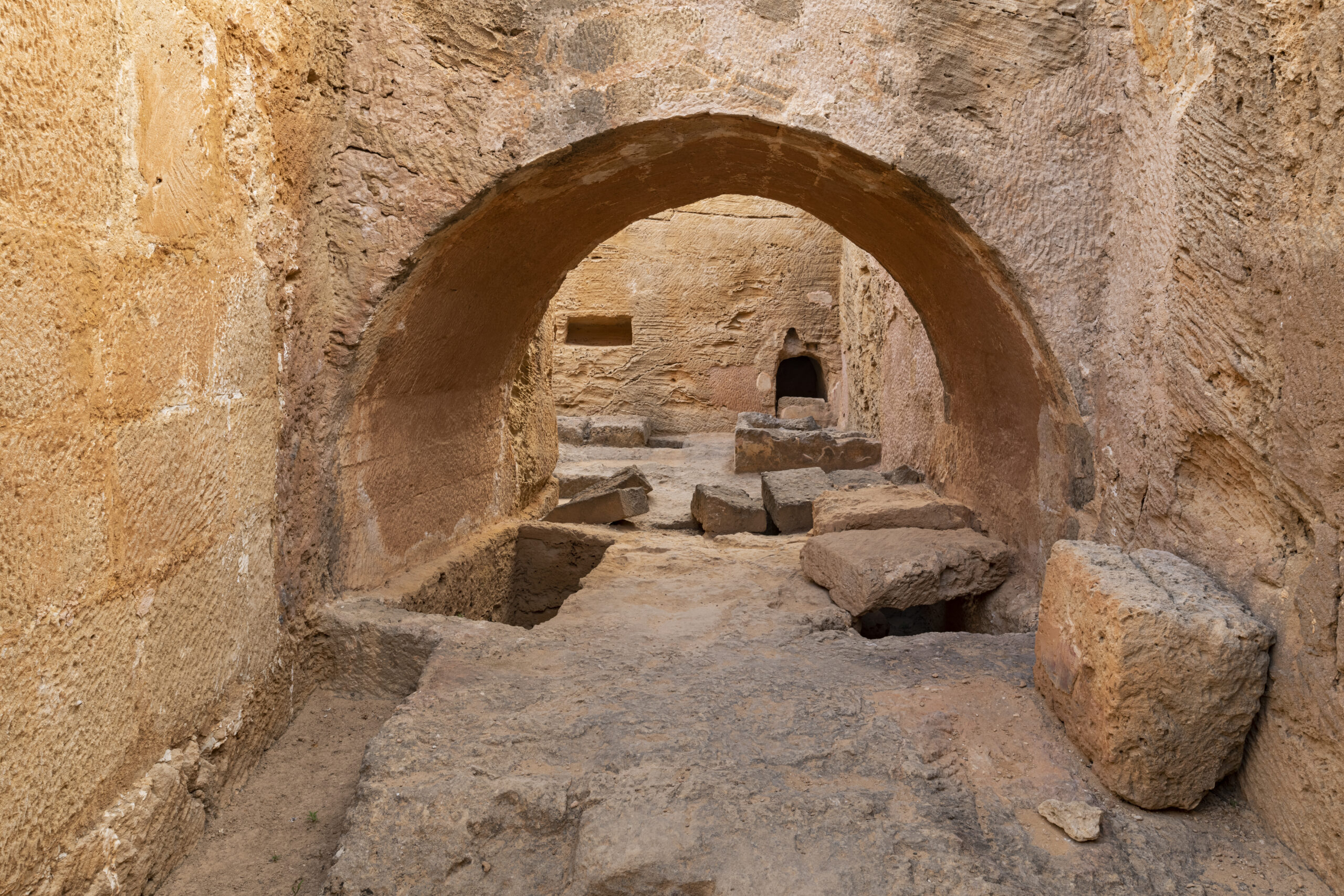
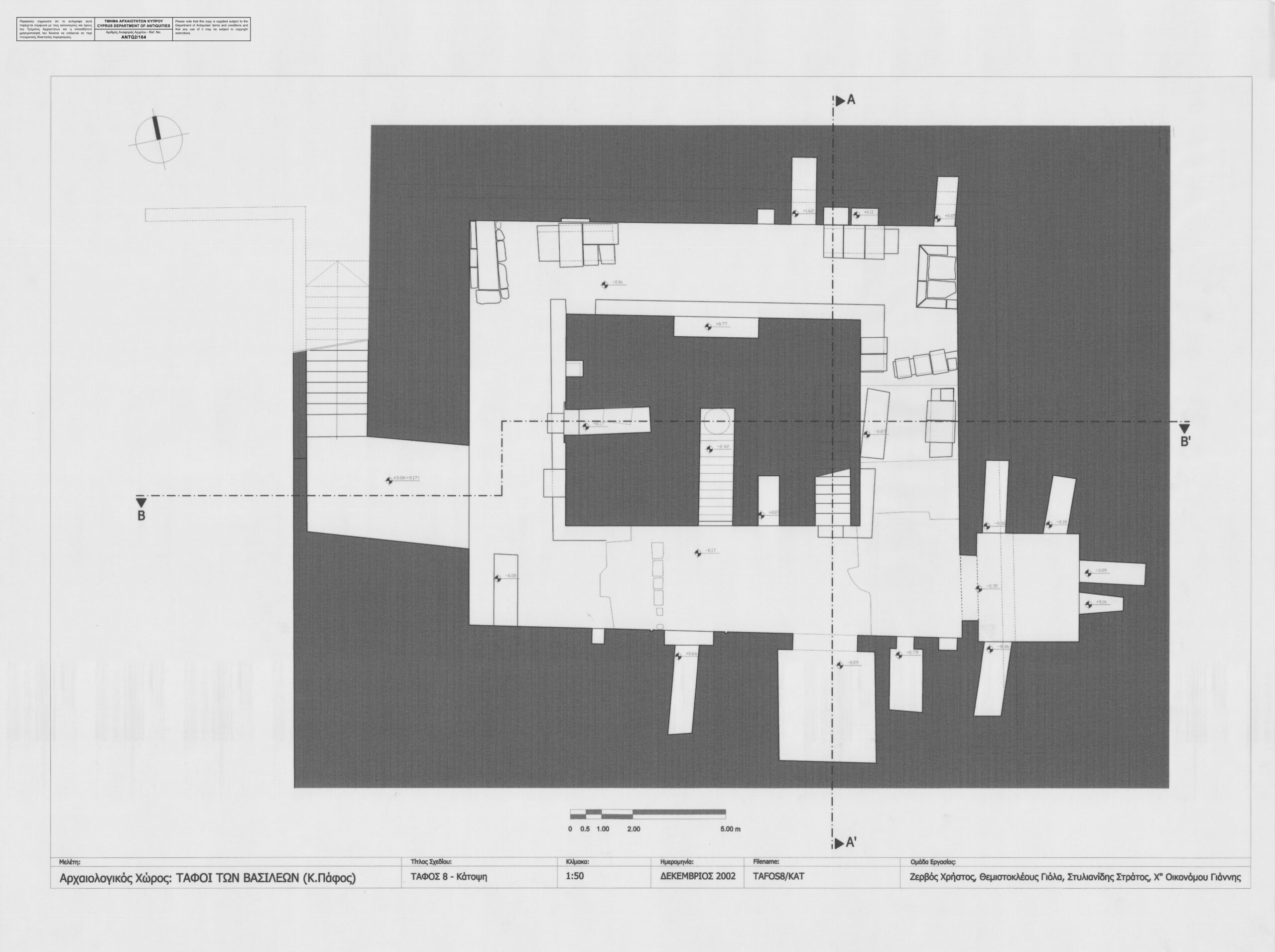
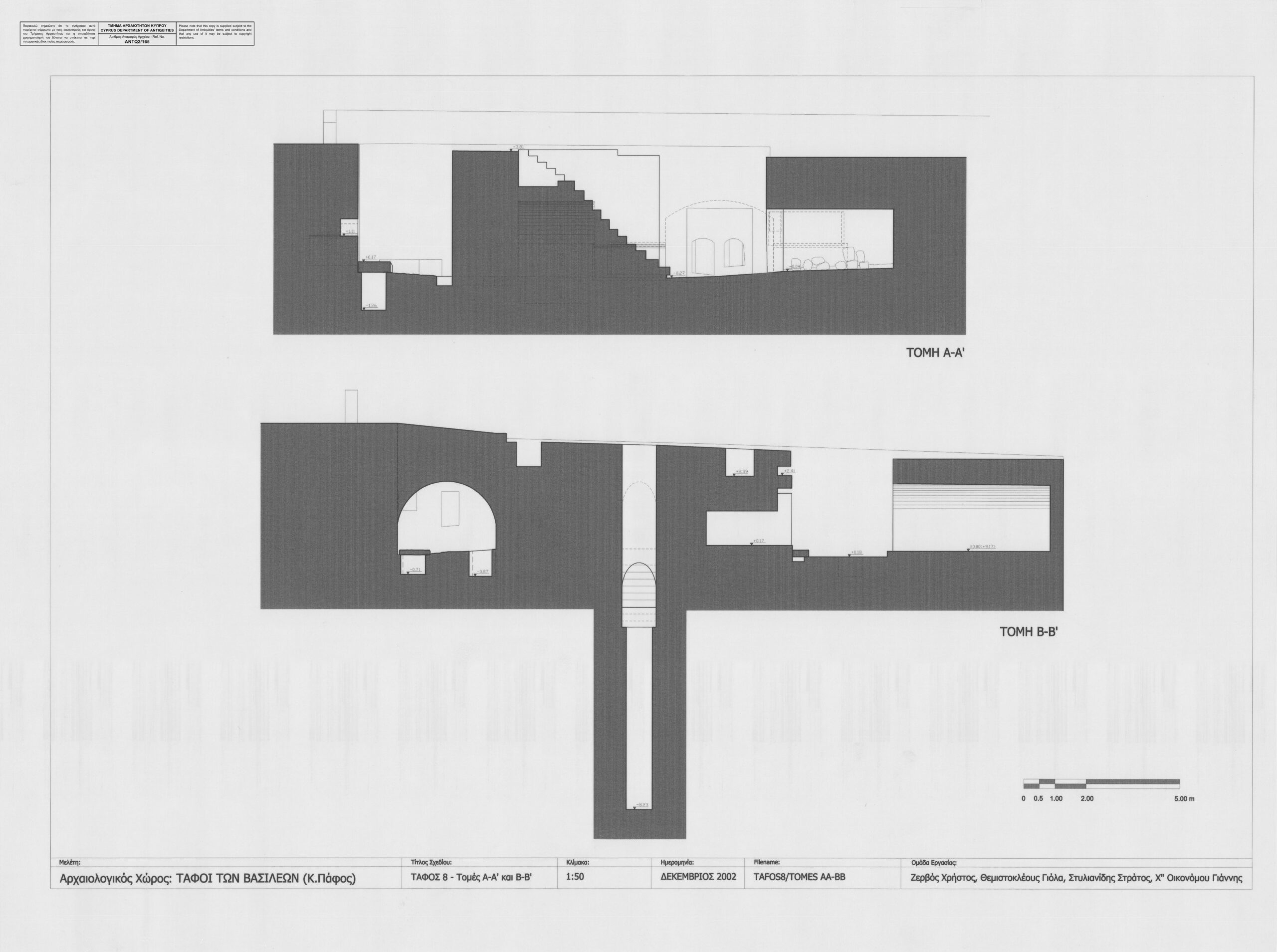
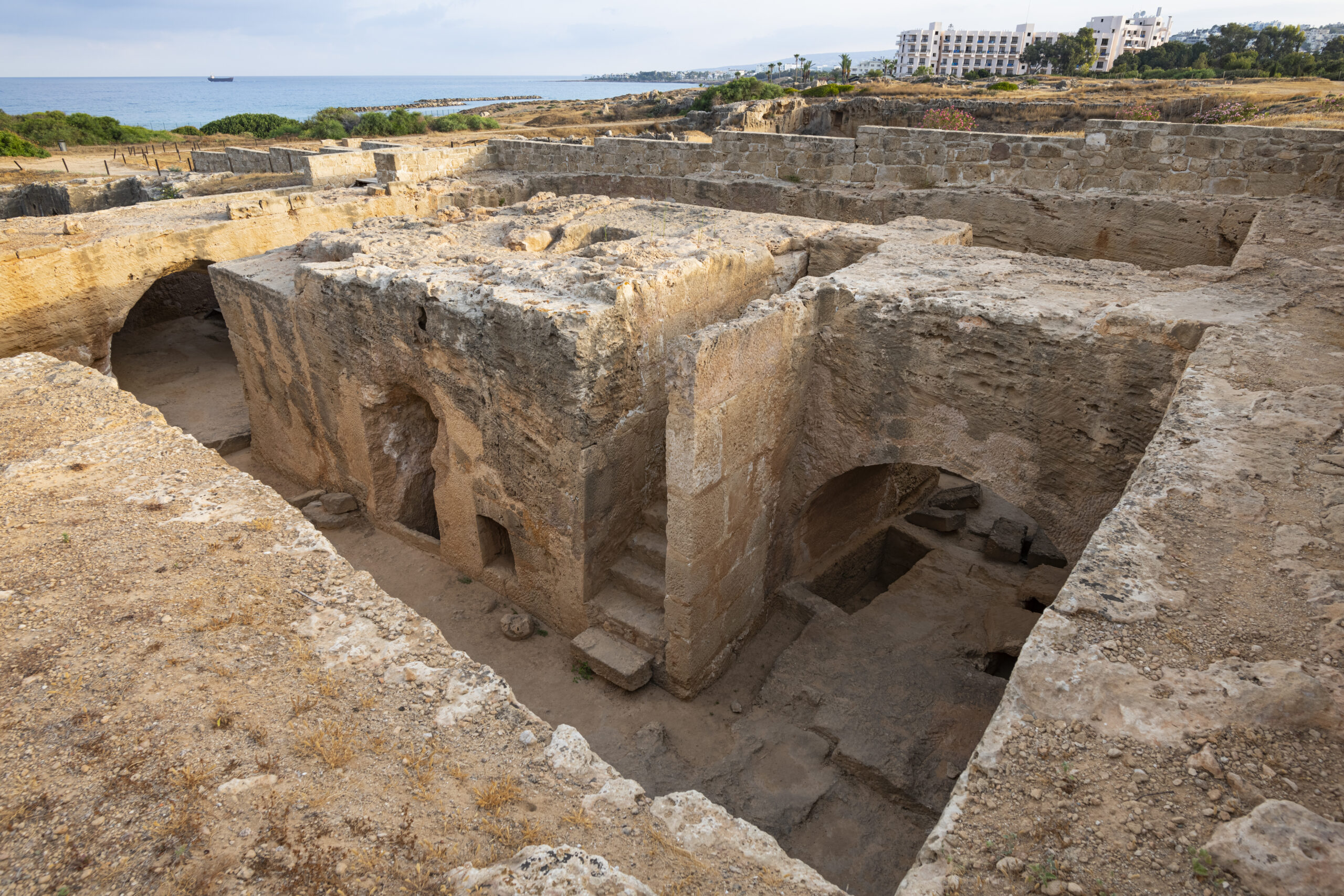
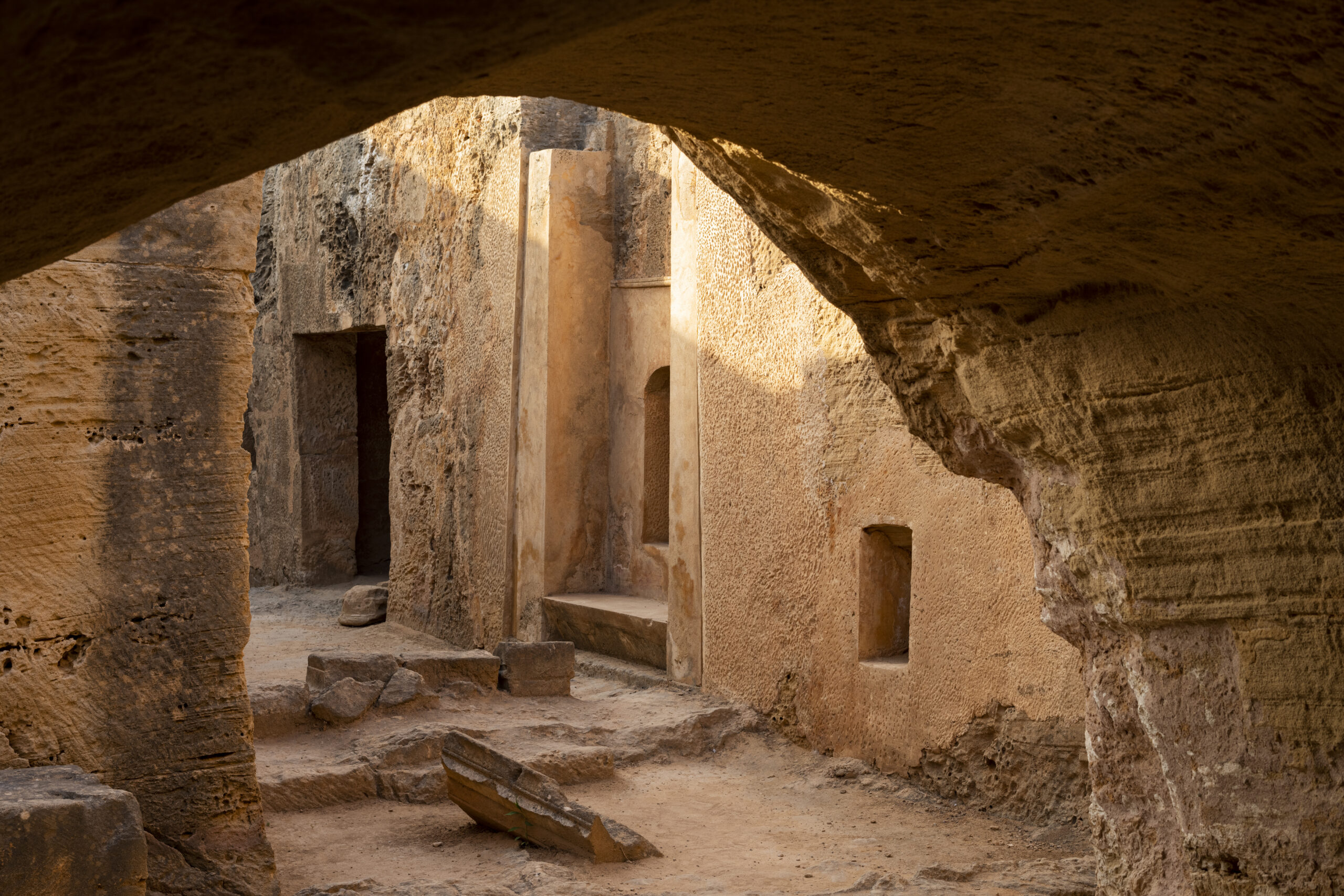
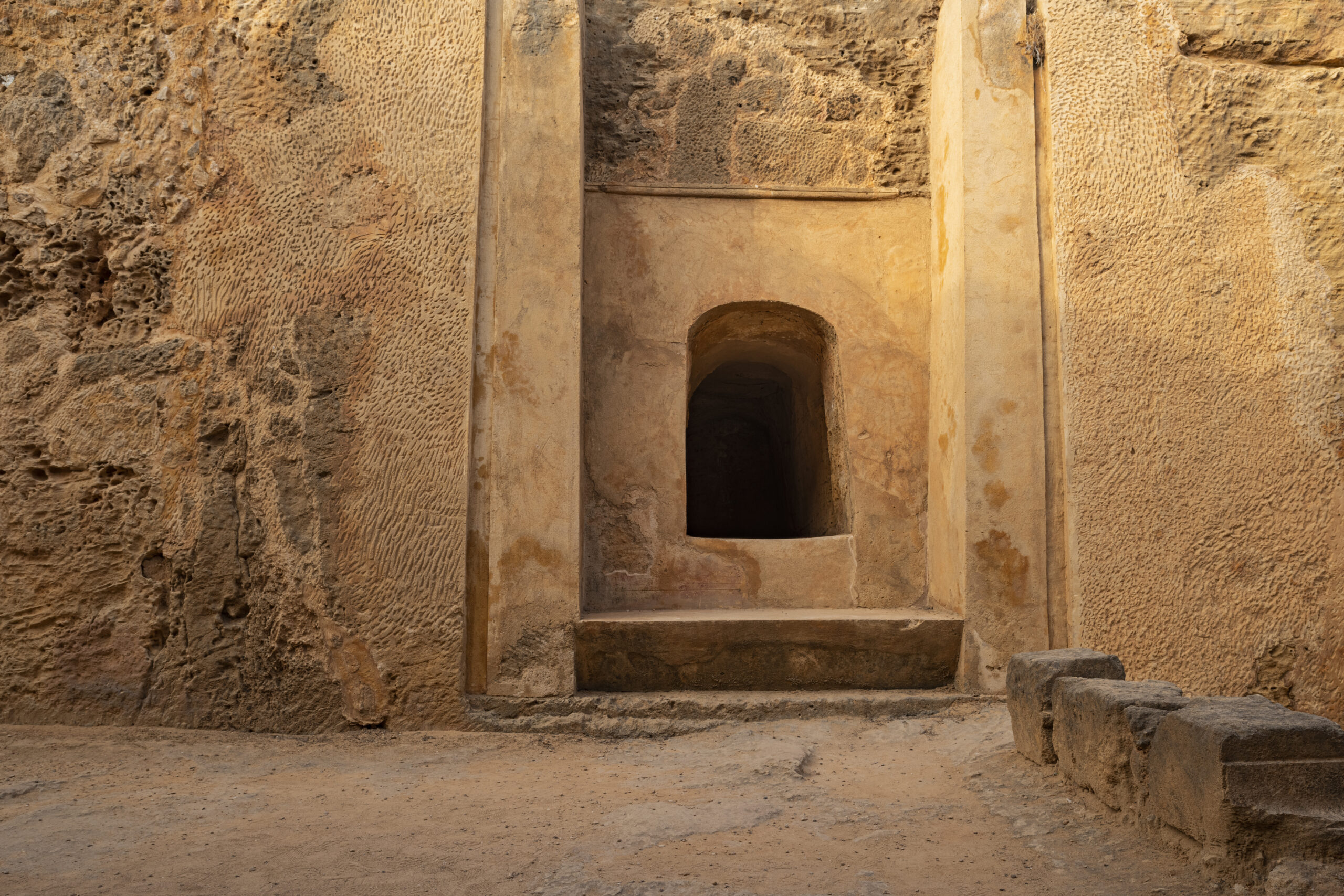
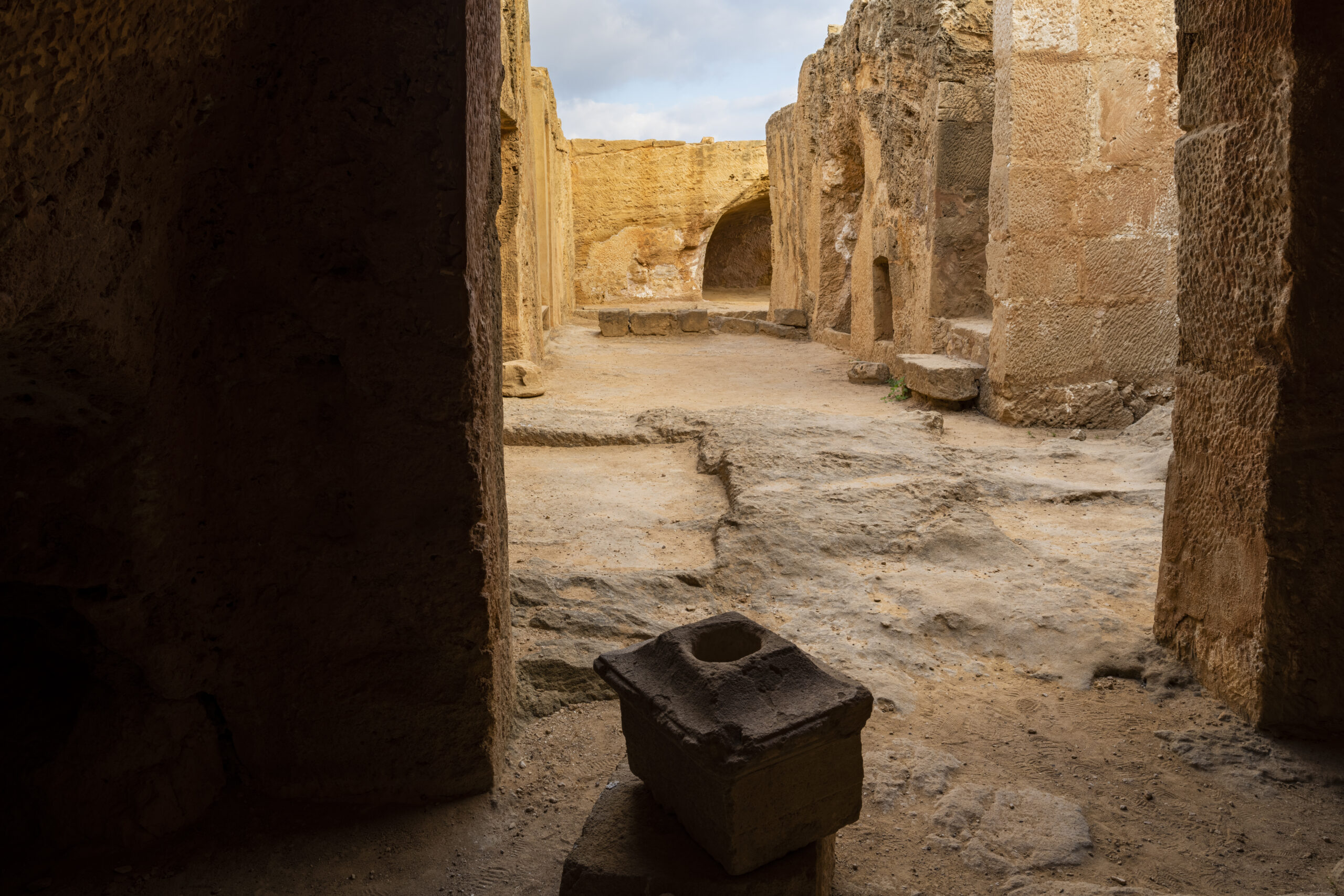
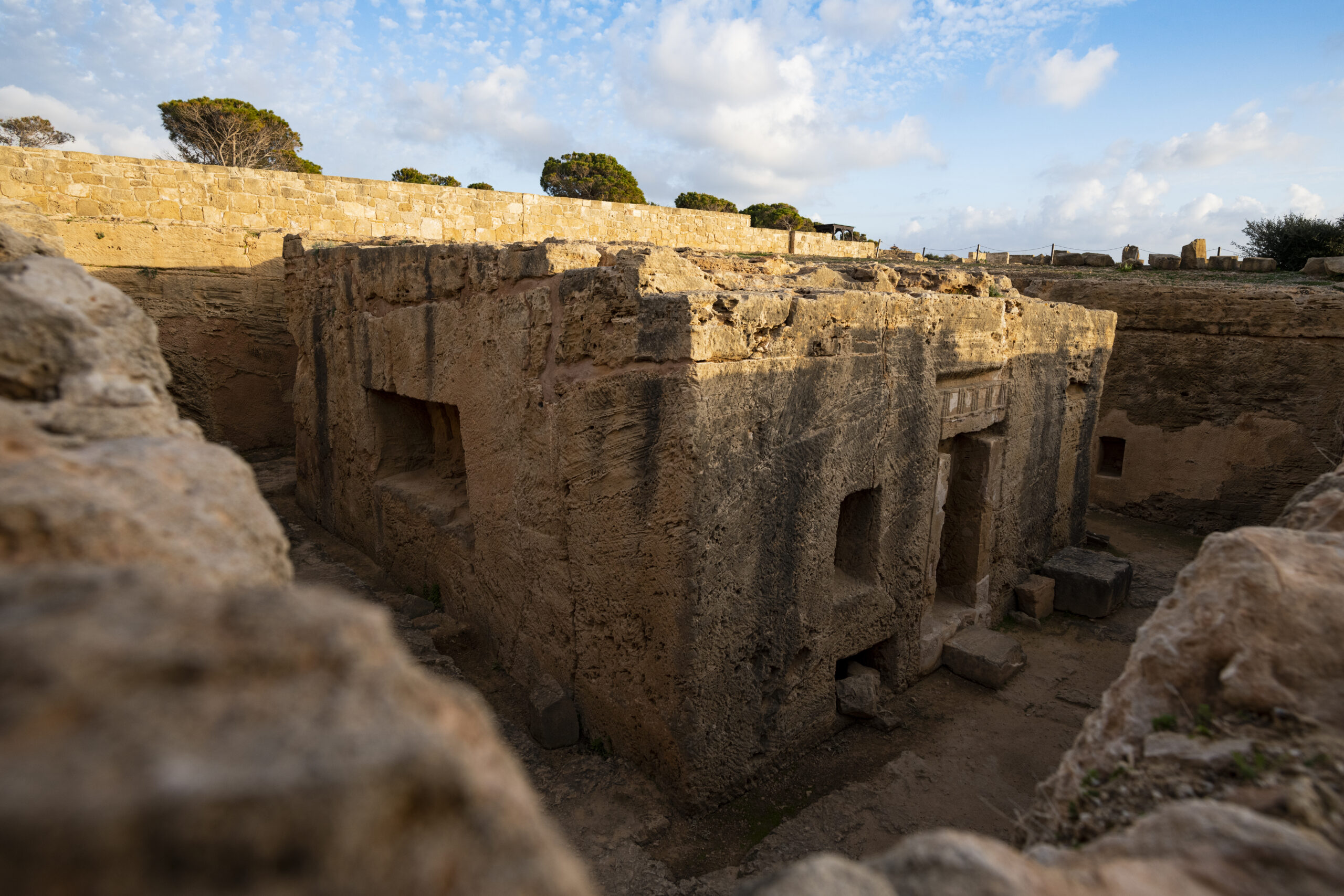
The architecture of Tomb 8 is completely distinct from that of the other tombs in the necropolis. Instead of featuring an open courtyard (atrium) at its centre, Tomb 8 incorporates a rectangular block of rock that is surrounded by four wings. The burial chambers are arranged around this central rock, and access to the tomb complex is provided by a monumental stepped dromos (staircase). A well was carved into the central rock and connected to the southern wing through an arched opening with seven steps.
The central rock appears to be the most significant part of the tomb, as it hosted a unique burial in a looted loculus. This loculus had a temple-like façade that was elaborately decorated, imitating the façades of Macedonian and Alexandrian tombs. The surrounding wings were filled with architectural elements, many of which are now housed under shelter. Among these elements were two stone falcons, which can be viewed at the Paphos Archaeological Museum and symbolize Ptolemaic power. The tomb's unique architecture, lavish decorations, and the discovery of falcons have led the excavator to propose that it was likely the burial site of a member of the Ptolemaic dynasty—most probably the last king of the island, Ptolemy of Cyprus. Archaeological evidence refutes the suggestion made by some scholars that a Doric temple or mausoleum existed on top of the central rock.
Several tombs dating to the Hellenistic and Roman periods were excavated within the wings surrounding the central rock. Notably, three undisturbed tombs were found in the northern and western wings. Among the grave goods accompanying the deceased were Rhodian amphorae, perfume flasks (unguentaria), and golden myrtle leaves. In a separate child’s burial, a perfume flask wrapped in linen fabric was also discovered.