DESCRIPTION:
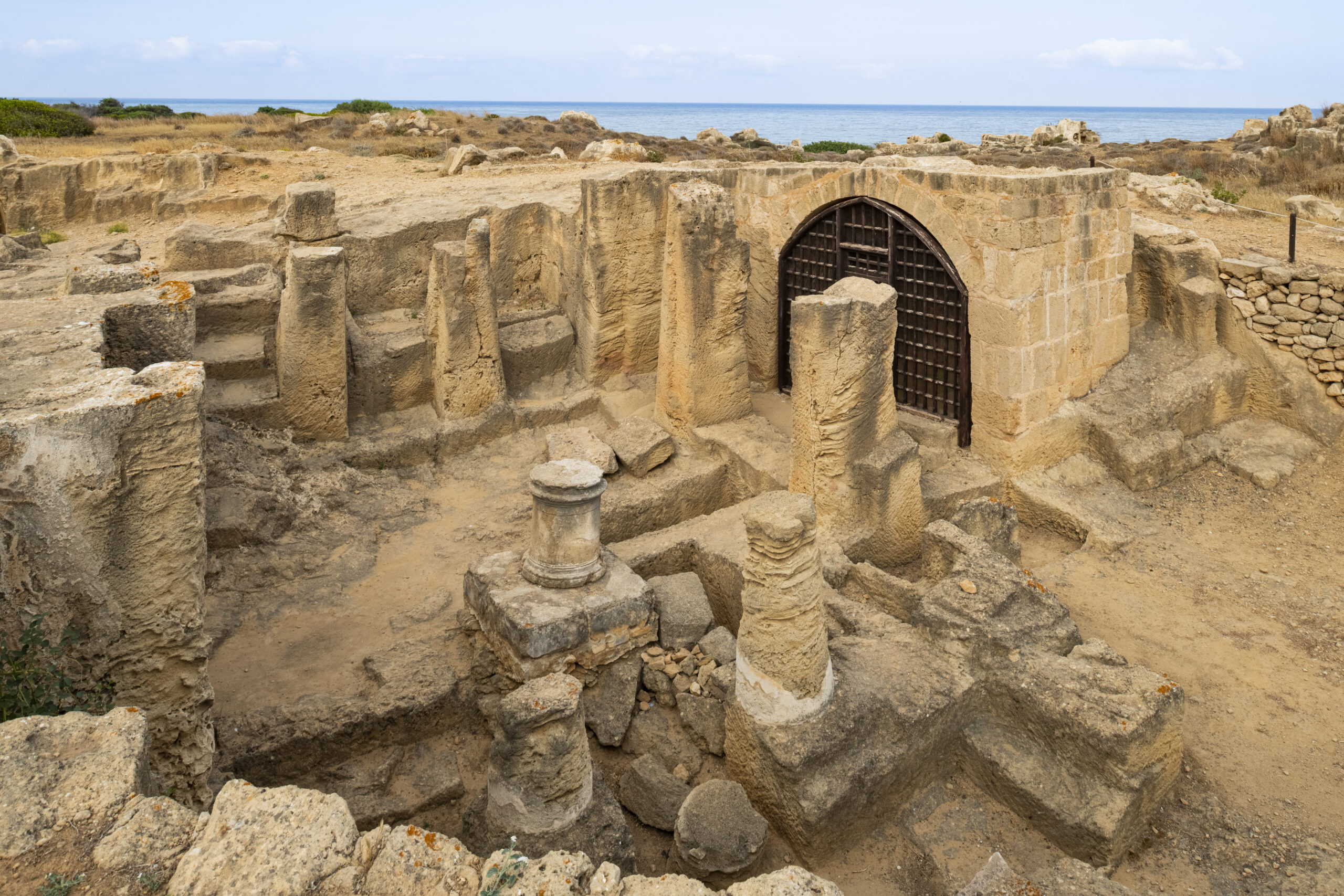
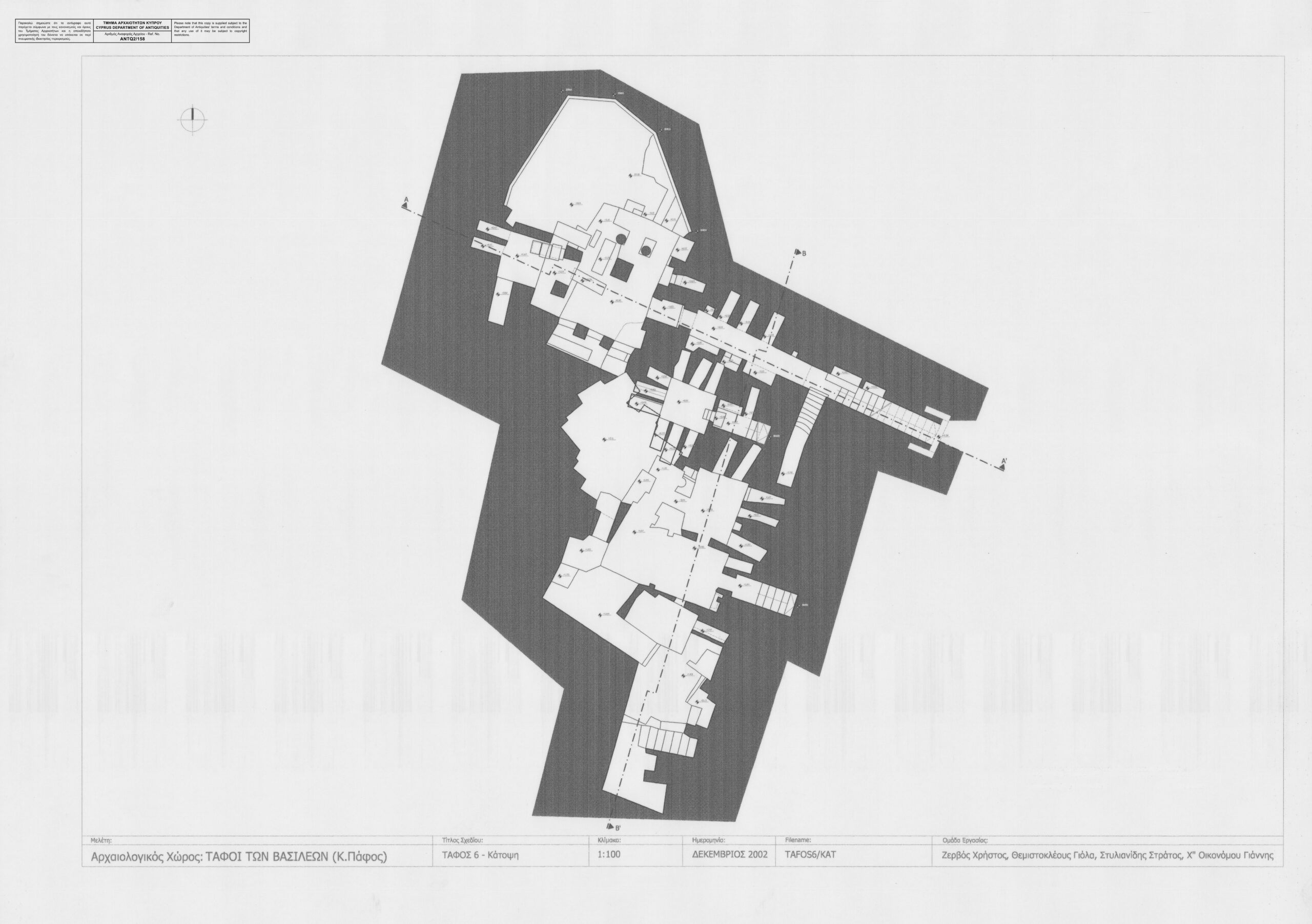
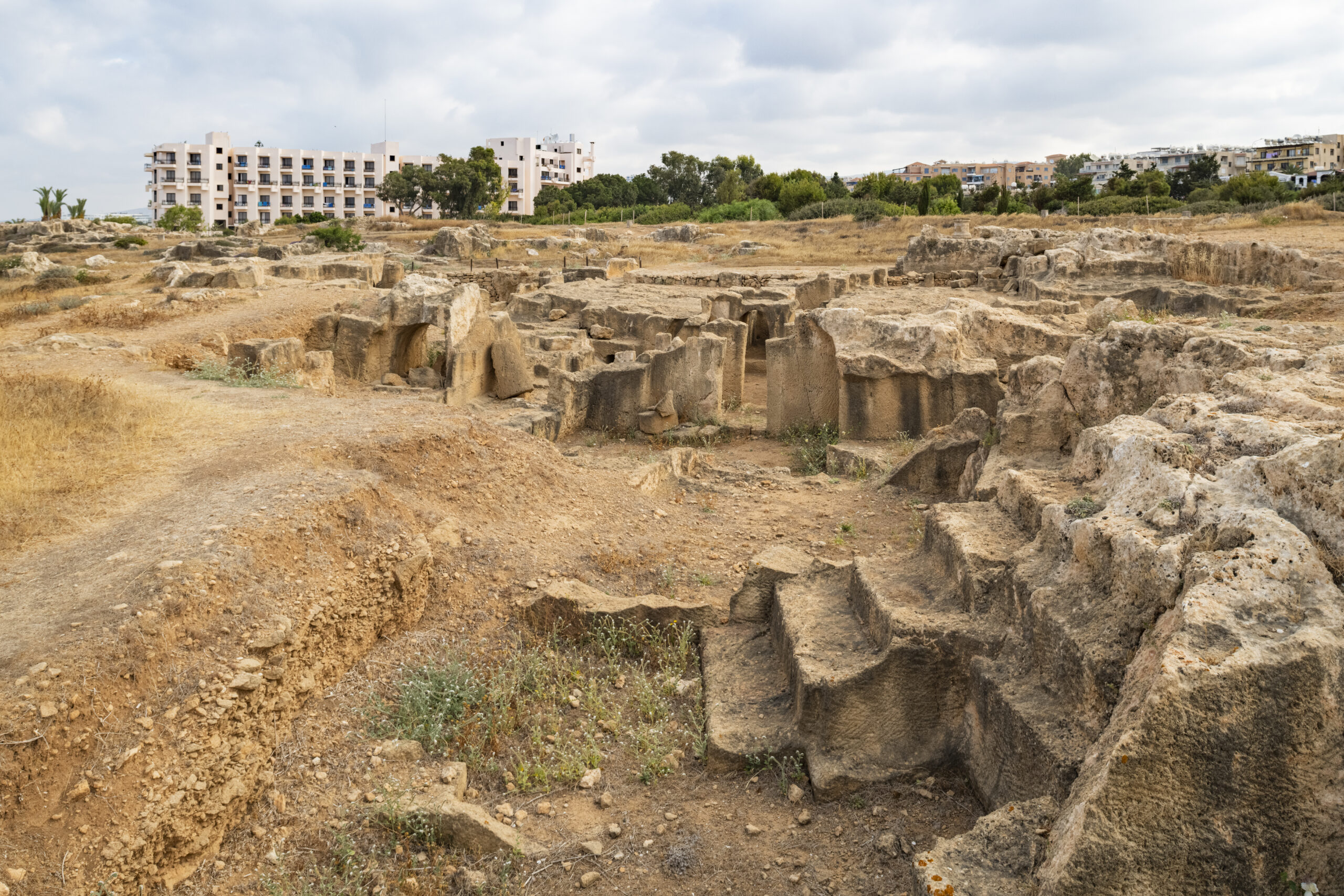
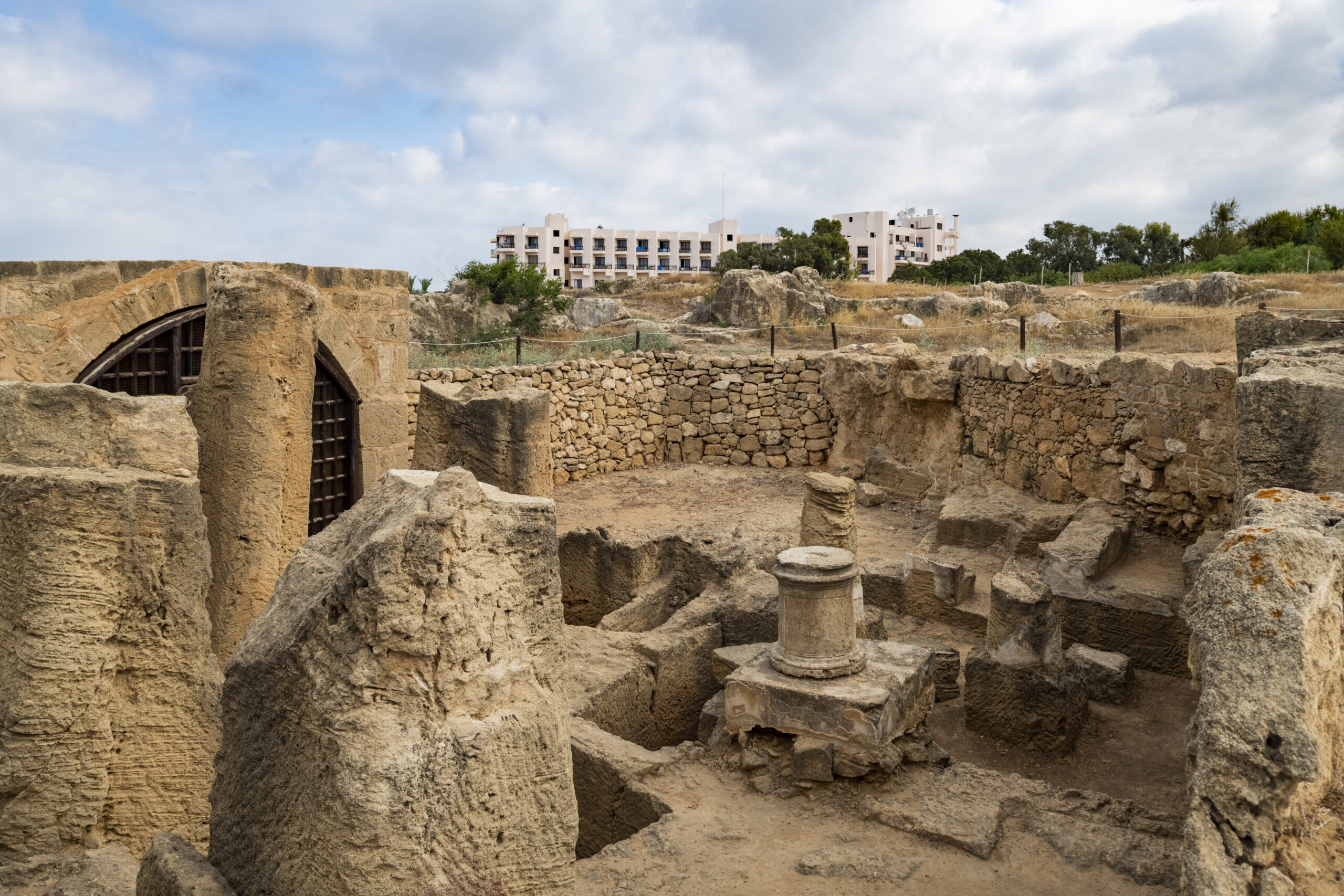
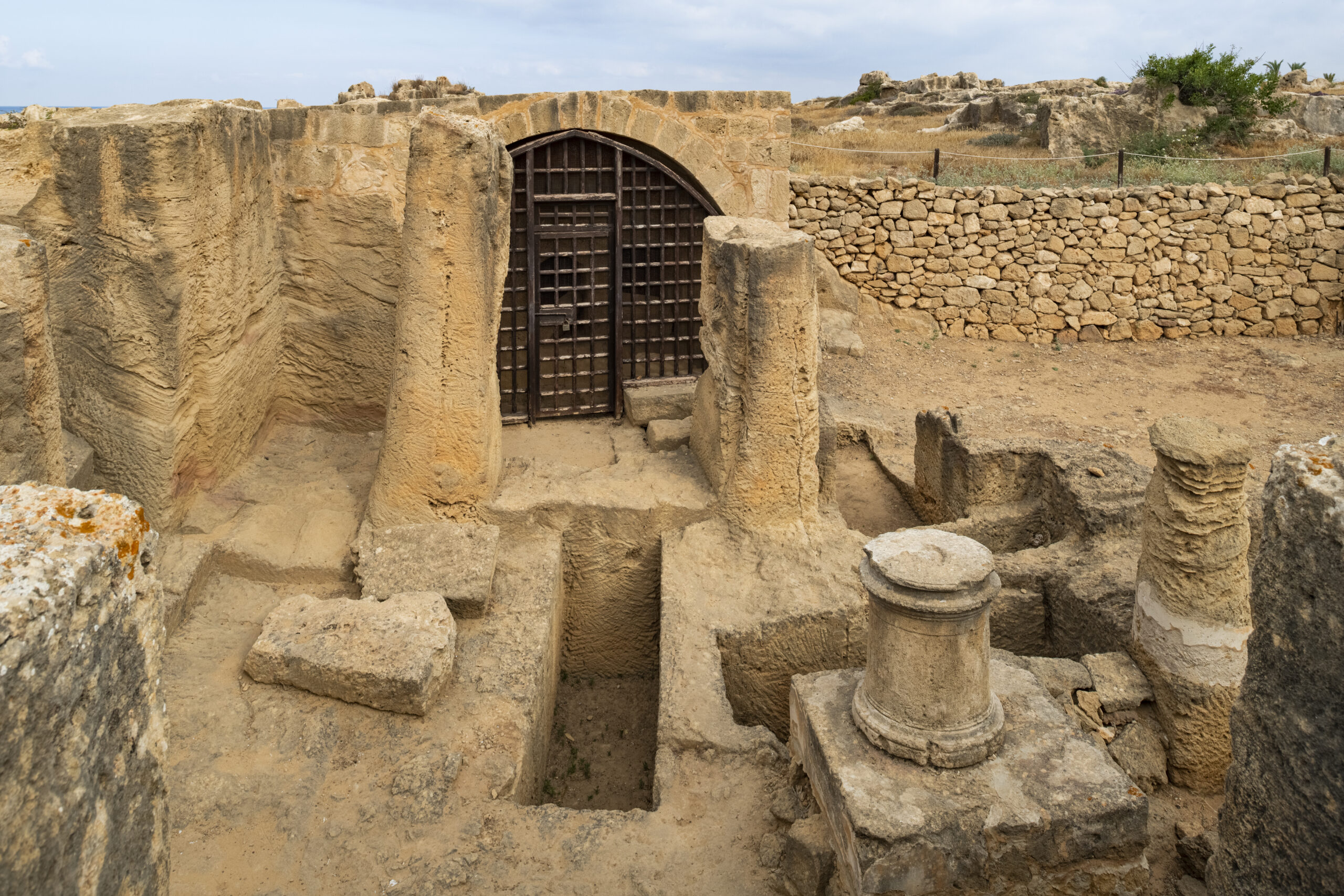
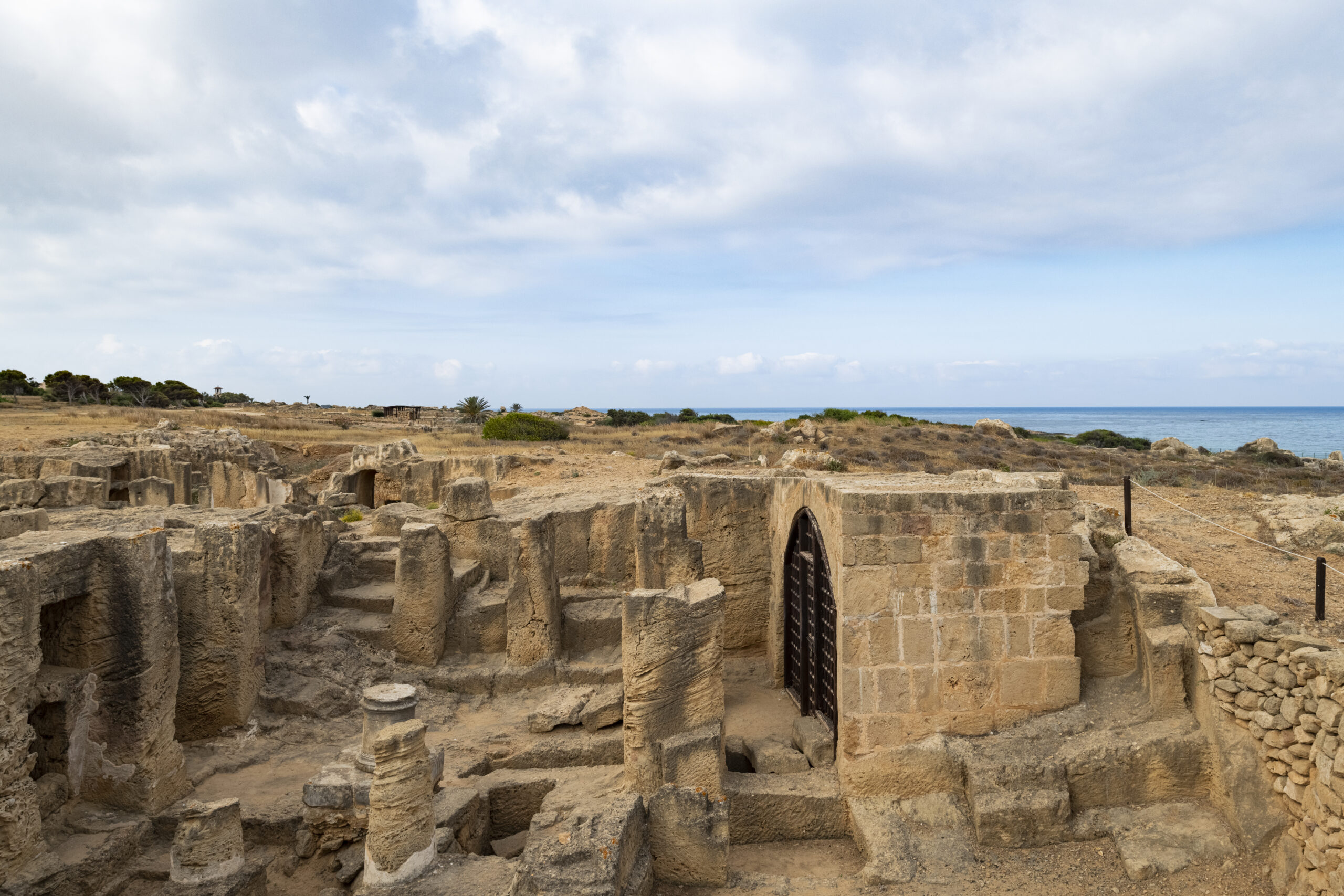
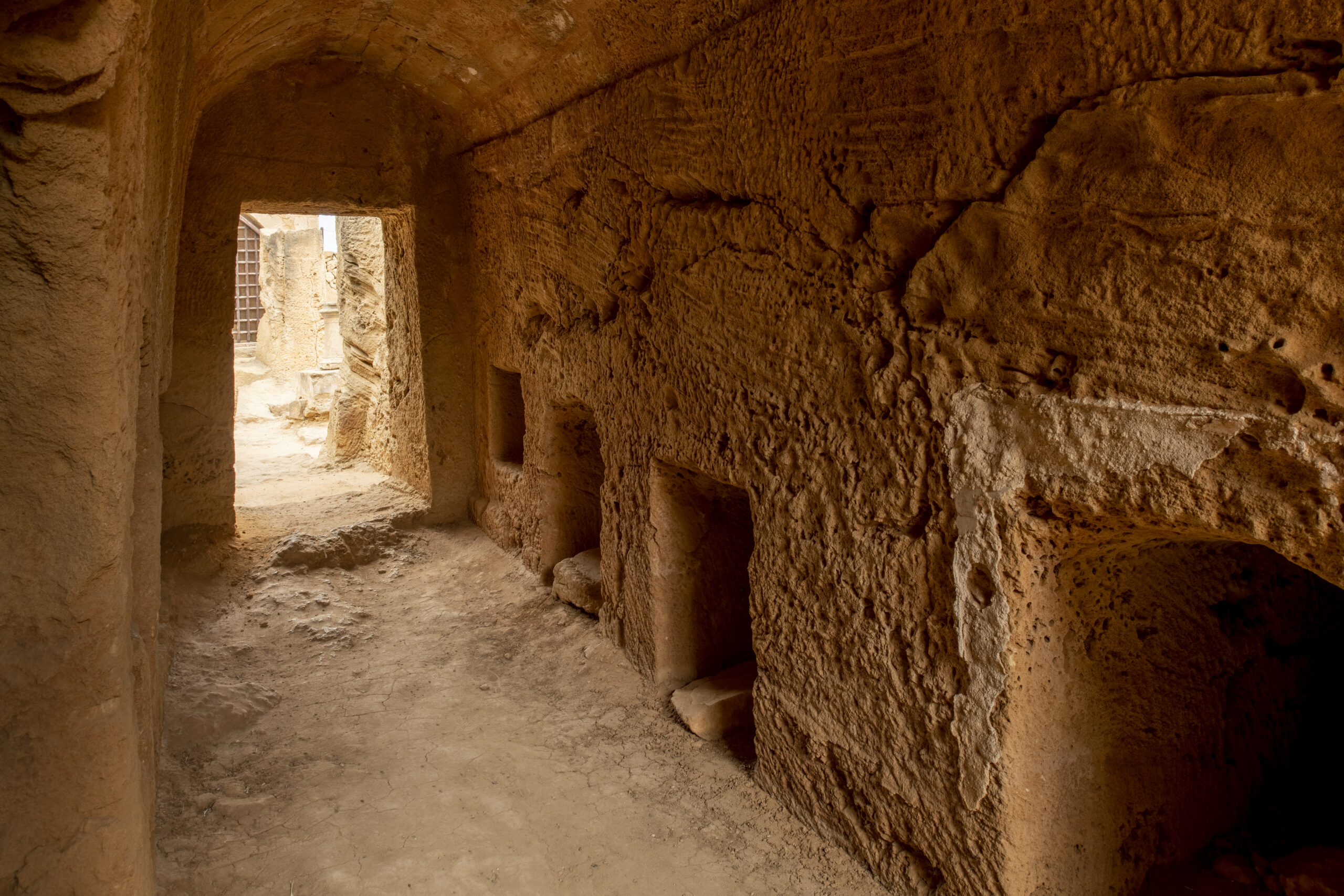
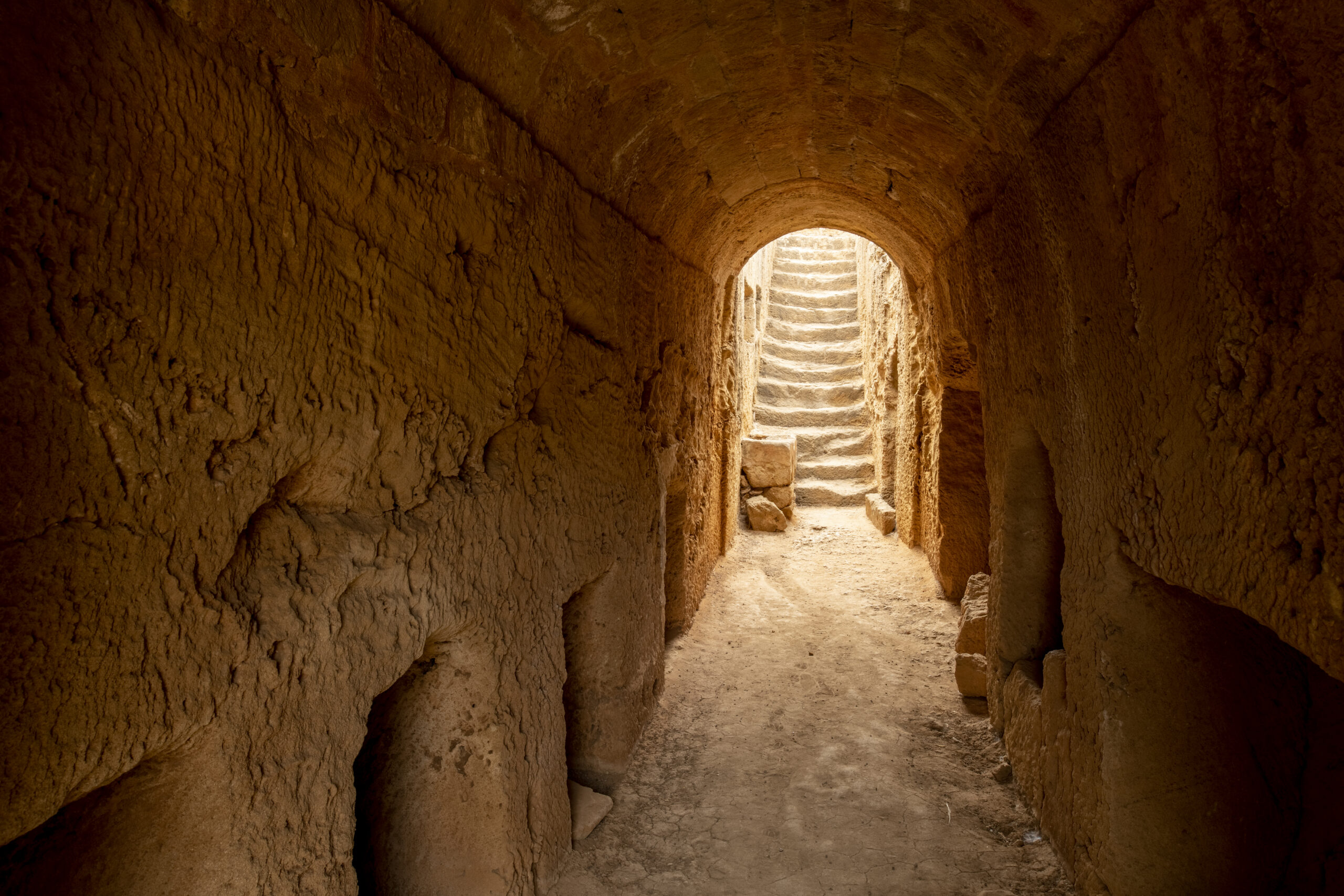
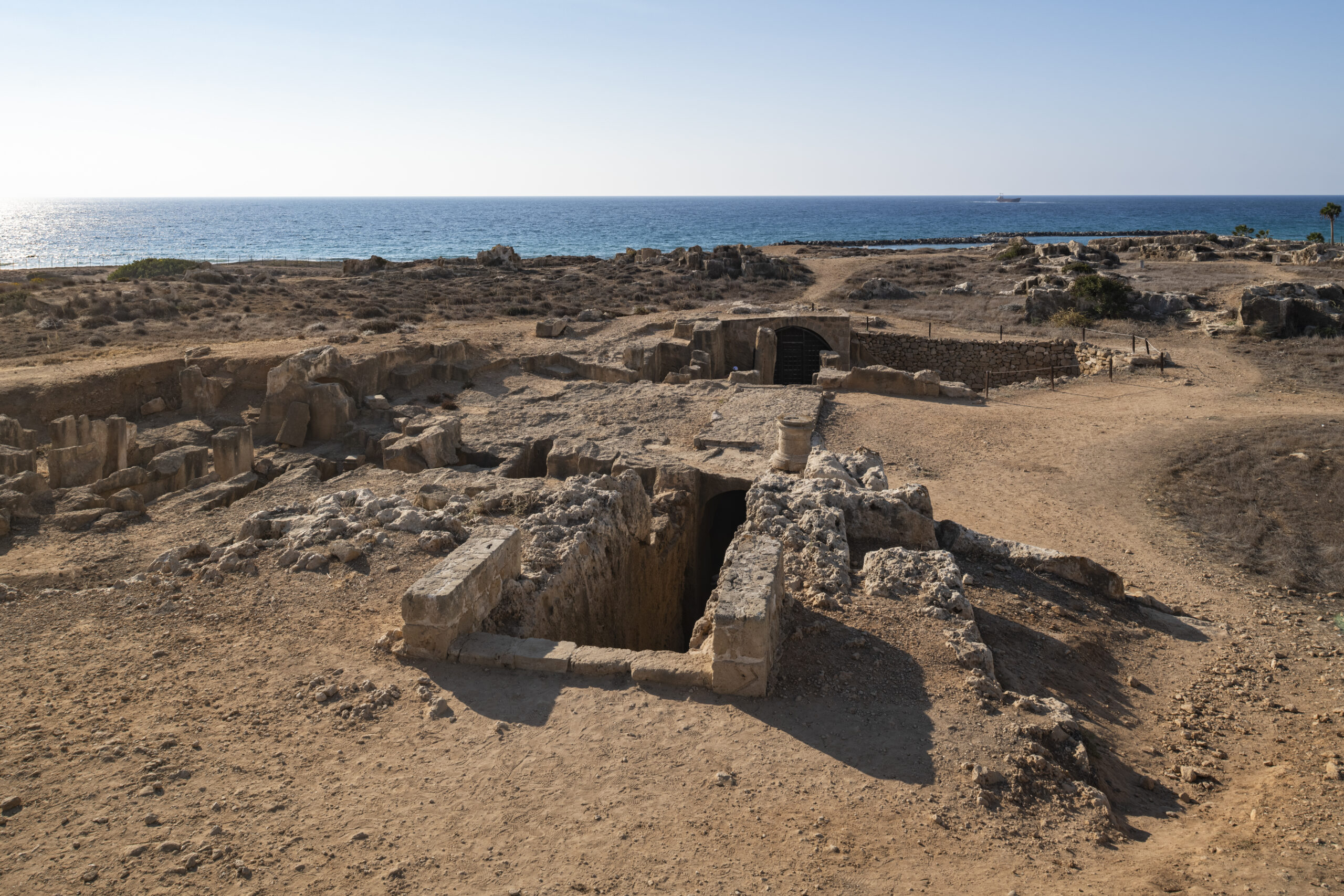
This impressive burial complex is marked at its entrance by a funerary column, known as a cippus. Access to the tomb is via a 20-meter-long stepped dromos, or staircase, that leads into a vaulted corridor. The walls of this corridor feature five loculi and two ossuaries, which are used for storing bones when tombs are reused. On the left side, there is a covered staircase that leads to the wellhead.
Originally, during the Hellenistic period, the dromos led into an atrium surrounded by porticoes. Three intact pit graves have been excavated in the atrium, and a fourth grave was marked with a funerary column (cippus). On the northern side of the atrium, traces of frescoes were found that imitate marble revetment, a technique for covering walls with marble.
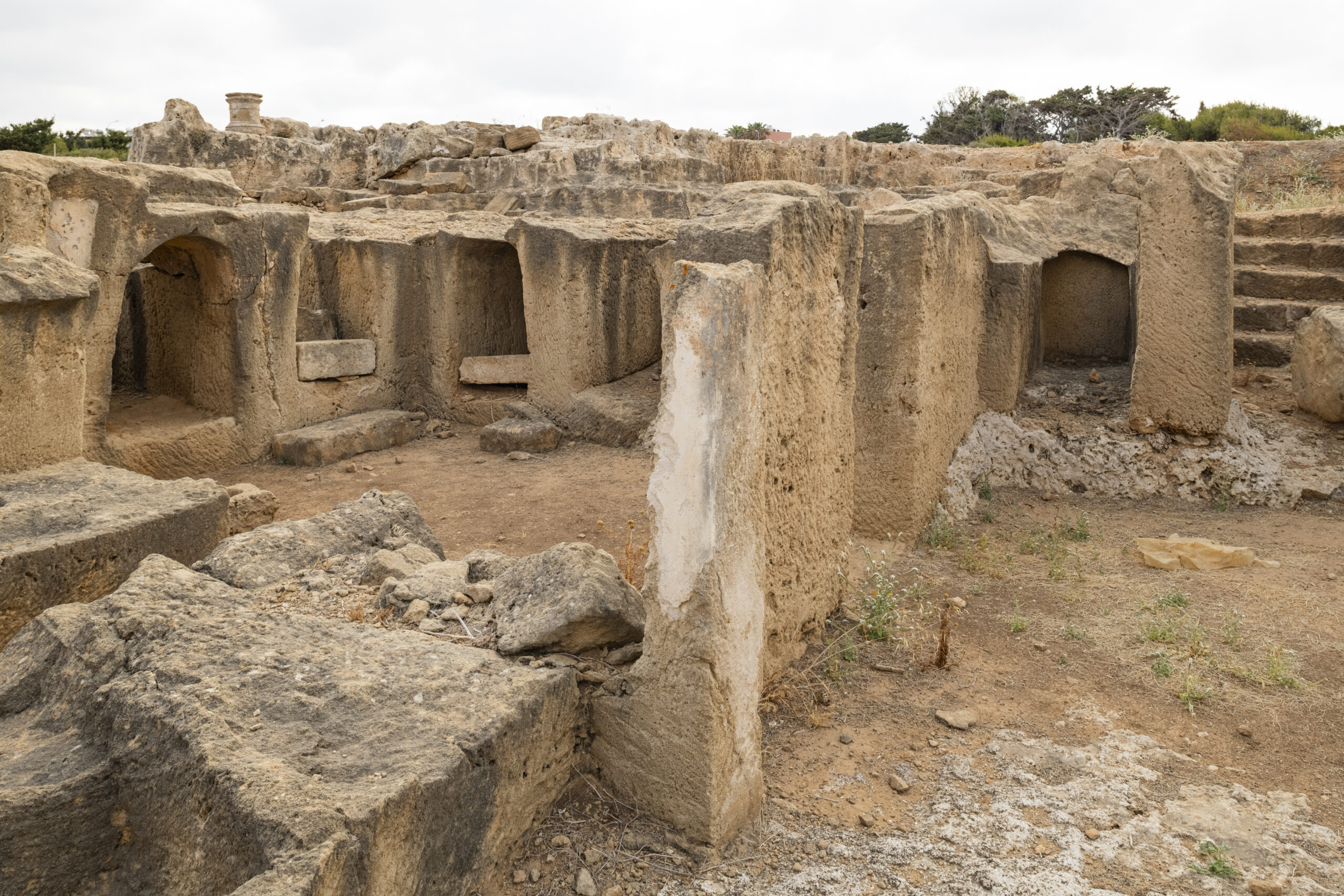
Directly opposite the dromos is the burial chamber. Inside the chamber, three looted loculi and one intact pit grave have been identified. Initially, the niches were covered with decorated plaster that imitated isodomic masonry. Unfortunately, the roofs of the portico and the chamber have been removed due to quarrying.
During the Roman period, the dromos was separated from the rest of the monument and used as an independent burial space. New loculi and an arcosolium—a shallow arched recess over a burial—were created. In front of the two niches, an offering table was constructed, which featured a clay pipe used for libations (liquid offerings) to the dead. This practice was related to the burial customs of that period. In addition to liquid offerings, which included milk, honey, water, and wine, various fruits were also presented to the deceased. Archaeologists have discovered remains of ash and cremated animal bones near the altars, suggesting that ritual pyres were held during which offerings such as eggs and birds were made to the deceased.