DESCRIPTION:
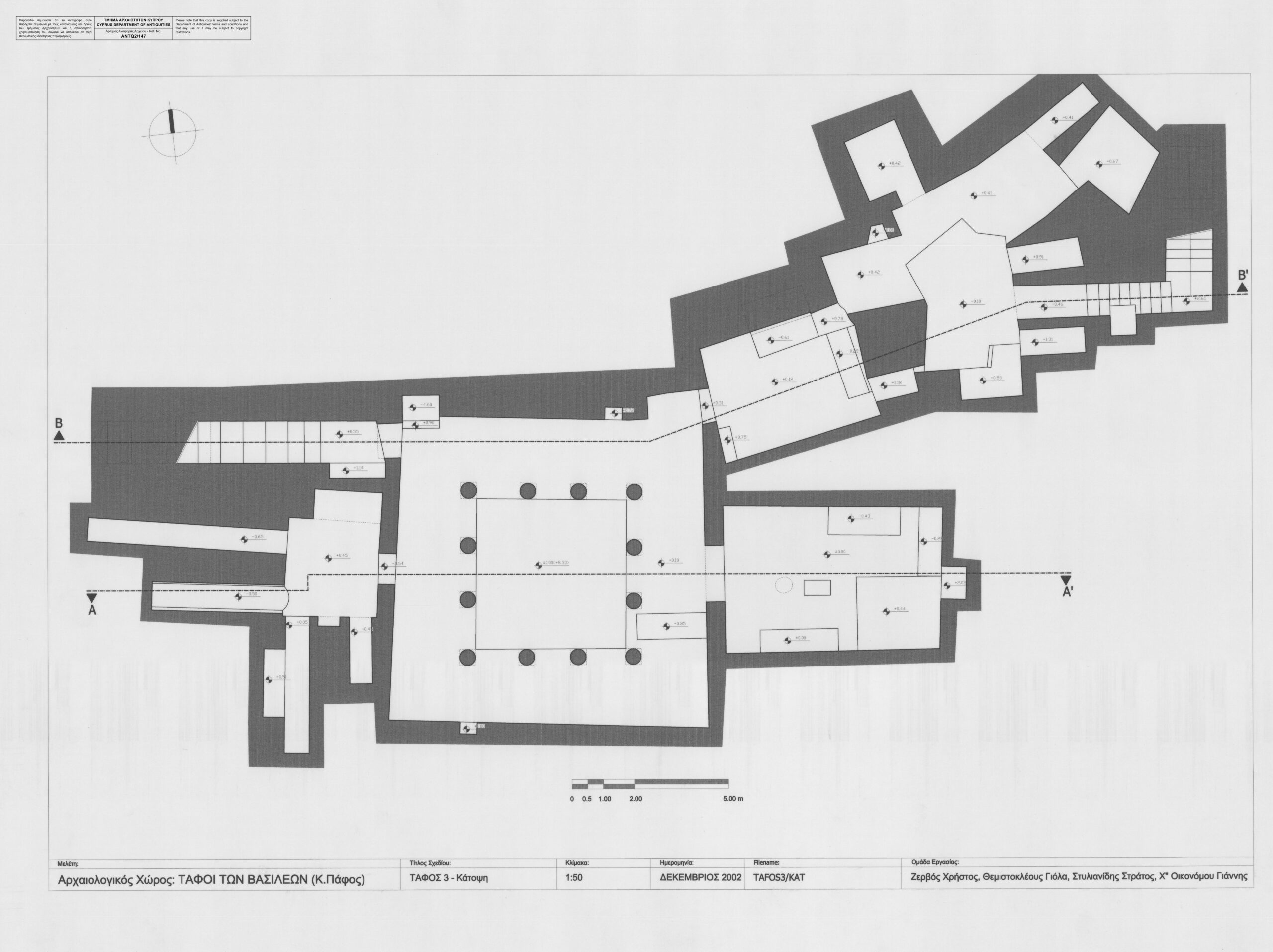
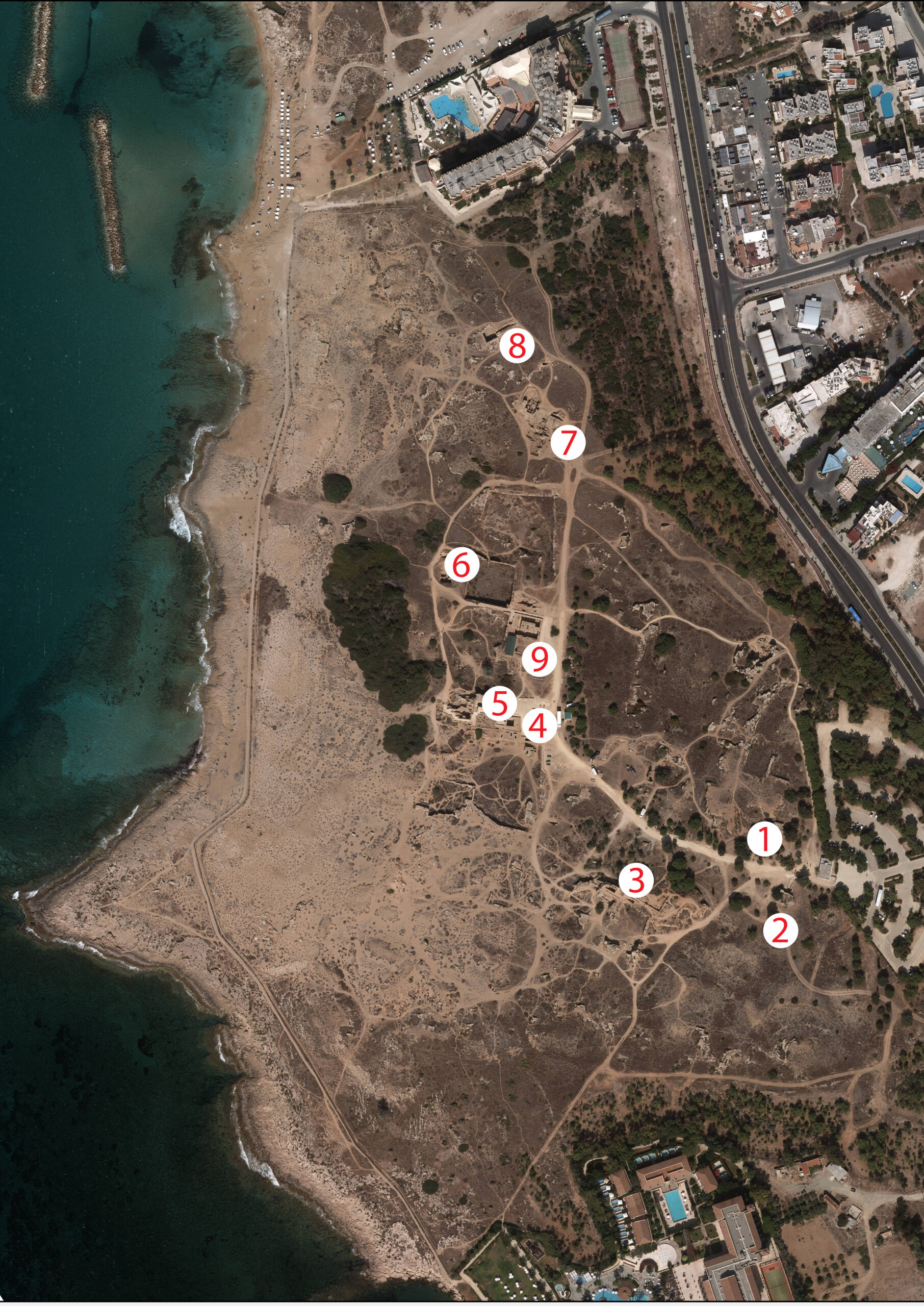
This is an underground burial complex with an atrium, surrounded on all four sides by porticoes. The entrance is via a covered stepped dromos (stairs), which leads to the northwestern corner of the atrium, where a well is located.
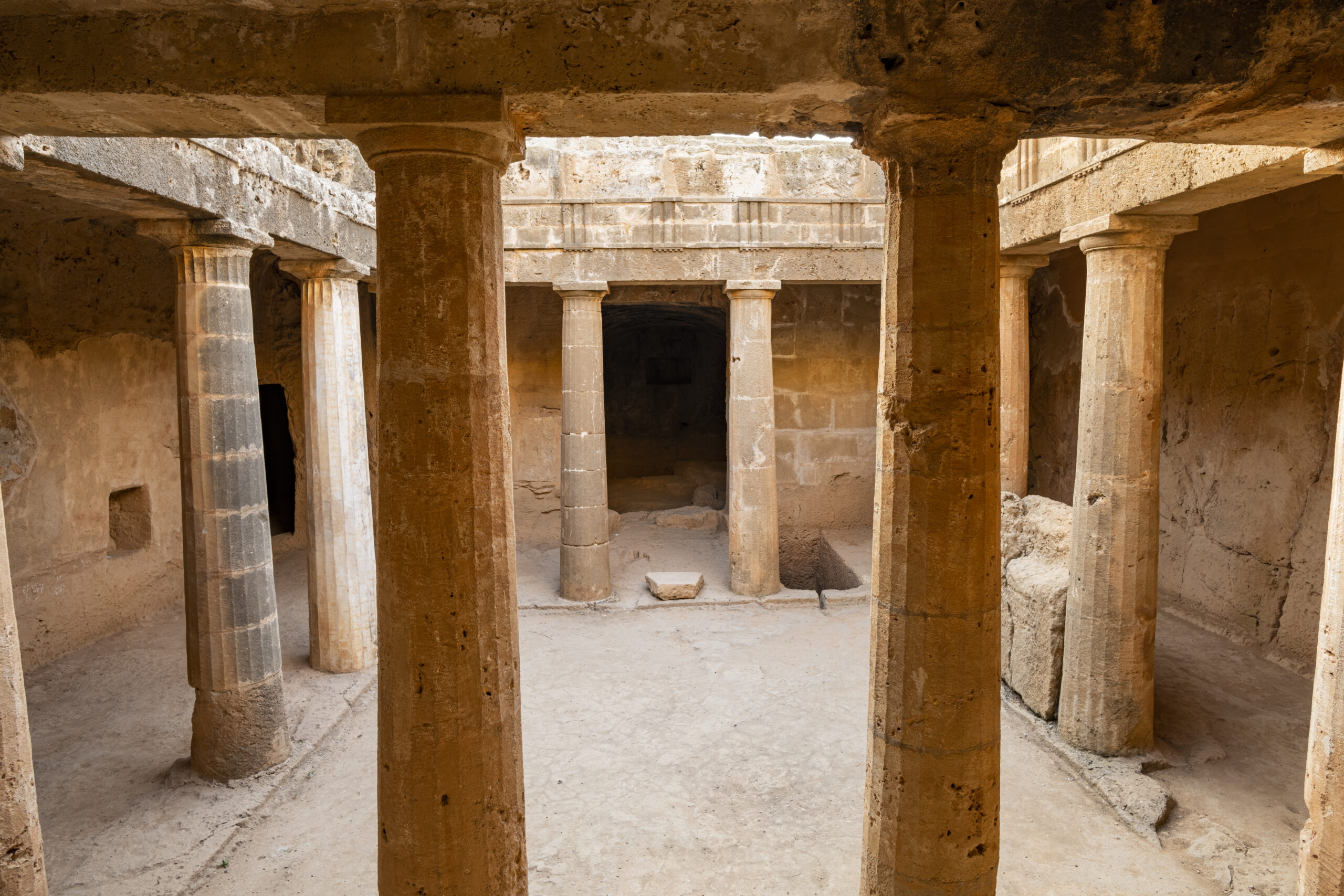
The atrium is surrounded by four porticoes of the Doric order. The simple columns in the Doric order do not have bases. Above the columns, the frieze of the entablature is decorated with triglyphs and metopes.
On the eastern side of the atrium, is a vaulted chamber originally used for ceremonial purposes. Initially, this chamber was most likely provided with klinai (ceremonial beds), on which the deceased was prepared before burial.
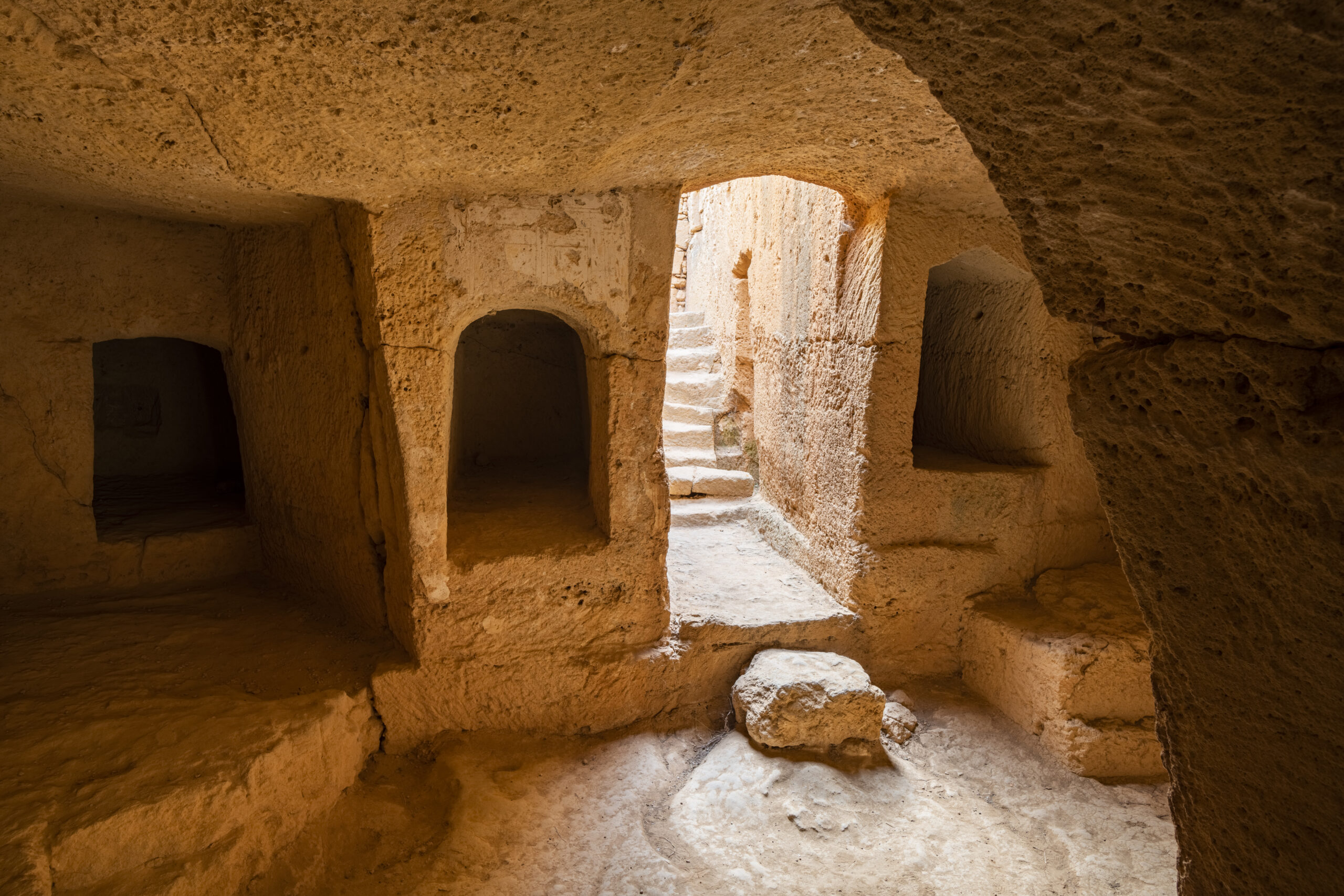
The burial chamber is on the west side of the atrium and contains several loculi for multiple burials. This is also a vaulted chamber, with its walls covered with plaster. Crosses are visible on the plaster, indicating the use of the space in early Christian times.
On the northern wall, beneath the portico that covers the well, a small ossuary is visible. Ossuaries were used to store bones when tombs were reused. Pit graves have been excavated beneath the eastern and southern porticoes, but these have now been filled in for safety reasons. An opening in the north-eastern corner of the tomb was created by tomb robbers and leads to another burial complex, which is accessible from the east.
The architectural design of this tomb, featuring a peristyle atrium, reflects a transfer of domestic architecture into a funerary context, a tradition also seen in Ptolemaic Egypt.