DESCRIPTION:
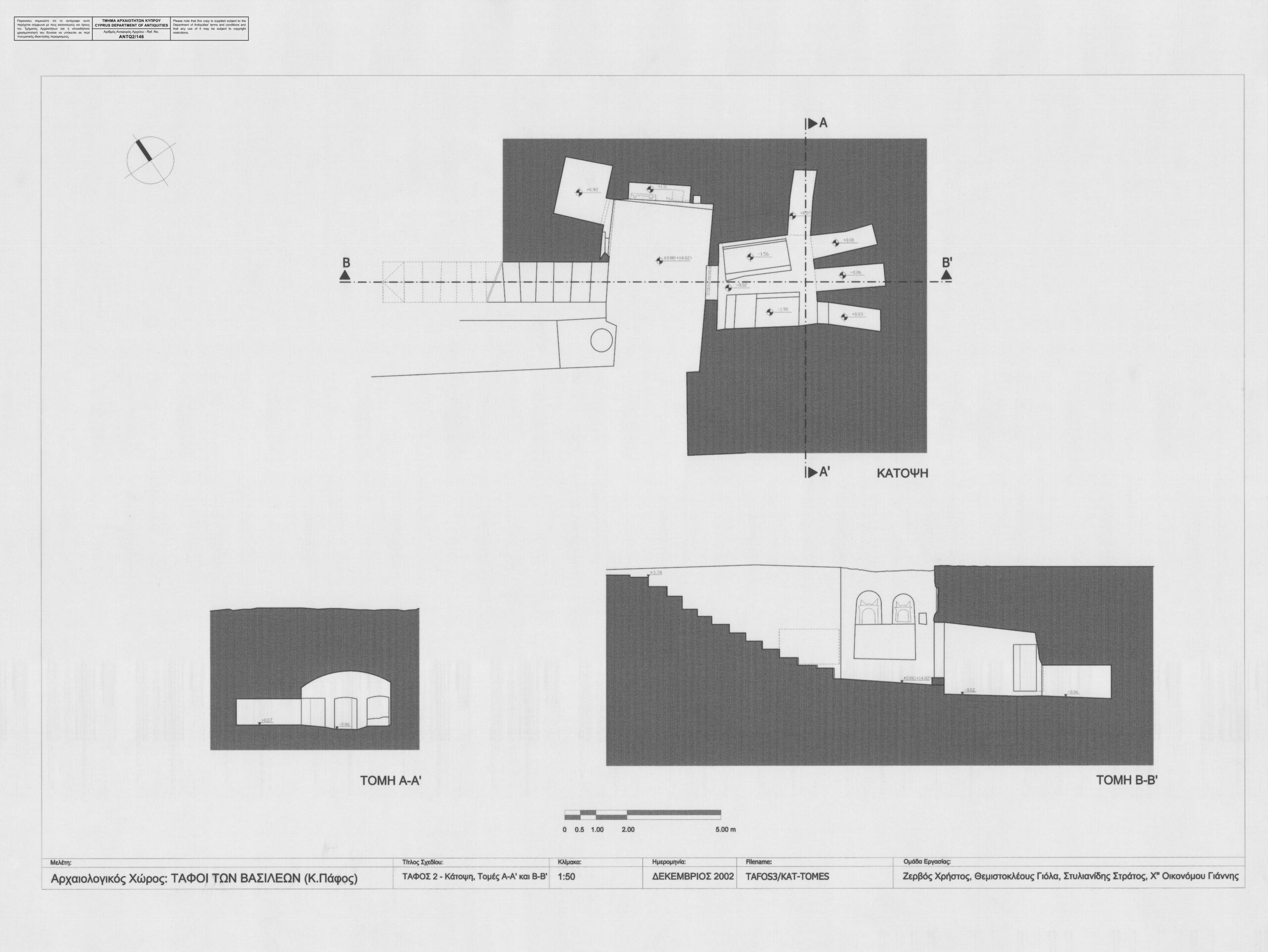
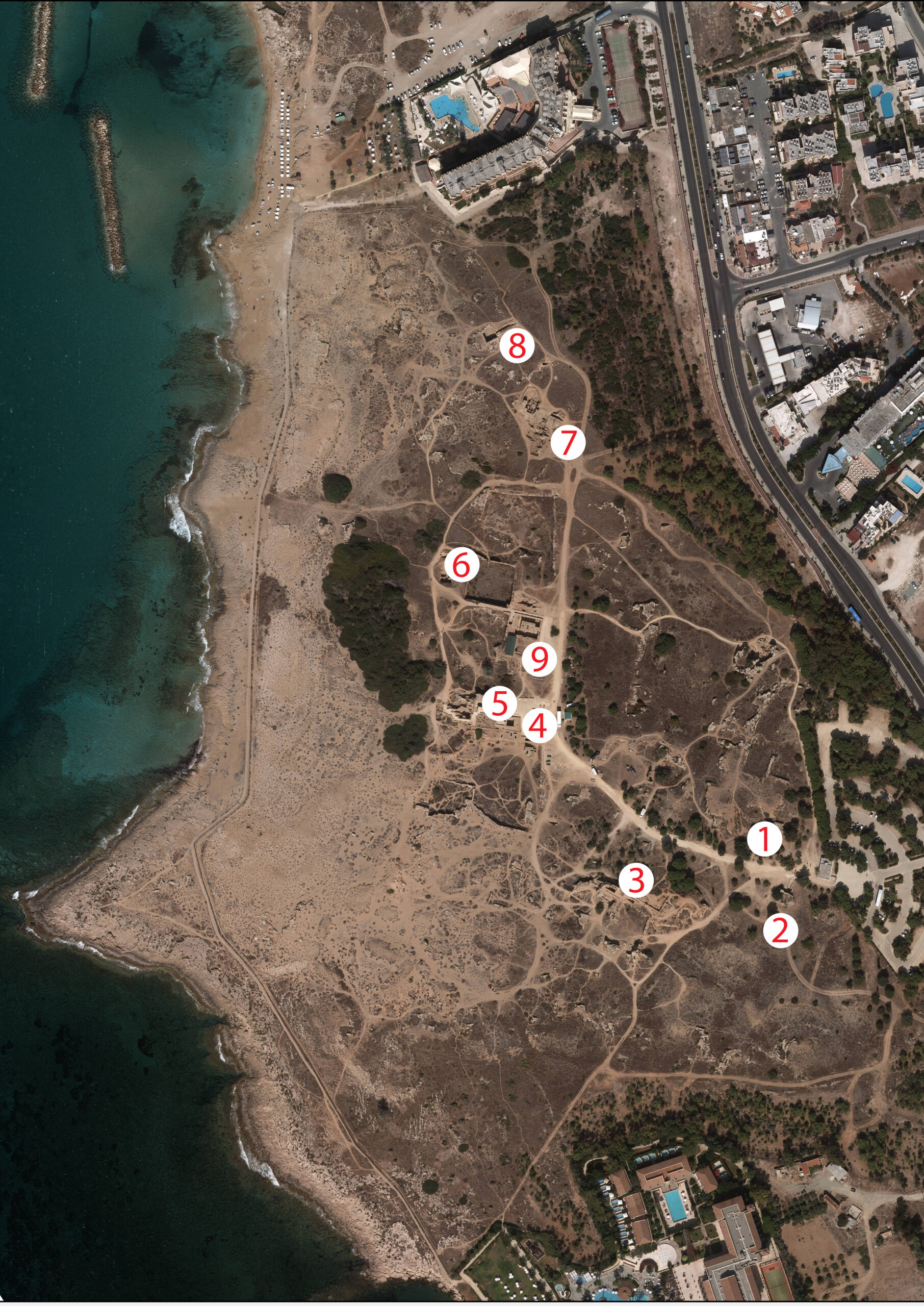
Tomb 2 is located at the southwest edge of a burial mound (tumulus) and has two construction phases: one during the Hellenistic period and another later during the Roman period.
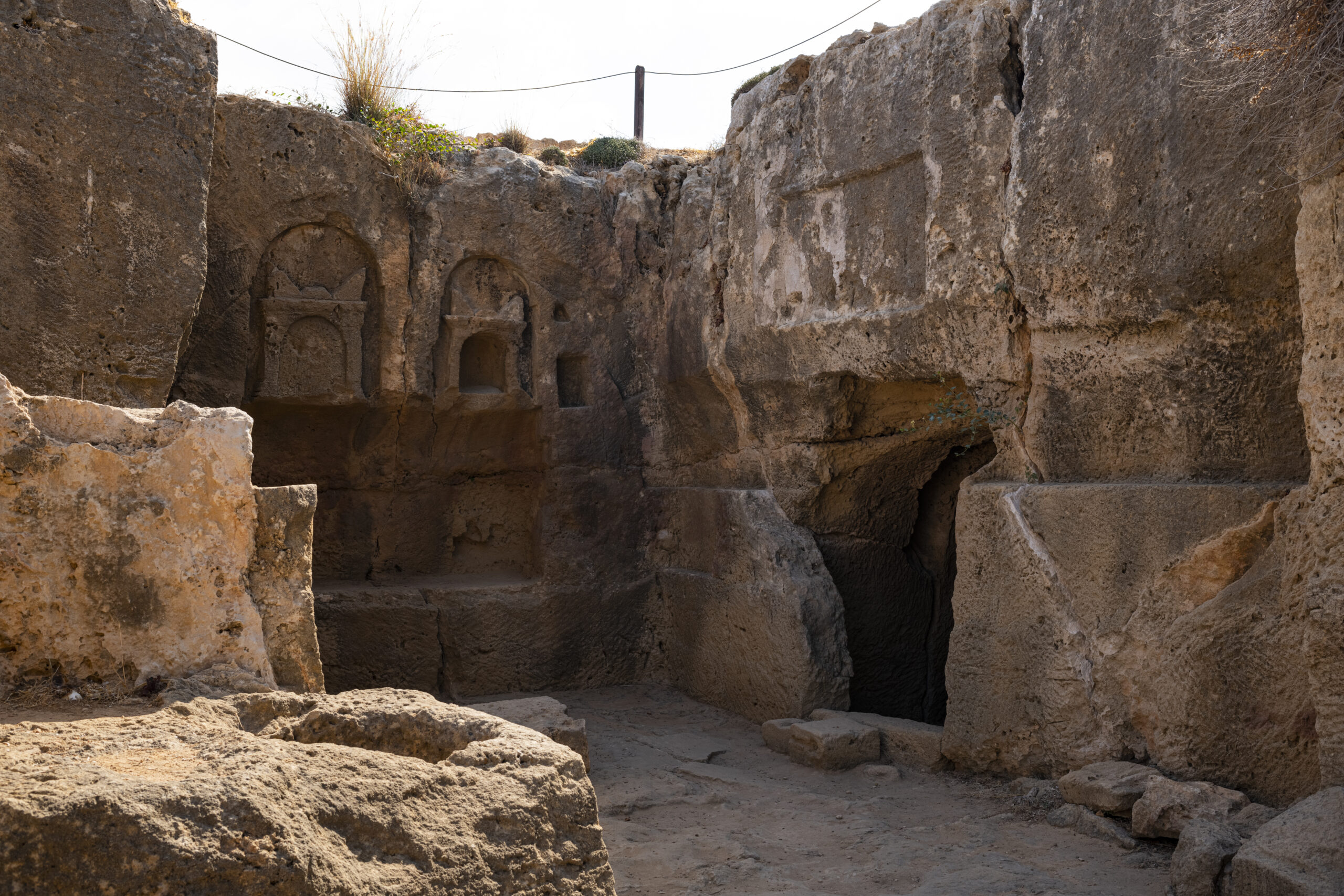
During the Hellenistic period, the tomb was accessed by a stepped dromos (staircase) leading down to the atrium. At the end of the dromos, there is a well. The burial chamber is opposite the dromos and contains four loculi and three pit graves on the floor. Above the entrance to the chamber, there is a plastered square recess, which most likely held an inscription with the name of the family using the tomb.
During the Roman period, the stepped dromos was built up, and the atrium was covered with a vaulted structure. The new entrance to the tomb was created on the southern side. Two new burial niches were carved on the western and southern sides of the new chamber.
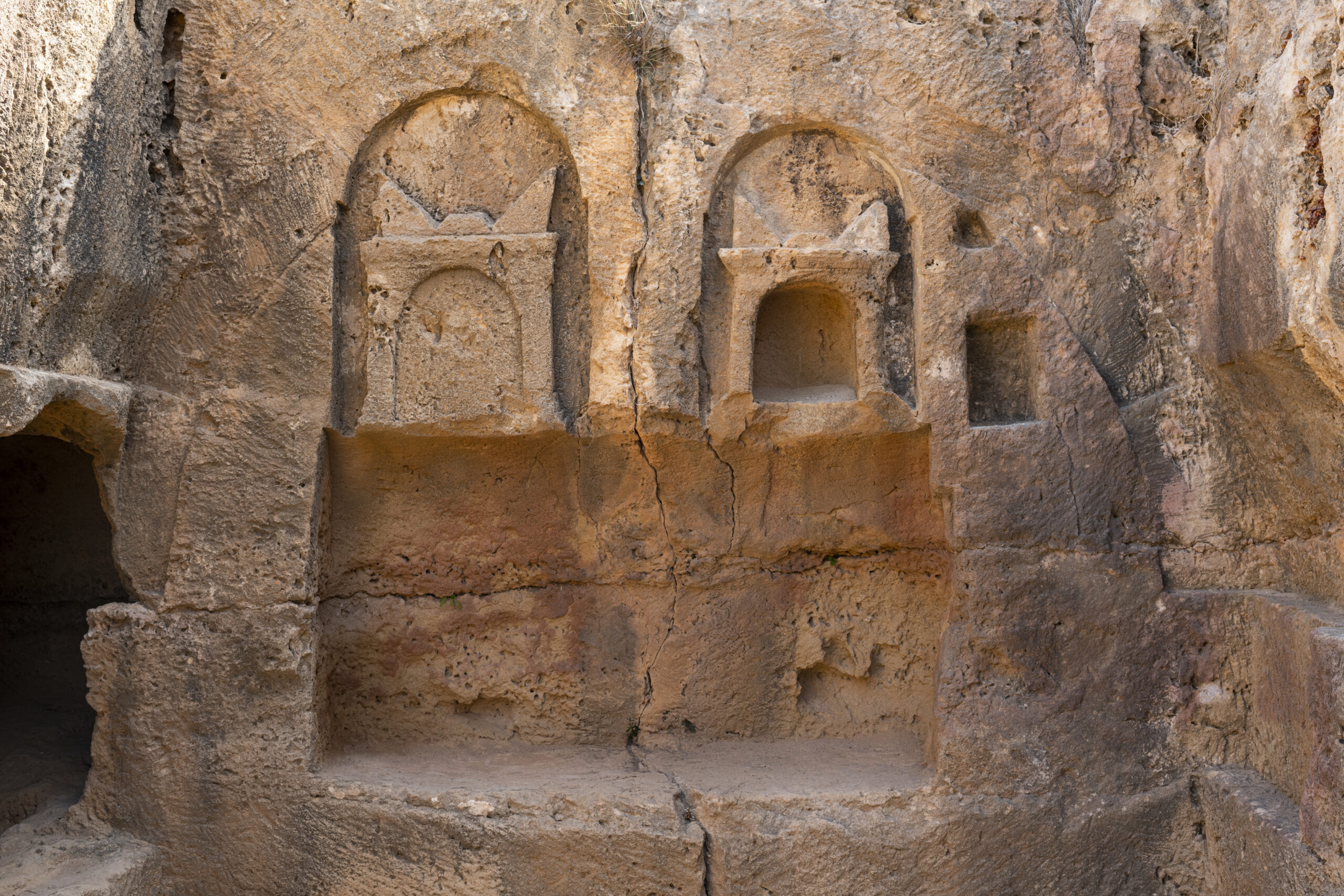
On the northern side, directly above the niche, two small horned altars were dug out during the Hellenistic period. The overlying arched cut was made to accommodate the carved stones that made up the barrel-shaped roof of the tomb. The horned altar originates from the Middle East and is associated with religious symbolism. During the Hellenistic period, they were introduced to Egypt, where they were linked to the worship of the goddess Isis and Serapis, and later became widespread in the ancient world.