DESCRIPTION:
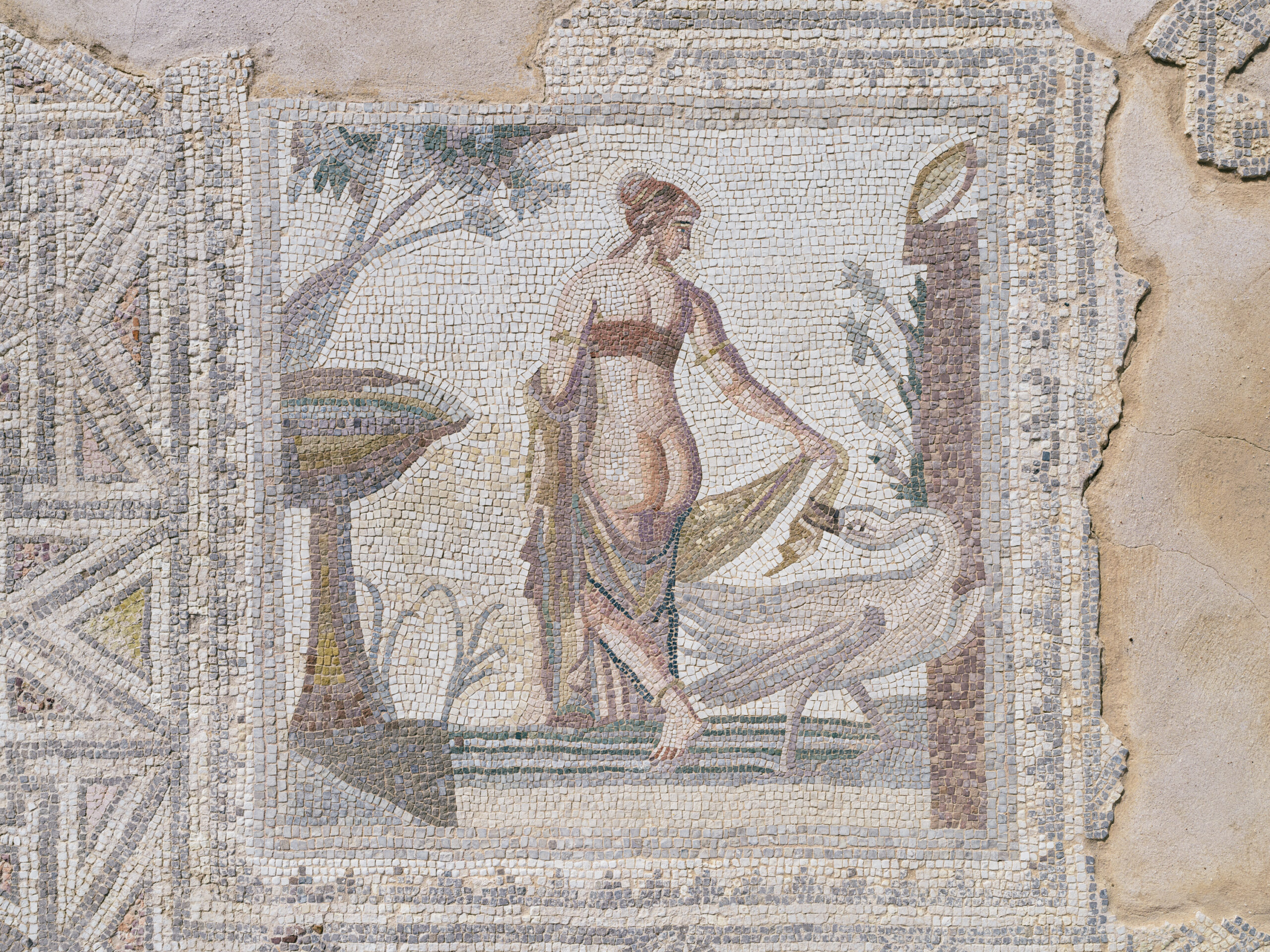
Northwest of the sanctuary of Aphrodite, archaeologists discovered a Roman house, though only one room, the triclinium (summer dining room) has been preserved. In this room, a mosaic floor dating to the late 2nd century AD was discovered. The mosaic features an unusual depiction of Leda with a swan. The scene is situated in the centre of the floor and it’s surrounded by several zones of geometric patterns. Because of the mosaic, the house has been conventionally named the "House of Leda."
According to legend, Zeus, with Aphrodite's assistance, transforms into a swan to seduce Leda, the mythical queen of Sparta. In this depiction, however, Leda is portrayed as the dominant figure in the composition. She is larger in size, positioned at the centre, and oriented differently from the swan, which is not placed at an equal distance from her. The artist uses size and spatial separation to emphasize the alienation and estrangement between Leda and the swan.
It is noteworthy that the Roman emperor Octavian Augustus pursued a policy of reviving religion, reshaping the "Roman memory" and improving morality and ethics. In this context Augustus initiates religious reforms, suppressing adultery and nudity. Leda in this mosaic may be the informative figure about the suppression of nudity, while promoting the female beauty and the role of fertility in society. But her figure in the composition also functions metaphorically as it symbolizes a figure that is neither bound nor imprisoned, removing her clothing and presenting herself half-naked, showing a kind of independence, liberation and resistance to the swan that can be either a god or a human being.
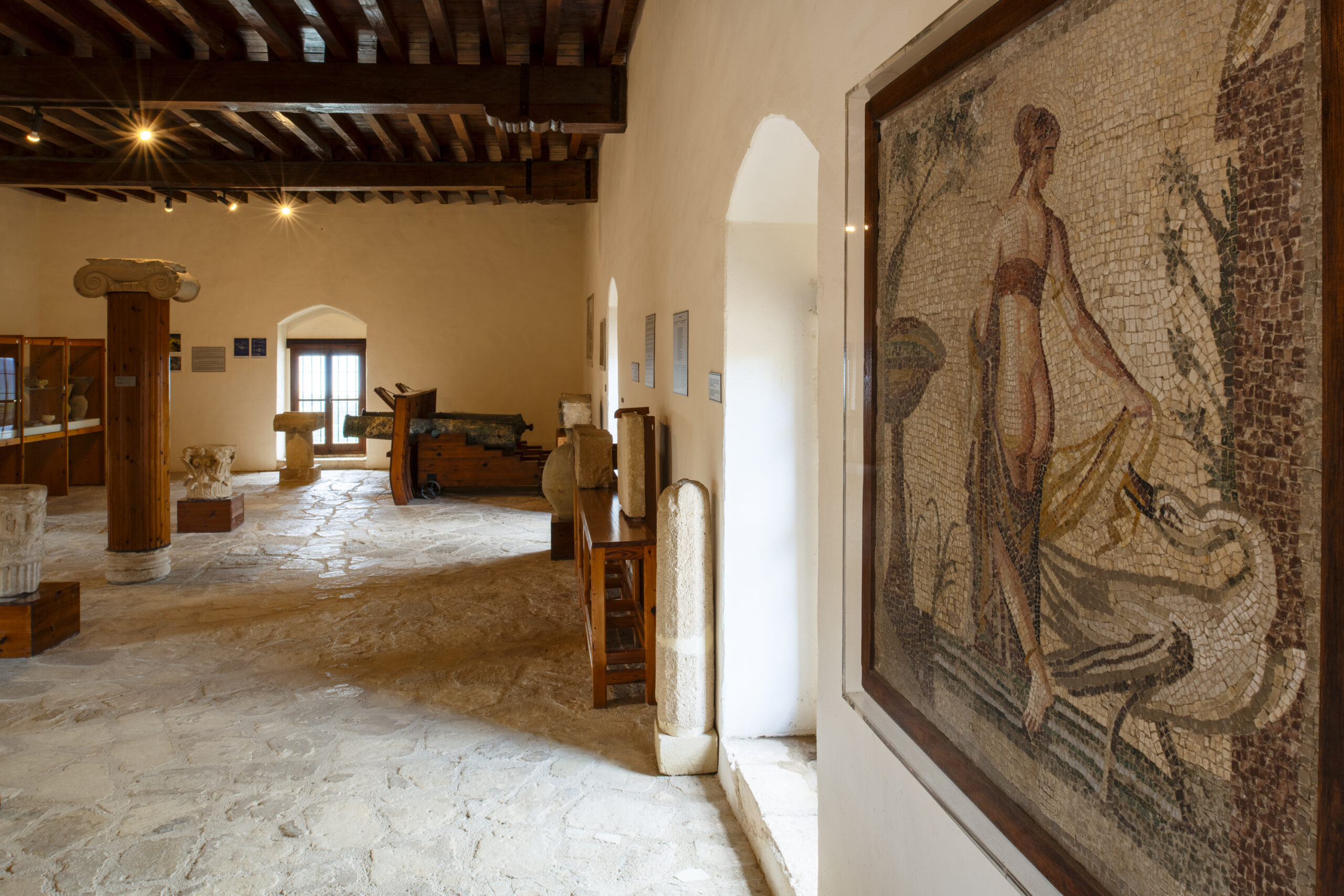
Today the mosaic is exhibited in the Local Archaeological Museum of Kouklia. The mosaic is another proof of the prosperity of the locals, moreover confirming the high quality of the mosaic workshops of Paphos.