DESCRIPTION:
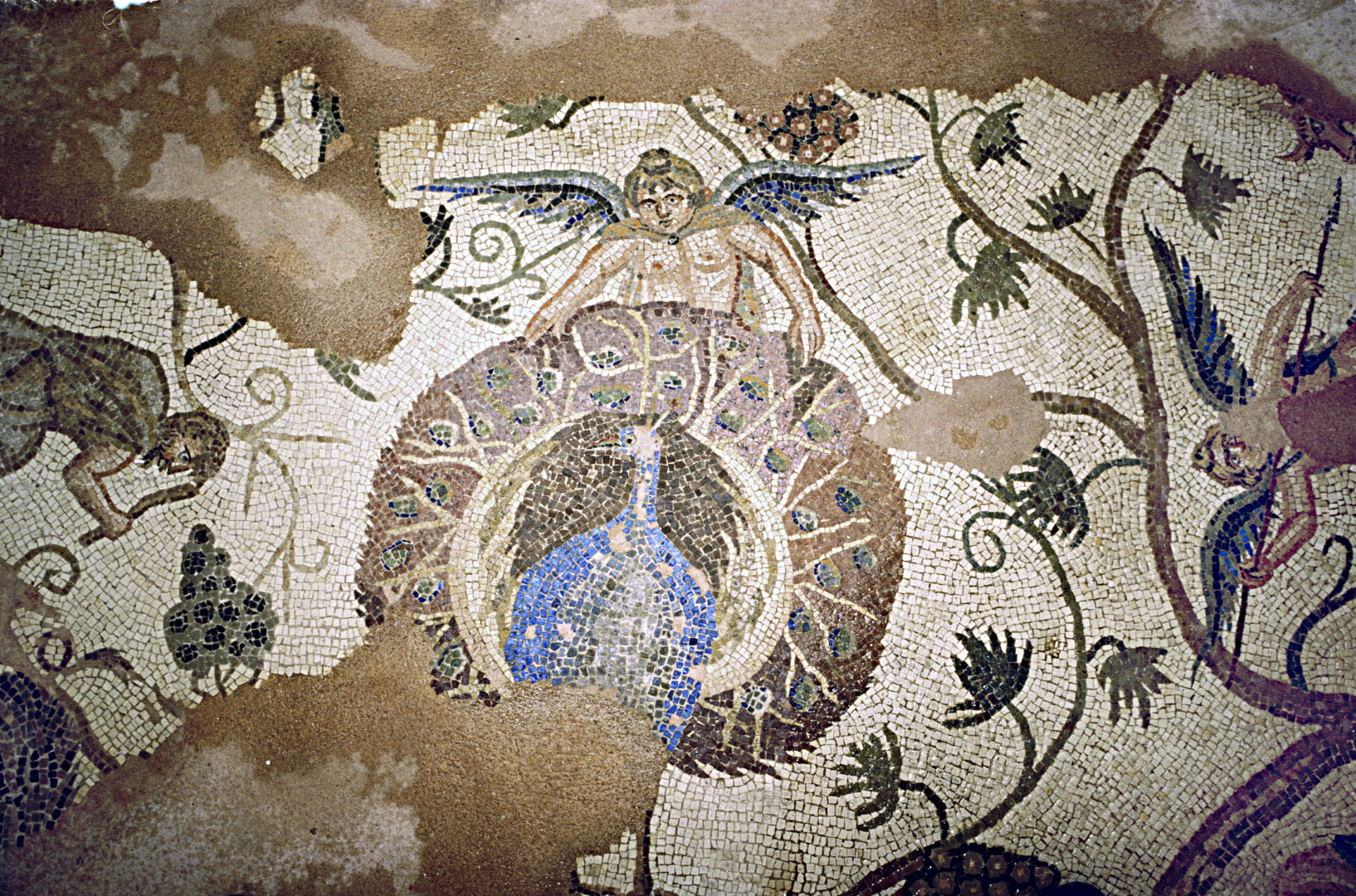
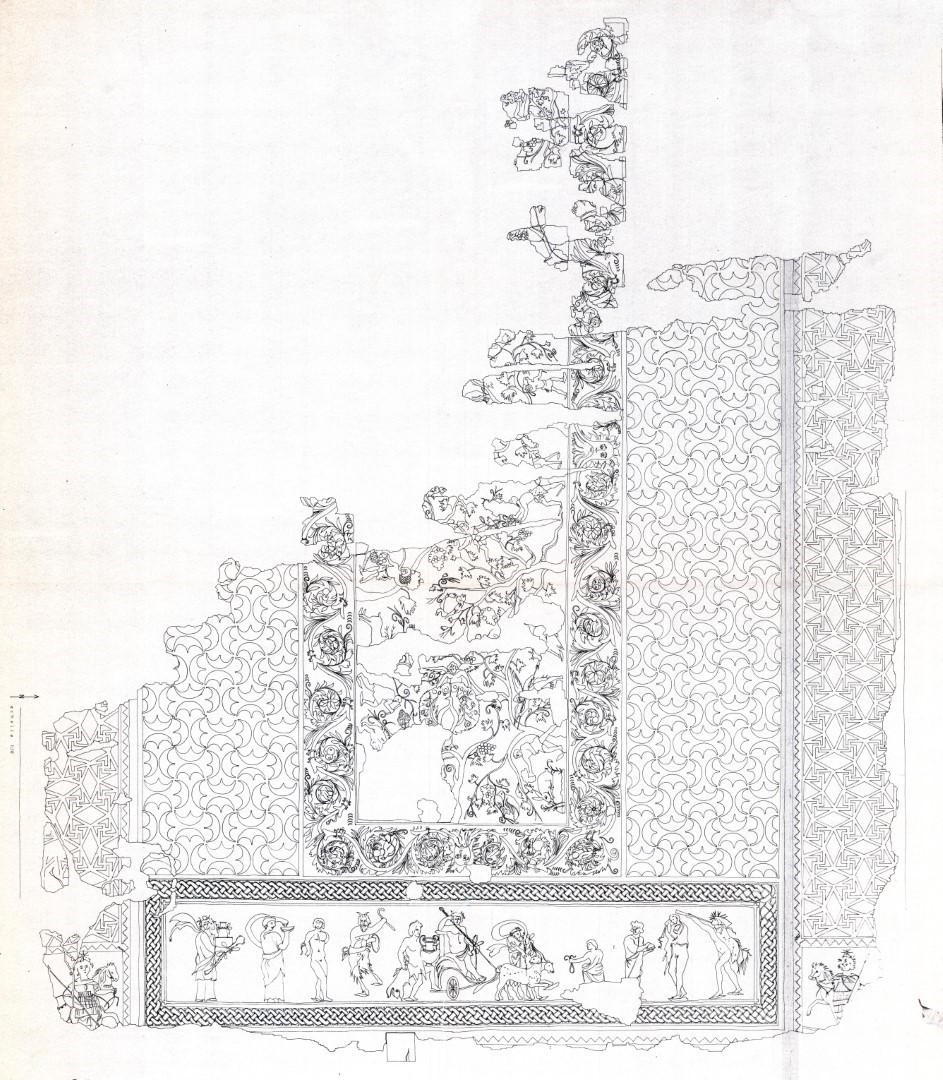
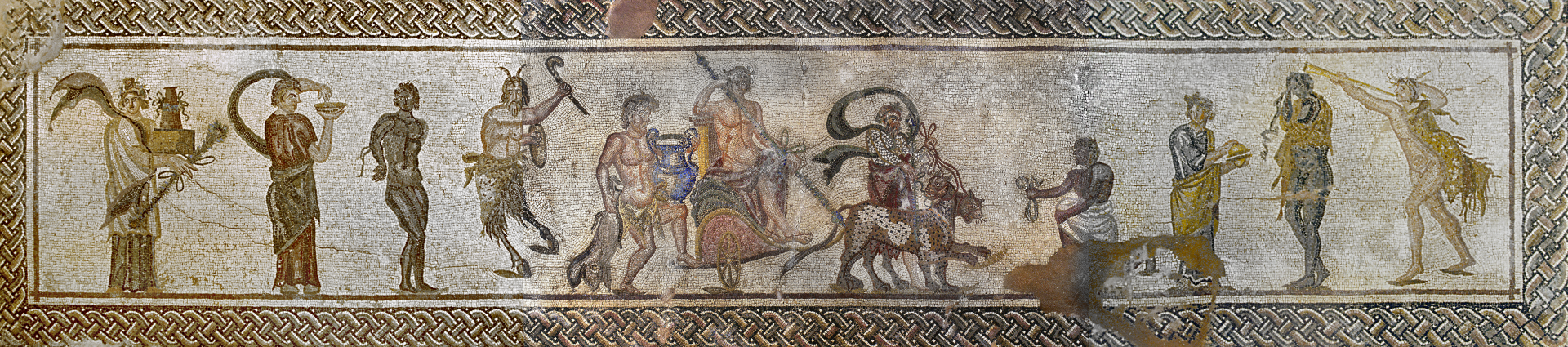
The size of the largest room in the house, the way it is covered with the mosaic floor as well as the elaborate compositions it contains show that it served as a reception room (tablinum) and dining room (triclinium). The long narrow panel in front of the entrance depicts the triumphal return of Dionysus from a military expedition to India. The god in the centre of the representation sits on a chariot drawn by two panthers and holds the thyrsus, a long stick with a conical head, covered with ivy leaves, which is his symbol. The procession includes the followers of Dionysus, such Silenus, the oldest follower, driving the god's chariot, the Satyr holding a wineskin, the forest god Pan with legs of a goat and Bacchantes. Among them, are two Indian slaves recognisable by their dark skin. Two small, square panels at either side of the entrance depict the twins Castor and Pollux in military clothes. The Dioscuroi, as they are known, brothers of Helen of Troy, had the property to protect guest and travellers. The central panel of the room, the largest representation in the house, is decorated with a complex composition formed by vines, within the branches of which hunting and harvest scenes are depicted. At the centre axis of the composition were peacocks, of which only one is preserved in good condition. It is shown frontally with his tail held open by a winged Eros.