DESCRIPTION:
The ancient theatre was an important part of social life in cities, hosting performances such as tragedies, comedies, and later, during the Roman period, animal fights.
The main parts of an ancient theatre were:
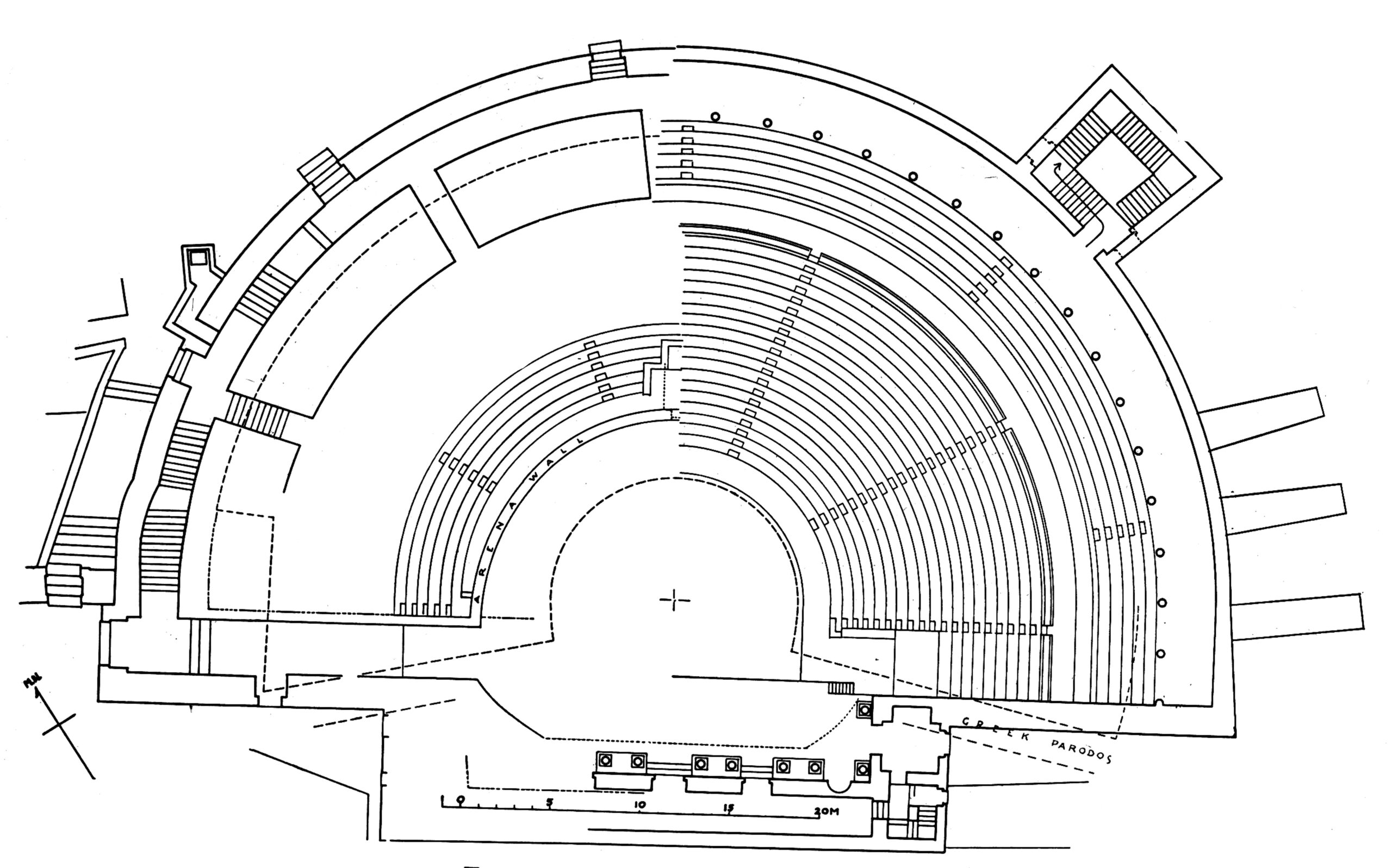
Koilon: The semicircular seating area where the audience sat. The seats were arranged on an incline so that all spectators had a clear view of the orchestra and the stage. The koilon was divided into horizontal seating rows, known as diazomata, and vertical seating sections, called kerkides.
Orchestra: The circular or semicircular area in front of the stage, where the chorus performed.
Skene : The structure behind the orchestra, serving as a backstage area for actors and storage for props. The skene typically had two or three doors for actors’ entrances and exits.
Parodoi : Two passageways on either side of the orchestra, via which the chorus and actors entered the orchestra area.
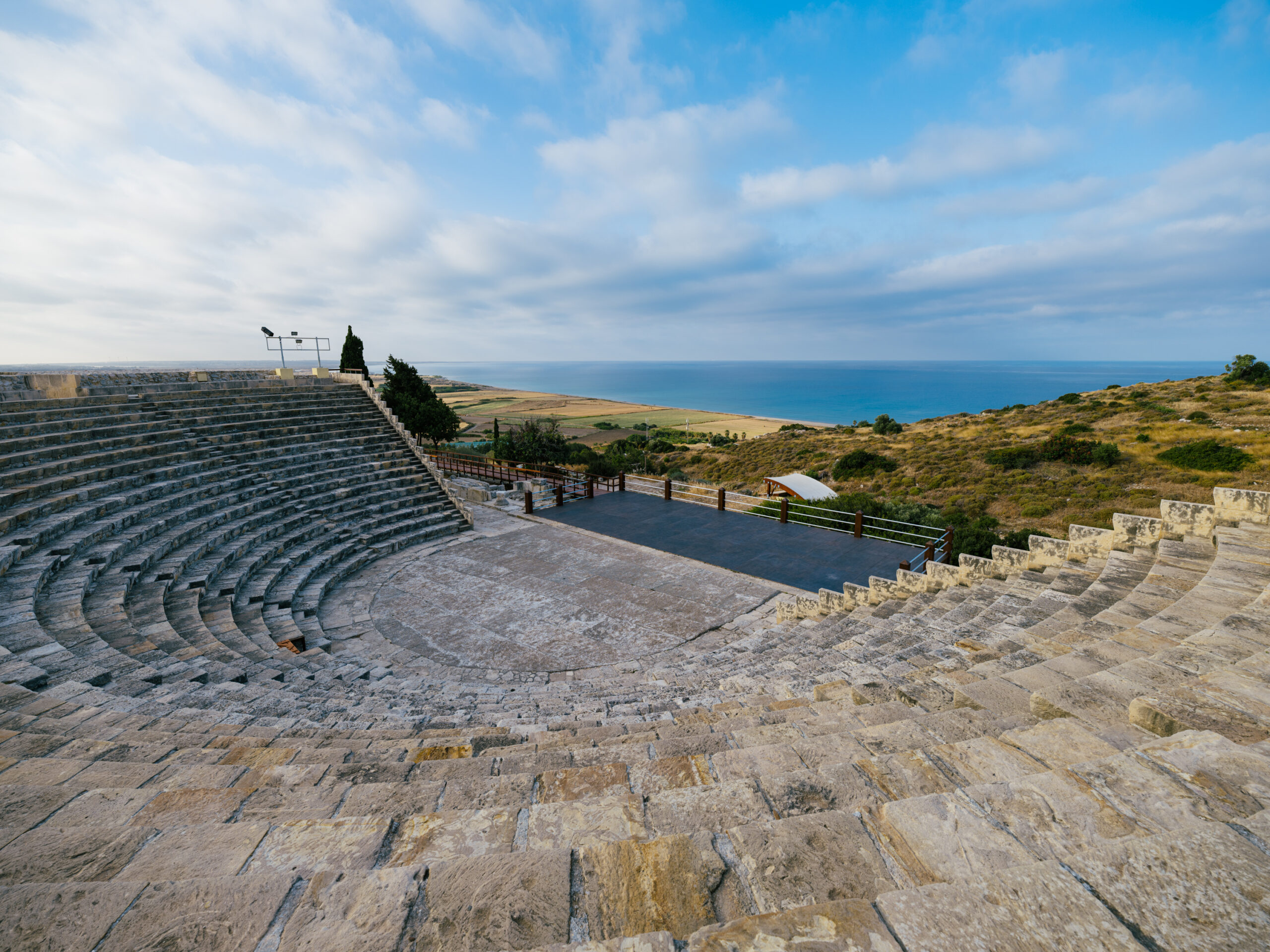
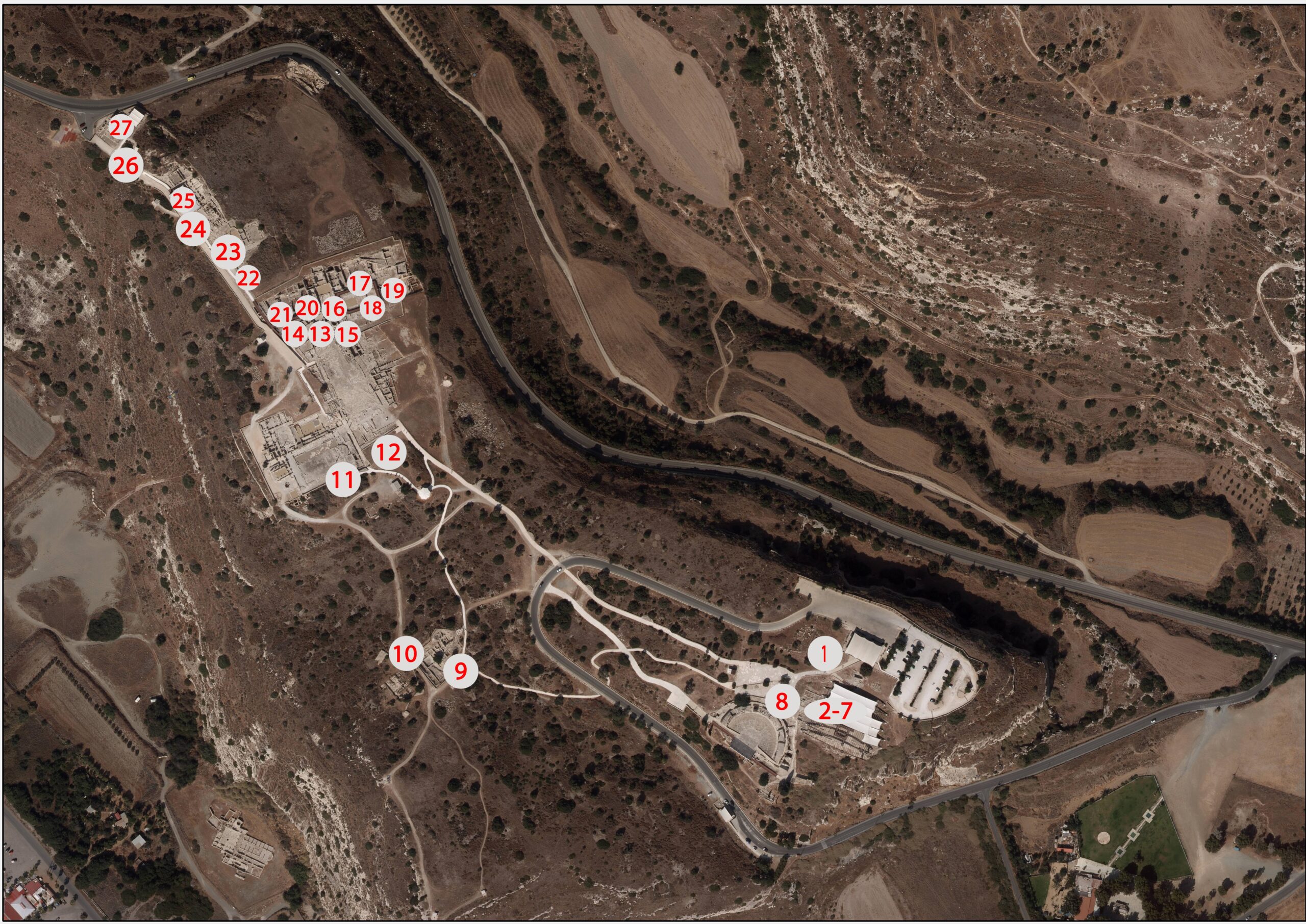
The theatre of Kourion is located at the southern edge of the city’s hill, near the eastern entrance known as the Amathus Gate. The builders took advantage of the natural slope, with the central part of the koilon (cavea), the orchestra, and a large part of the stage underlying structures of the scene fronts carved into the natural rock. The construction of the building relied heavily on the region’s abundant limestone resources.
The theatre is semi-circular in plan, with a diameter of approximately 62 metres. Its koilon contained seating tiers and could accommodate around 3,500 spectators. Audience movement was facilitated by a vaulted corridor at the back of the koilon and by five stairways. Two additional entrances between the stage and orchestra allowed access to the vaulted corridor. Above the final row of seats, a colonnade encircled the koilon at its highest point, forming a roofed arcade.
The stage building, of which only the foundations remain, initially rose to the height of the koilon, creating a tall backdrop.
The first construction phase of the theatre likely dates to the Hellenistic period (2nd century BC). During this period, the orchestra may have formed a complete circle, with the koilon covering an area exceeding 180 degrees.
The theatre appears to have suffered serious damage from a destructive earthquake in 15 BC, prompting repairs and modifications. According to an inscription on an epistyle, further restoration works took place around 64/65 AD, under Emperor Nero. In the 2nd century AD, the theatre took the form and dimensions we see today. The stage building was renovated with marble columns and cornices, buttresses were added to the east of the koilon and a staircase was built leading to the top of the koilon. By the late 2nd century AD, further changes mainly involved the decoration of the stage.
In the early 3rd century AD, the theatre was modified to accommodate animal fights, likely during Emperor Caracalla’s reign (214-217 AD). It has been suggested that the city was preparing to host the emperor on his way to Syria. In the latter half of the 3rd century AD, the theatre returned to its original use for dramatic performances.
The theatre was likely destroyed by the earthquake of 365/370 AD. After this earthquake and the theatre’s abandonment, the area was used as a source of building materials. Human activity in the abandoned theatre has been identified near and behind the stage until at least the 5th century AD.
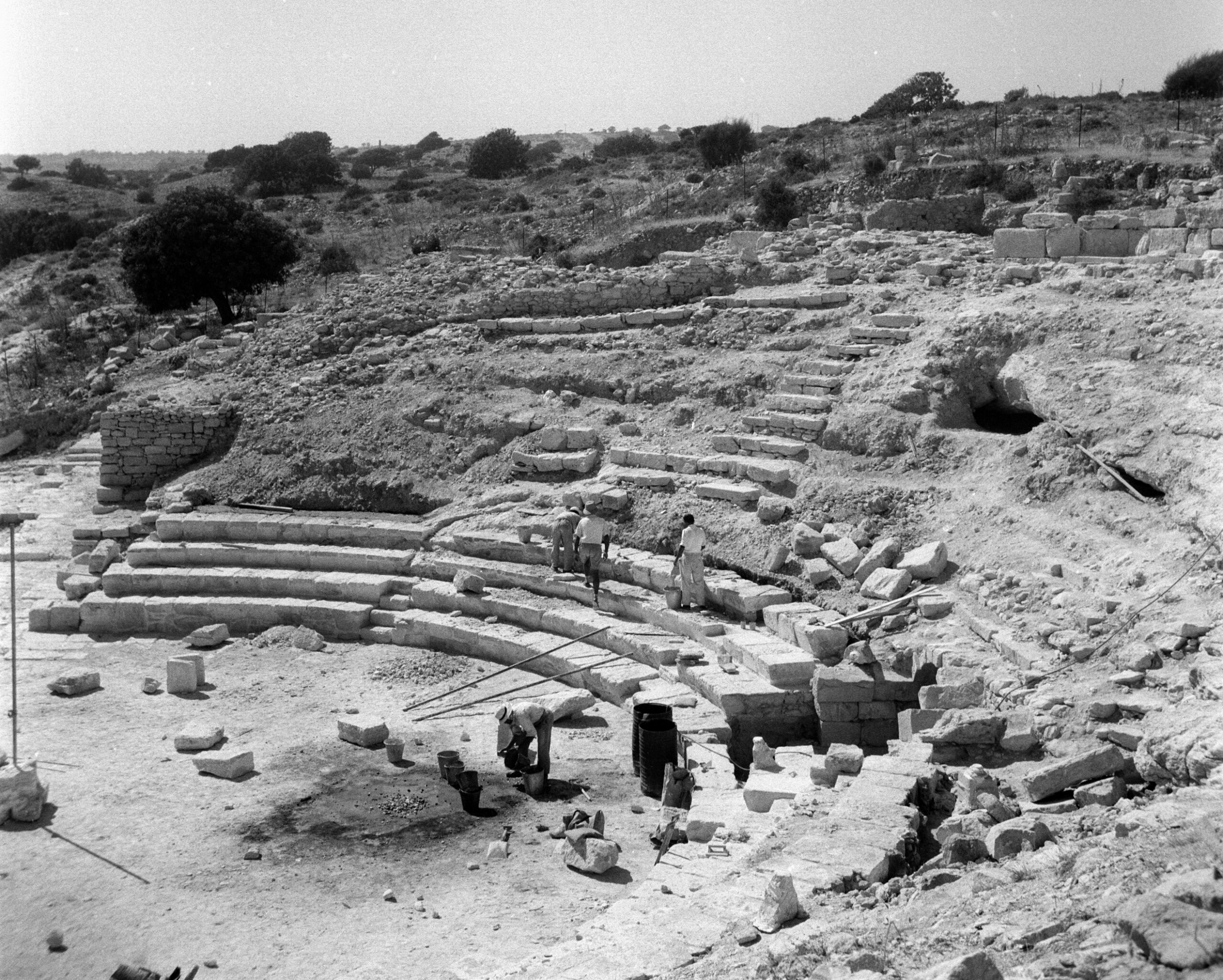
The current form of the theatre is the result of extensive restoration works conducted by the Department of Antiquities in the early 1960s.