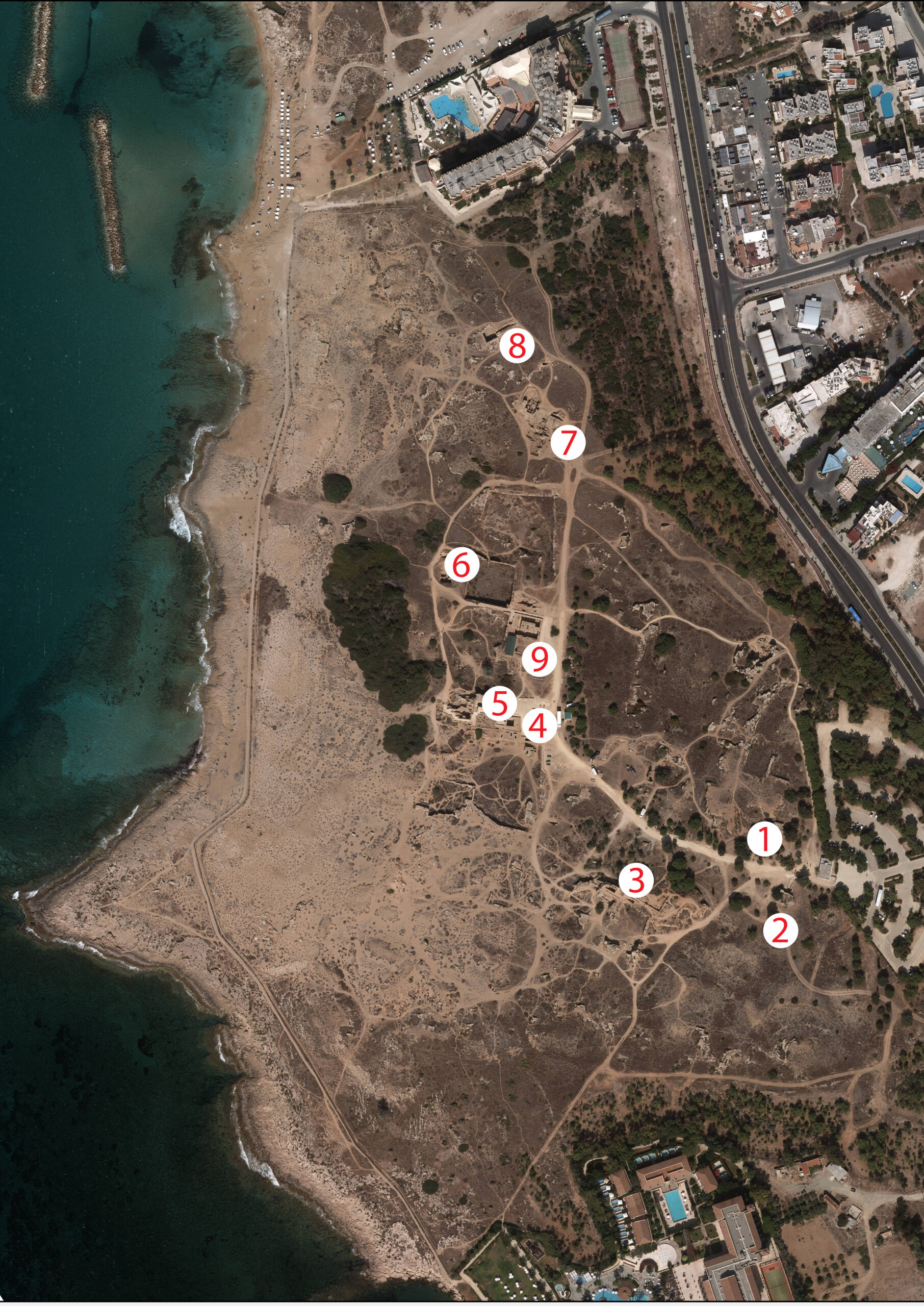
DESCRIPTION:
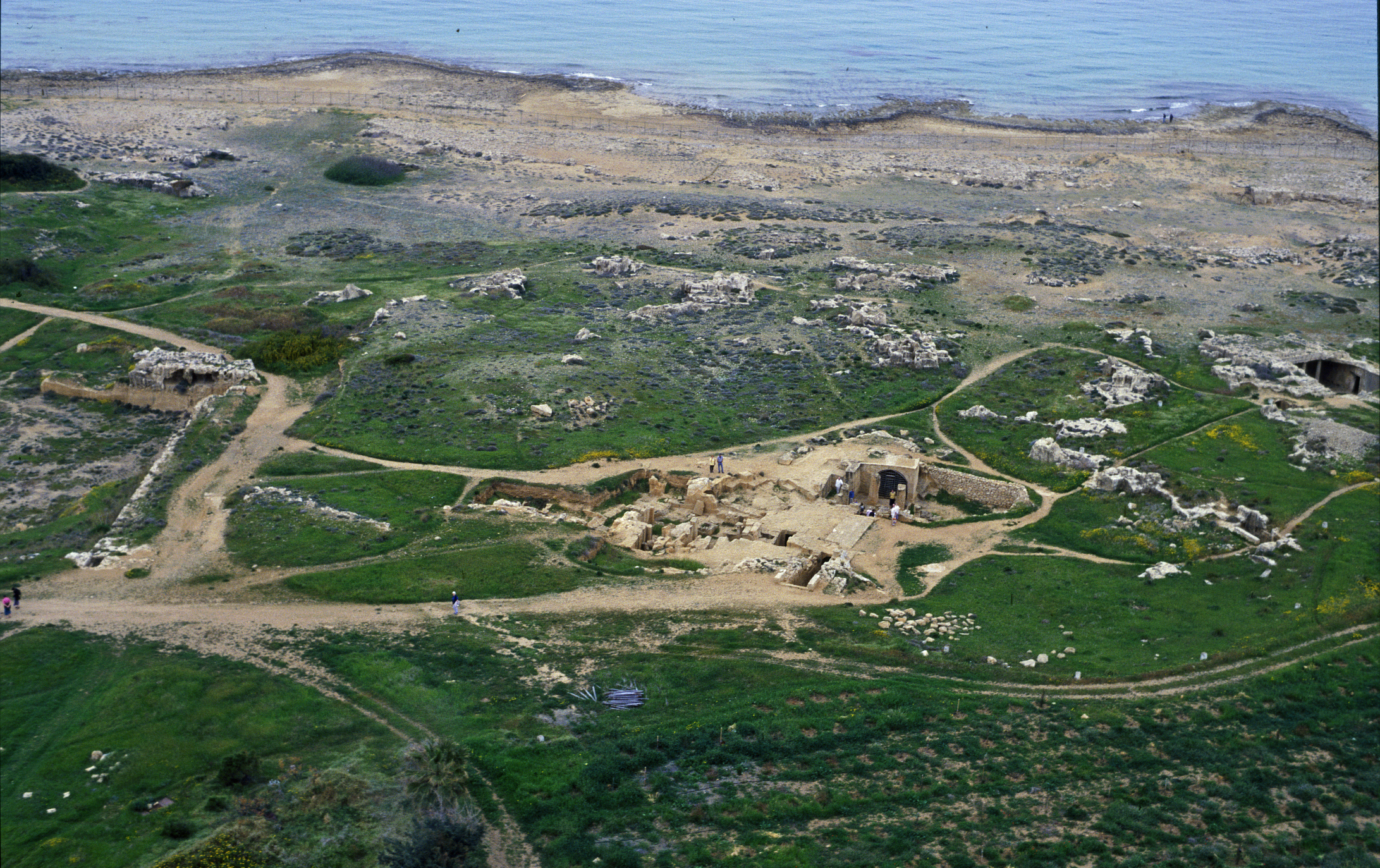
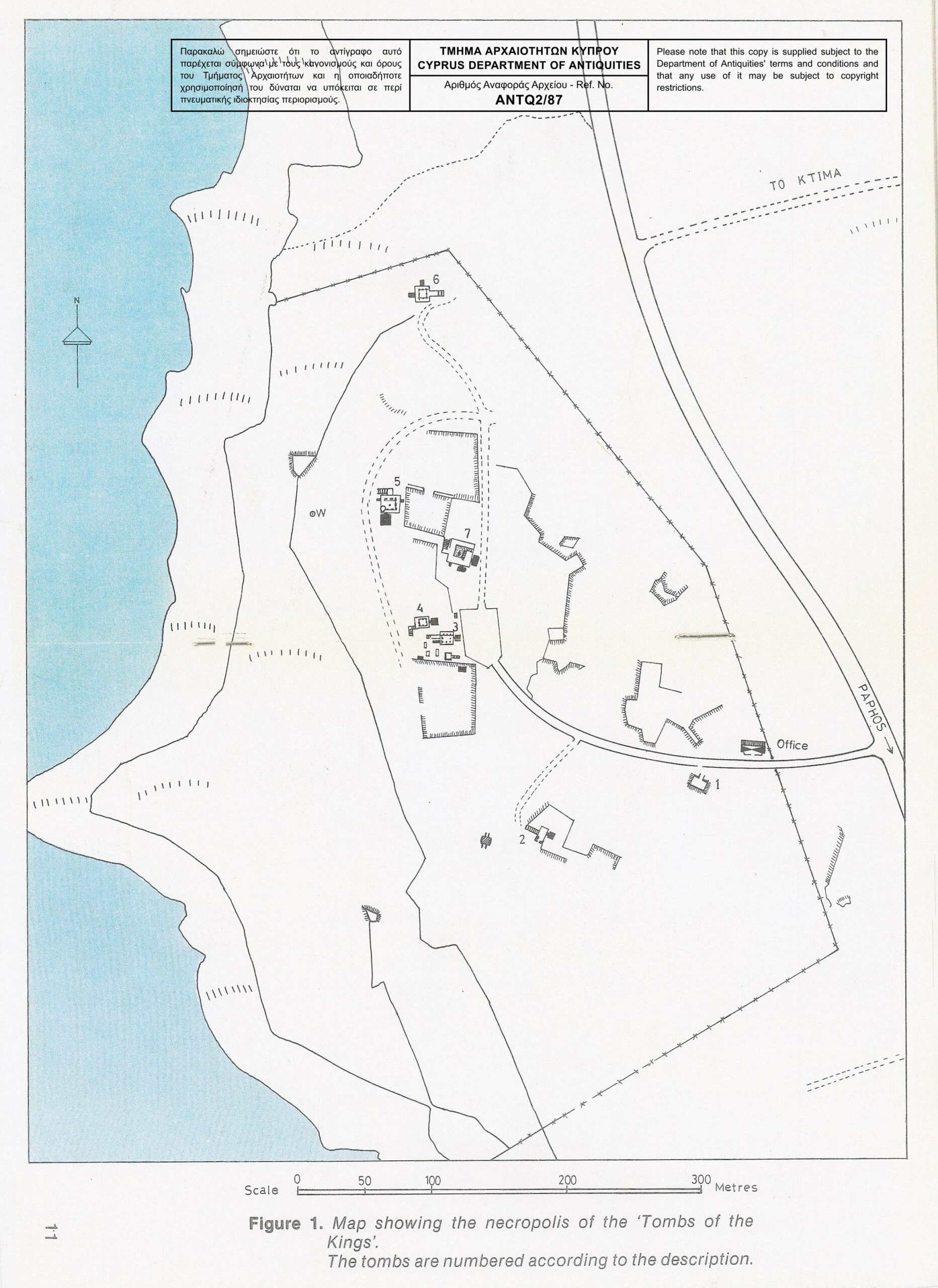
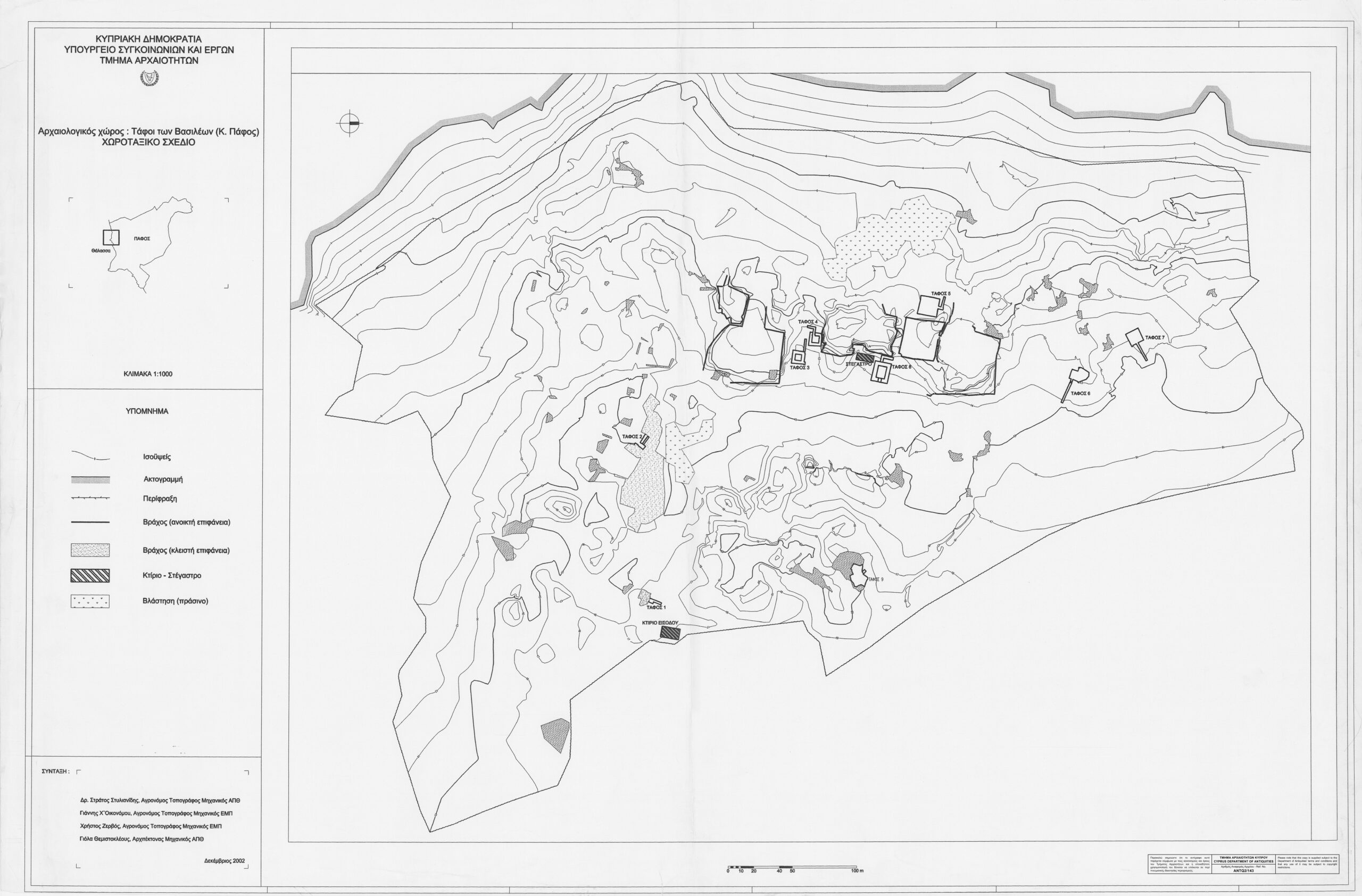
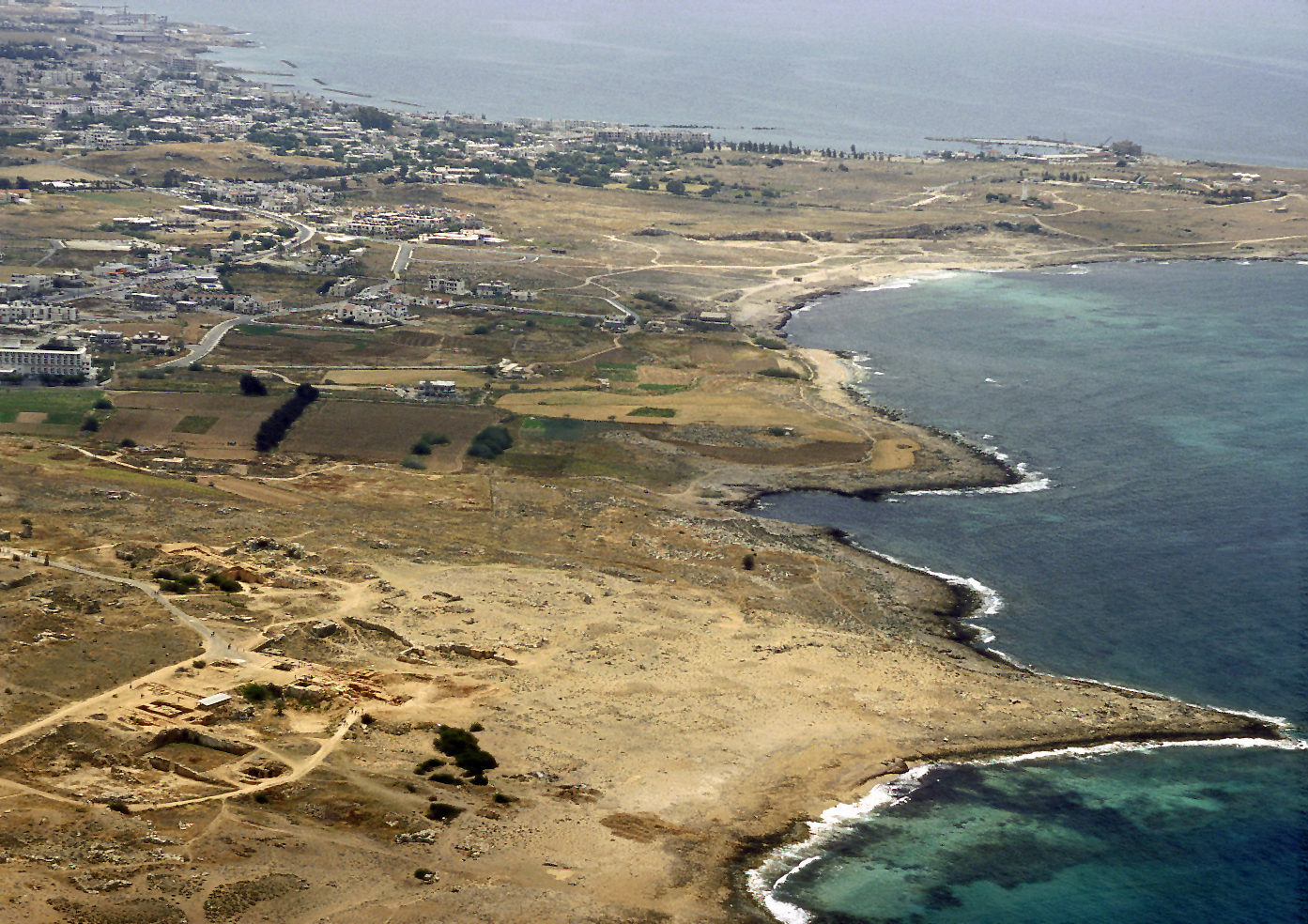
The ancient cemetery, known as the "Tombs of the Kings," is located outside the city walls, in the northern part of the necropolis of New Paphos. It consists of impressive burial sites carved into the rock, used during the Hellenistic and Roman periods (3rd century BC – 4th century AD). Although they are called the Tombs of the Kings because of their size and impressive construction, these rock-cut tombs, at least until recently, have not been proven to be related to any kings. It seems that they were burial places for Ptolemaic officials and the local aristocracy of Paphos.
The site was initially and during its use also used as a quarry, as evidenced by the clear notches on the rocks. Building material from the area was used to construct New Paphos, the island's new capital during the Ptolemaic and Roman periods.
Several tombs in the necropolis were modified and reused during the Roman period. Some burial complexes seem to have continued in use after the Roman period, specifically during the early Byzantine period, serving as underground spaces for the worship of early Christians. The northernmost tomb (tomb 7) is even known by the name "Palioekklisia" (Old Church), which supports the idea of its use as a place of worship. The use of the area is further confirmed during the Medieval period when certain tombs (e.g., tombs 4, 5, and 7) were repurposed as houses, workshops, and sheepfolds.
The findings suggest that each family had its own burial space, usually consisting of a rectangular enclosure with different tombs. Each individual's tomb was marked with grave cippi, but unfortunately, no inscription has ever been preserved.
Remains of offerings were found in front or on top of the tombs, indicating the burial customs of the time. Notable finds include the remains of burned birds and eggs, fruits, and nuts, placed in small vessels inside the tombs.
The tomb architecture imitates that of the houses, as known from similar monuments in Alexandria, Egypt. Each burial complex consists of a stepped dromos (the stone staircase leading to the interior of the tomb) and a central atrium, around which burial chambers provided with loculi are located. In the area, we additionally find pit graves and chamber tombs with one or two burial chambers. This site, along with the archaeological park of Kato Paphos, is included in the UNESCO World Heritage List.