DESCRIPTION:
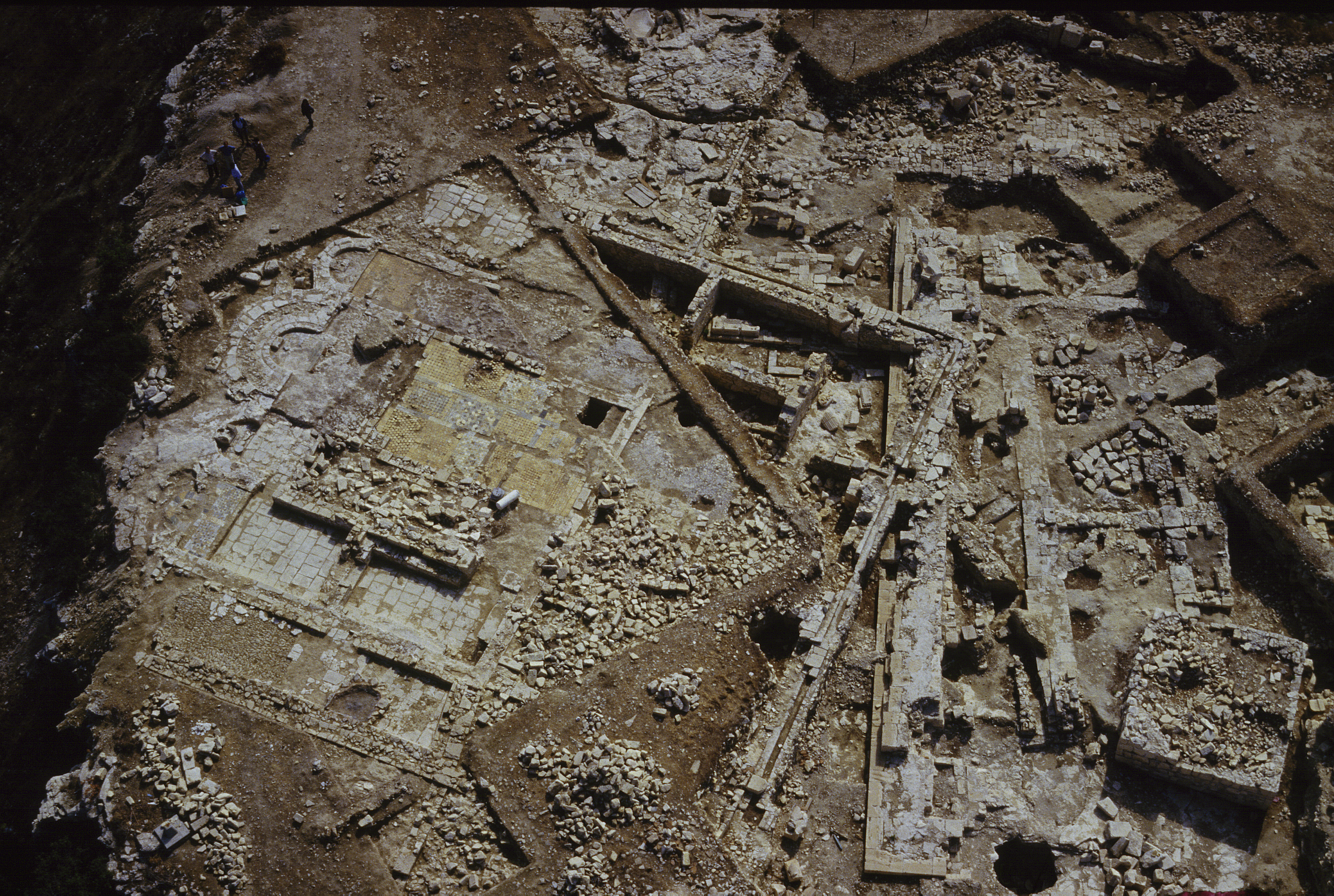
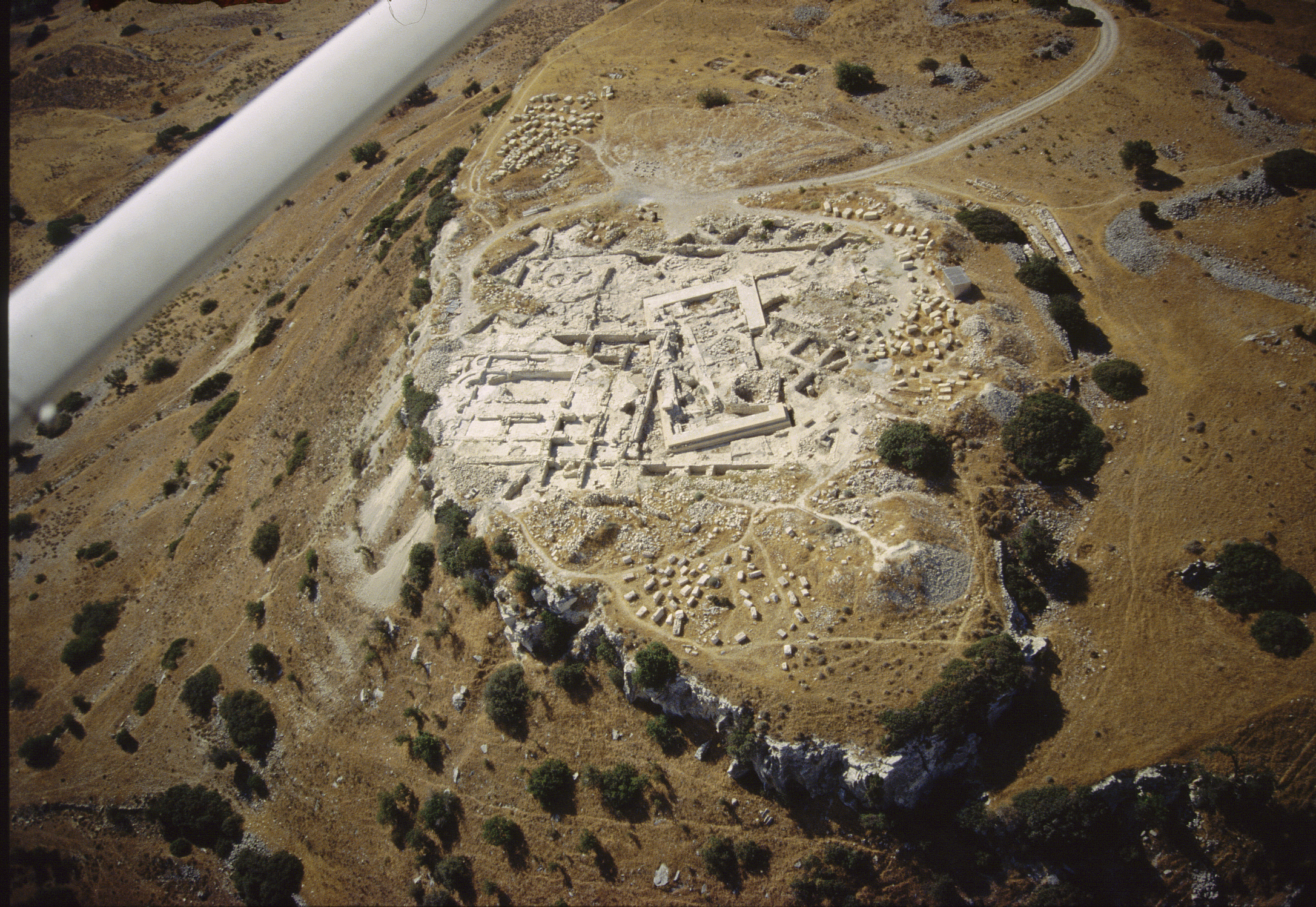
Towards the end of the 6th century, when Christianity became the official religion, a Christian basilica was constructed in the place of the former sanctuary. All structures related to the old religion were demolished, and their material was repurposed for the construction of the basilica.
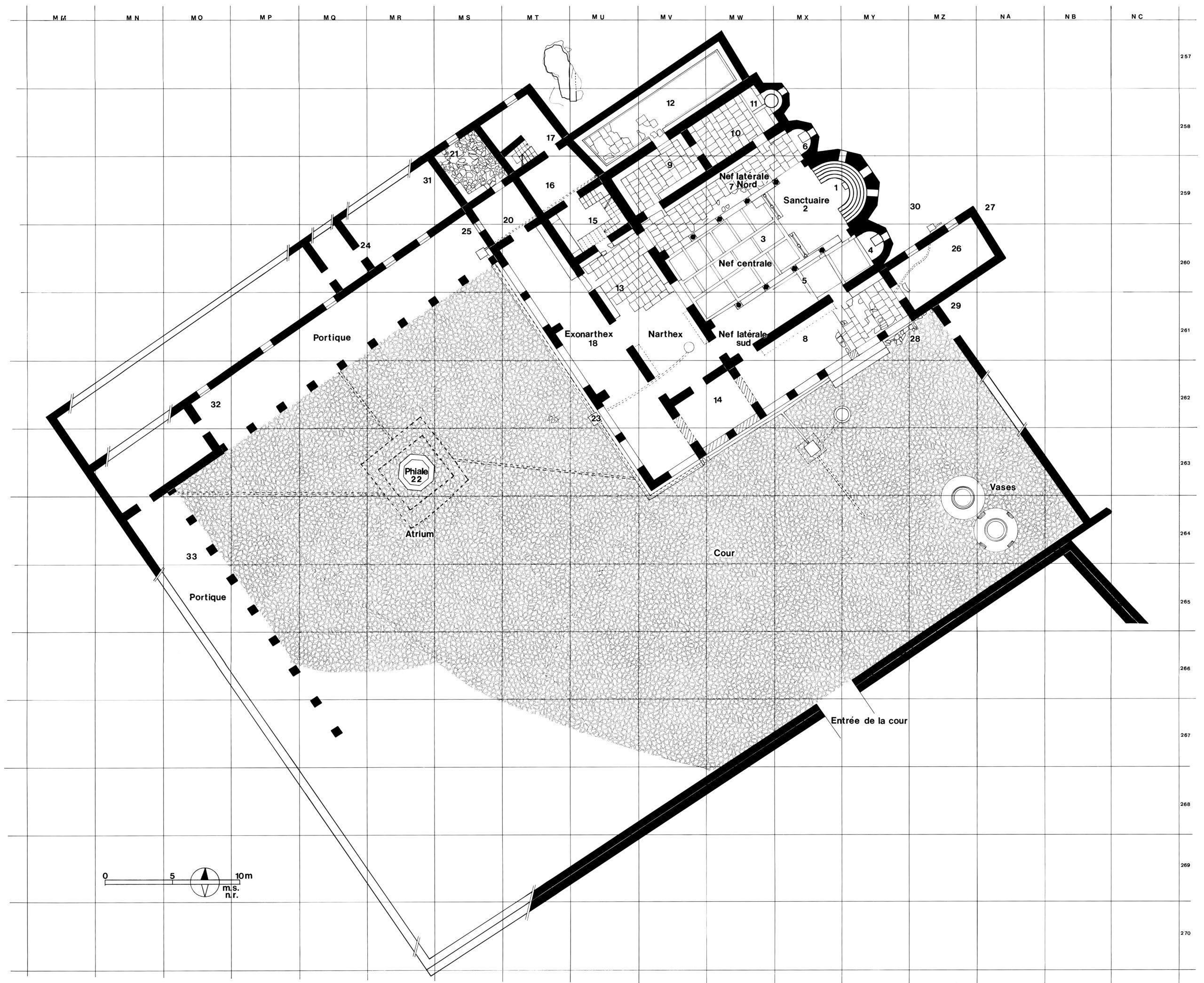
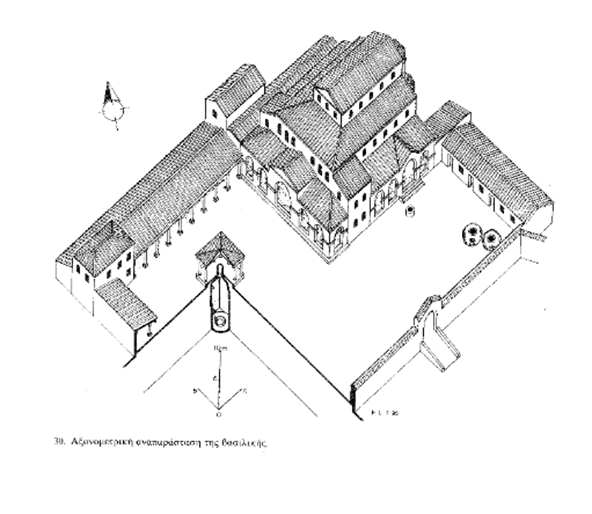
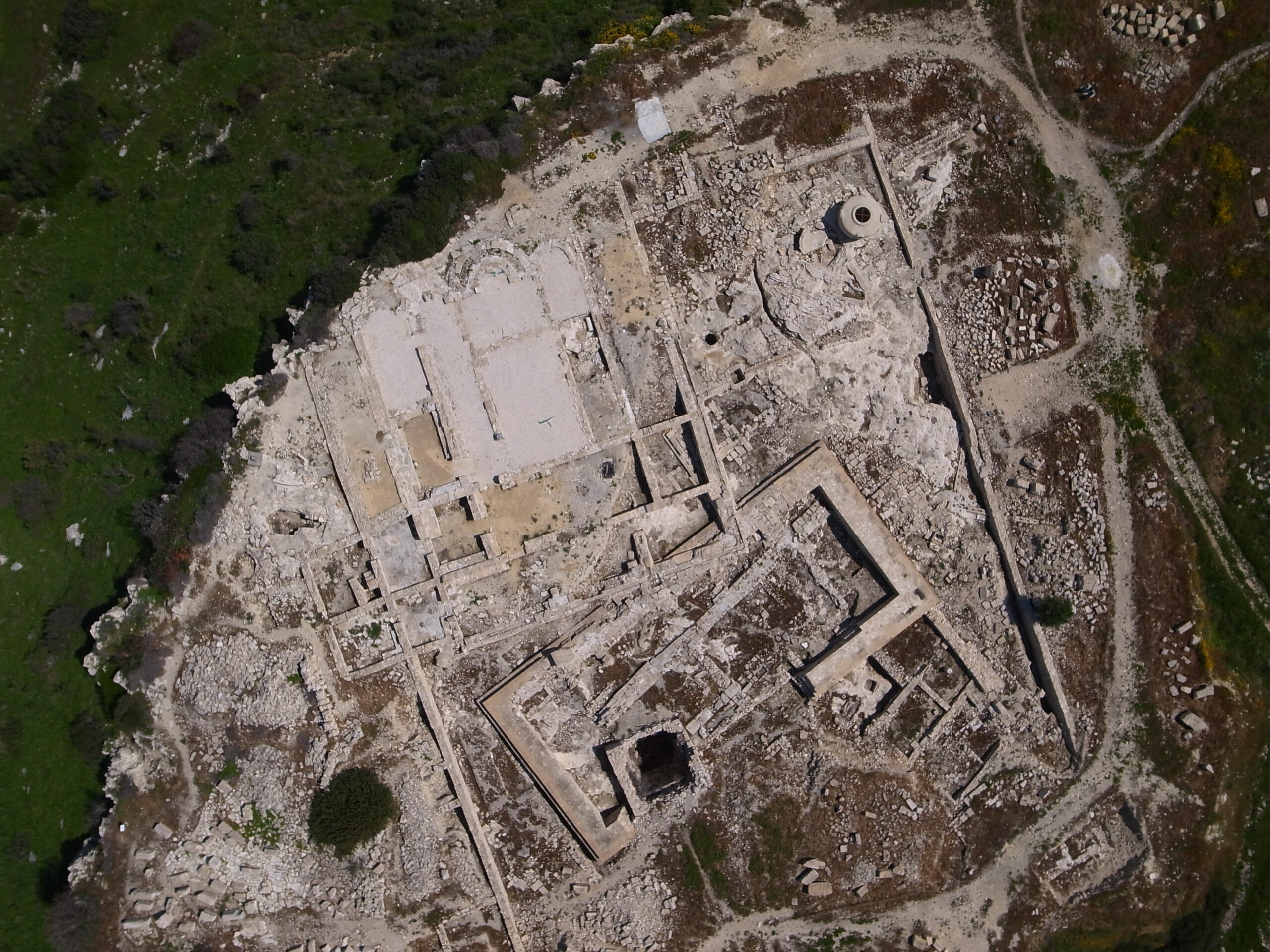
The basilica complex includes a large paved atrium, the “phiale” a cistern where worshippers washed their hands before entering, two stoas to the north and west, and the annex to the west. The entire complex is enclosed by a precinct that included the two large stone vases.
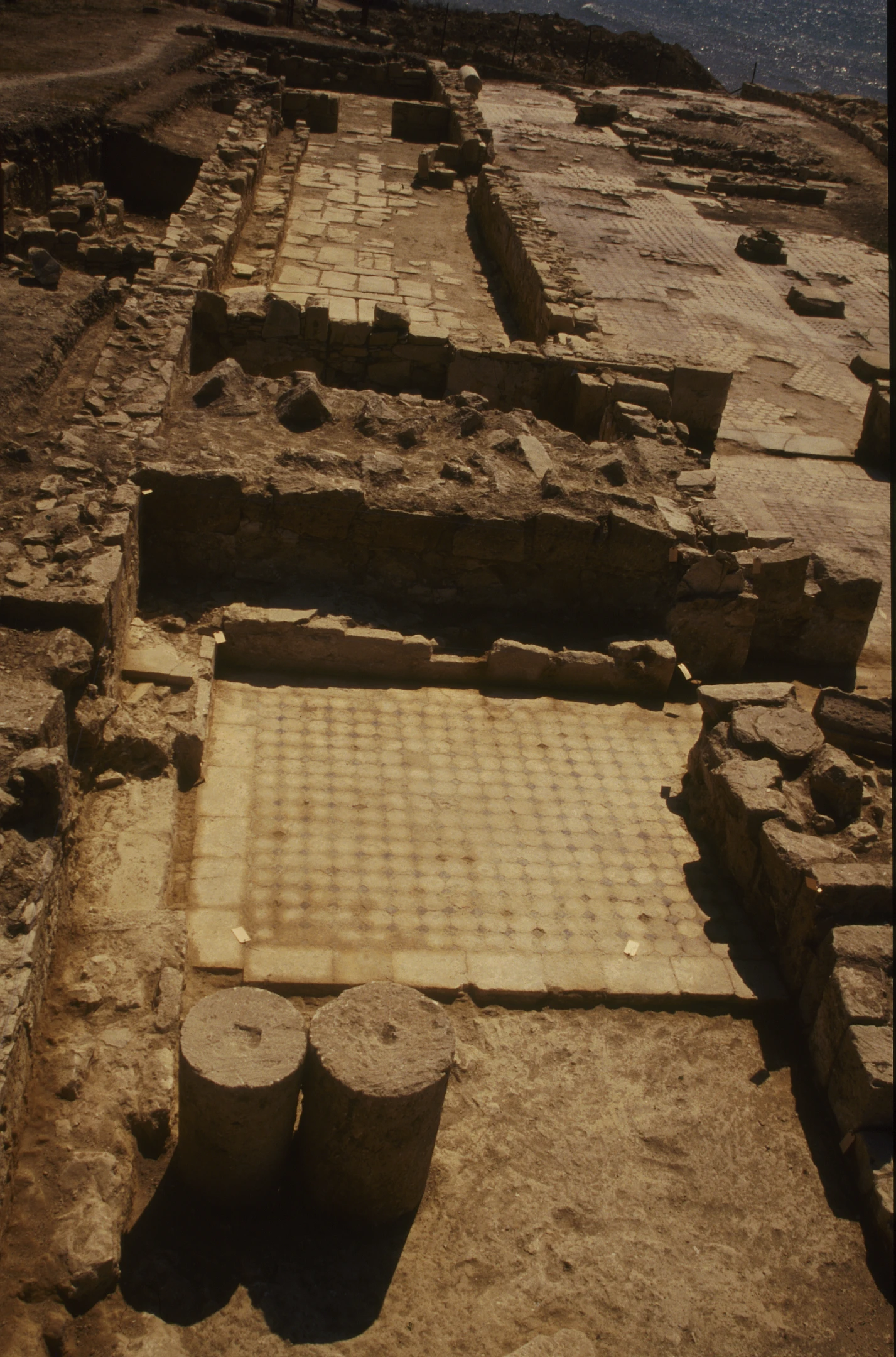
The basilica is three-aisled with a narthex, an exonarthex and two entrances, one to the south and the other to the west. The basilica's exonarthex was likely an open stoa, with its floor paved with limestone slabs. Three openings from the exonarthex lead into the narthex of the basilica. The narthex had a paved floor and benches on all sides.
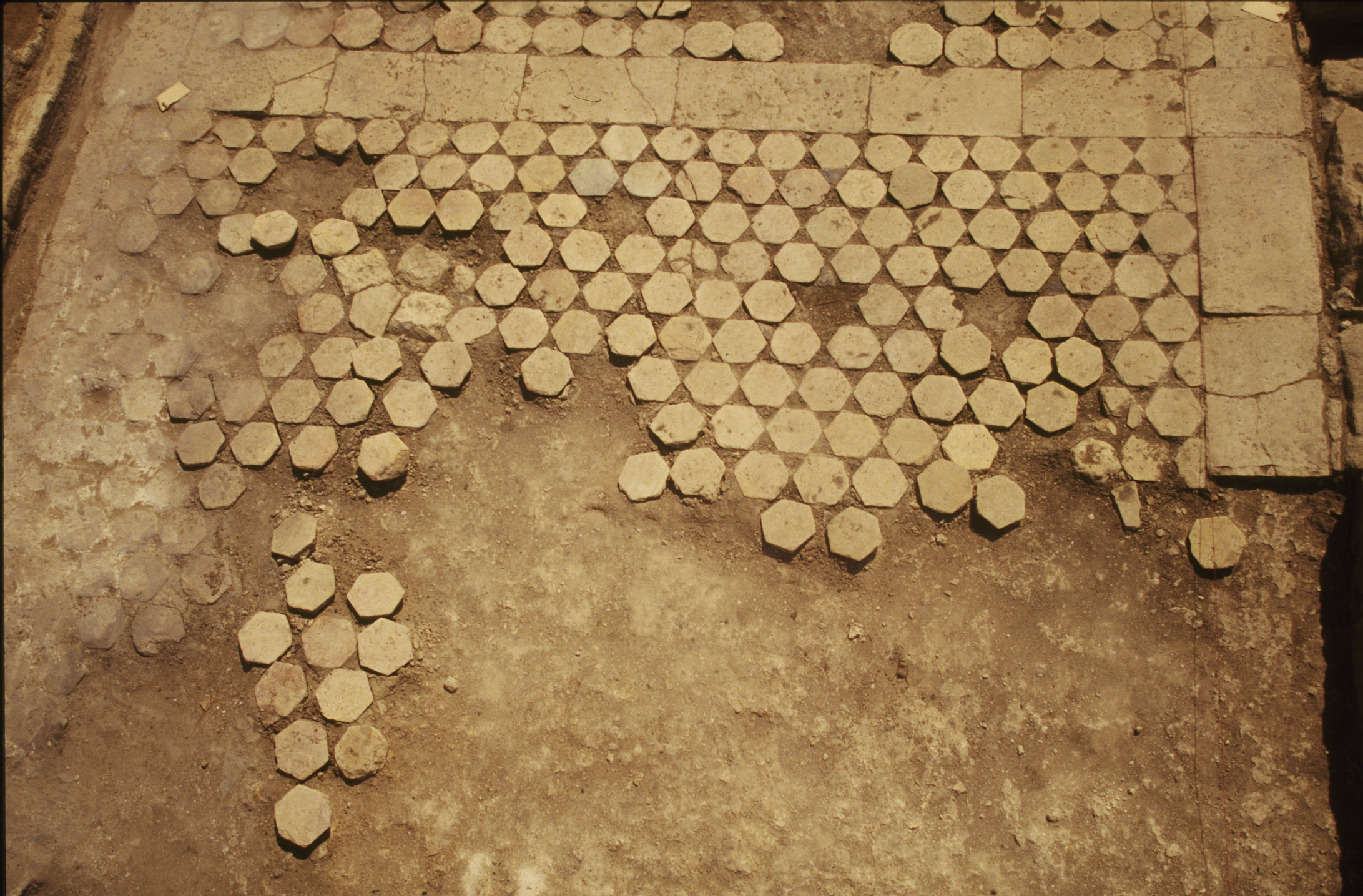
The entire floor of the central nave is richly paved with marble pieces (opus sectile) in various shapes and colours, some featuring relief decorations. Similarly, the floor of the south aisle contains marble pieces, similar to those in the central nave. In contrast, the floor of the north aisle is paved with gypsum slabs, and the walls were likely painted in red and green.
The chancel of the basilica was slightly elevated, and part of the floor was covered with Proconnesian marble slabs. The altar table has not been preserved, but it was originally placed under the apse, covered with a ciborium supported by small pillars. Additionally, beneath the central apse, the synthronon with the episcopal throne, decorated with white and black marble, remains intact. Numerous fragments of glass tesserae attest to the existence of a mosaic in the semi-dome of the apse.