DESCRIPTION:
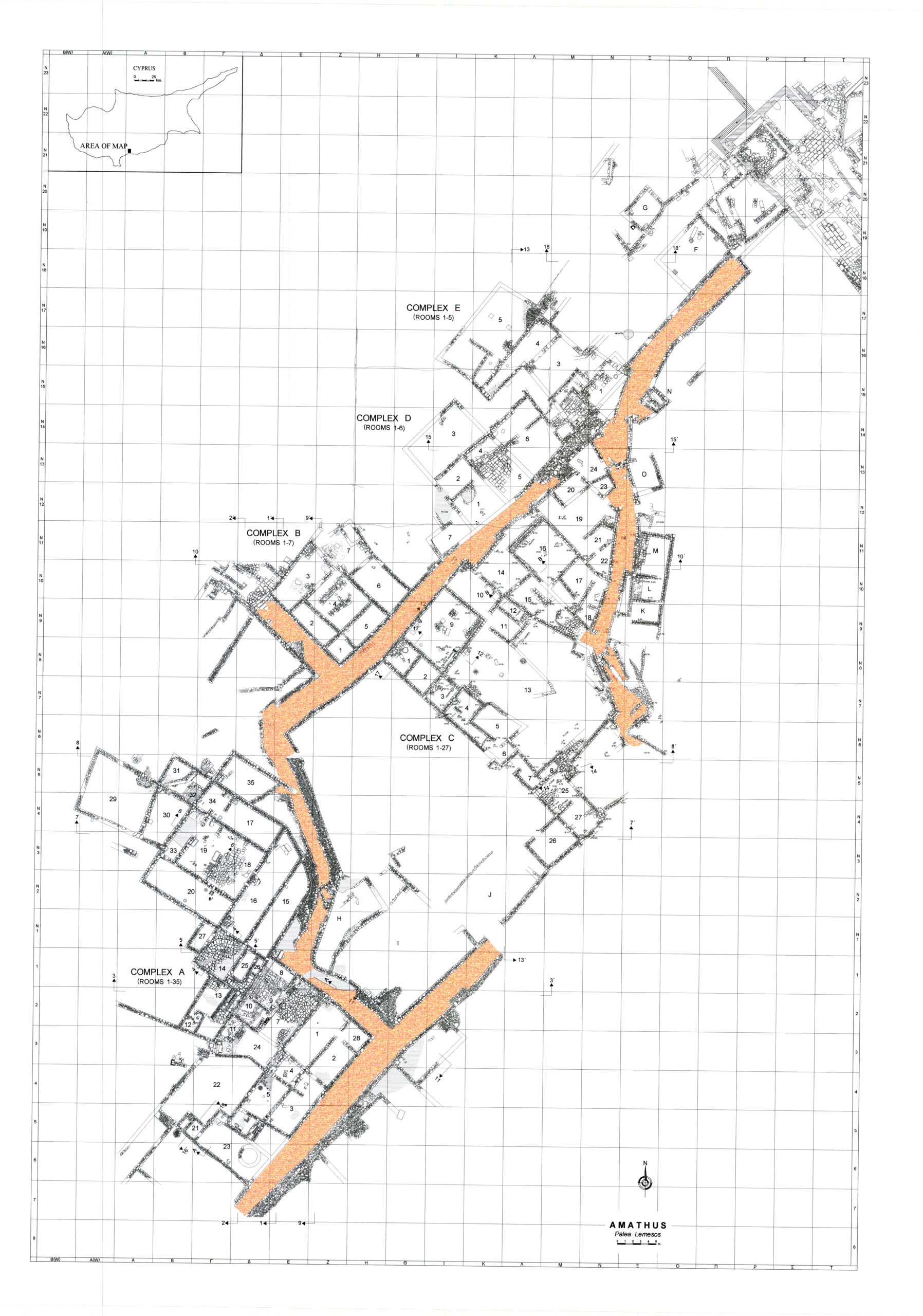
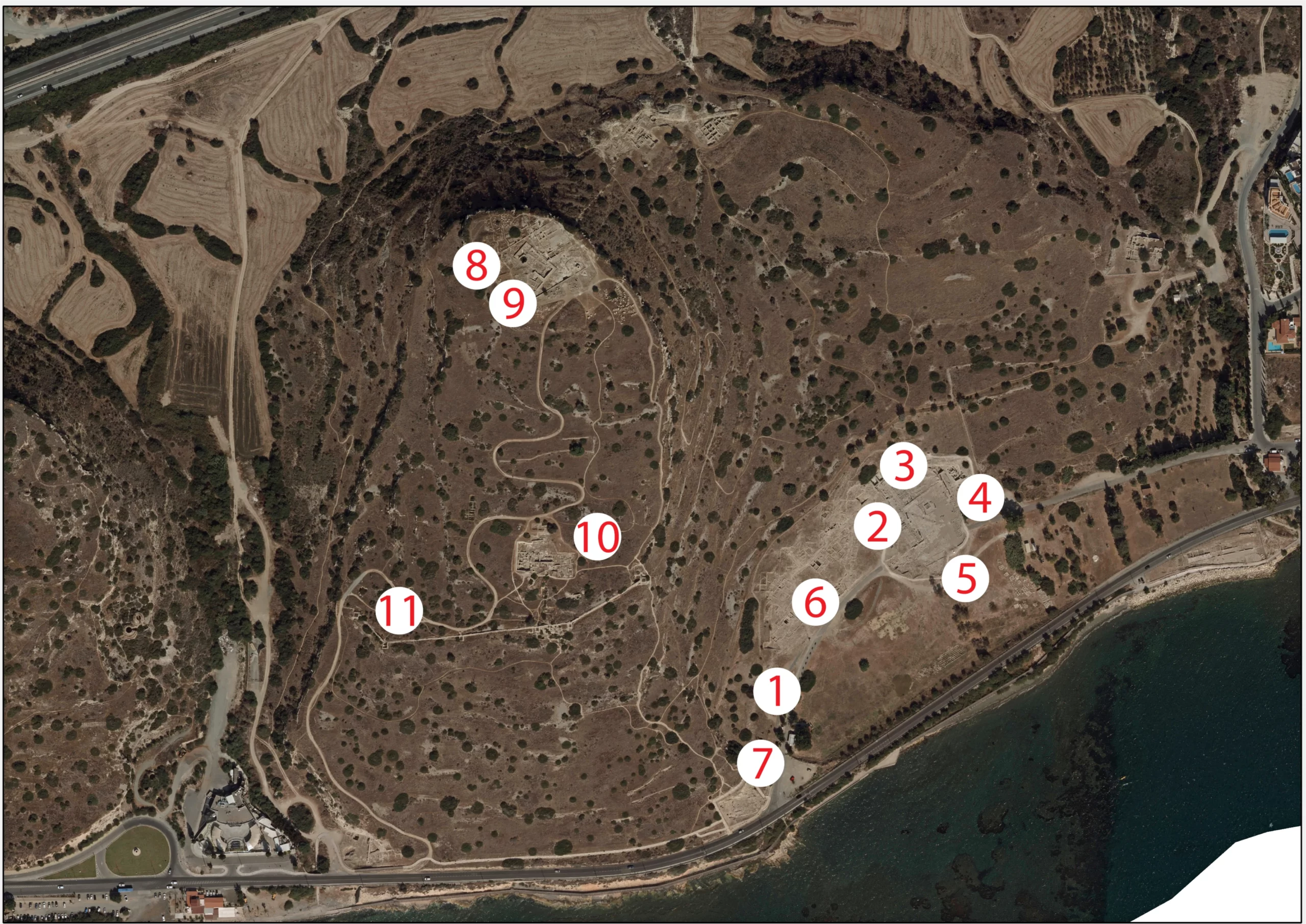
To the southwest of the agora, excavations revealed building complexes that formed the "lower city," the neighbourhoods of Amathous. Small passageways connected these neighbourhoods to the main road running along the southern side of the city.
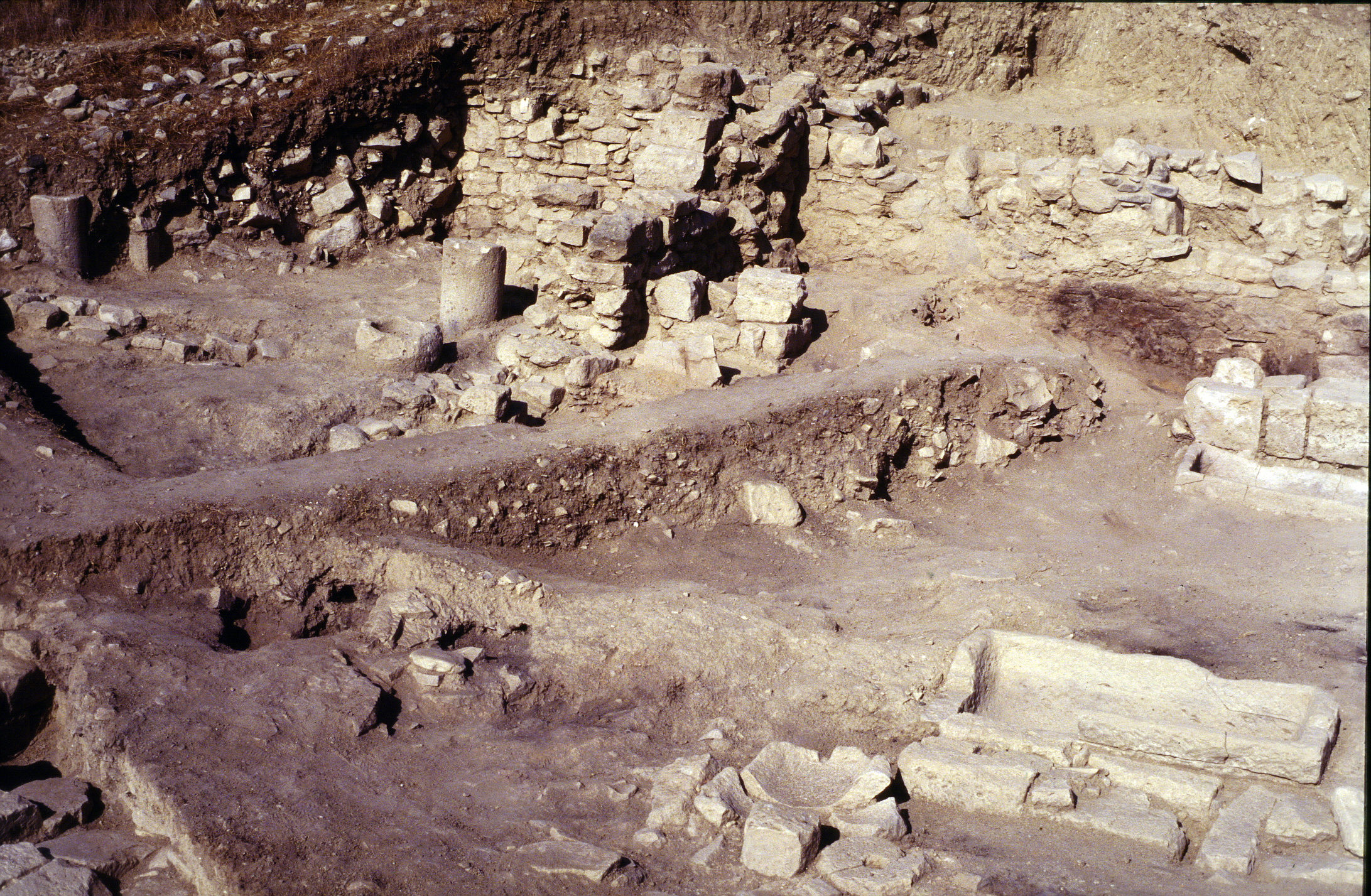
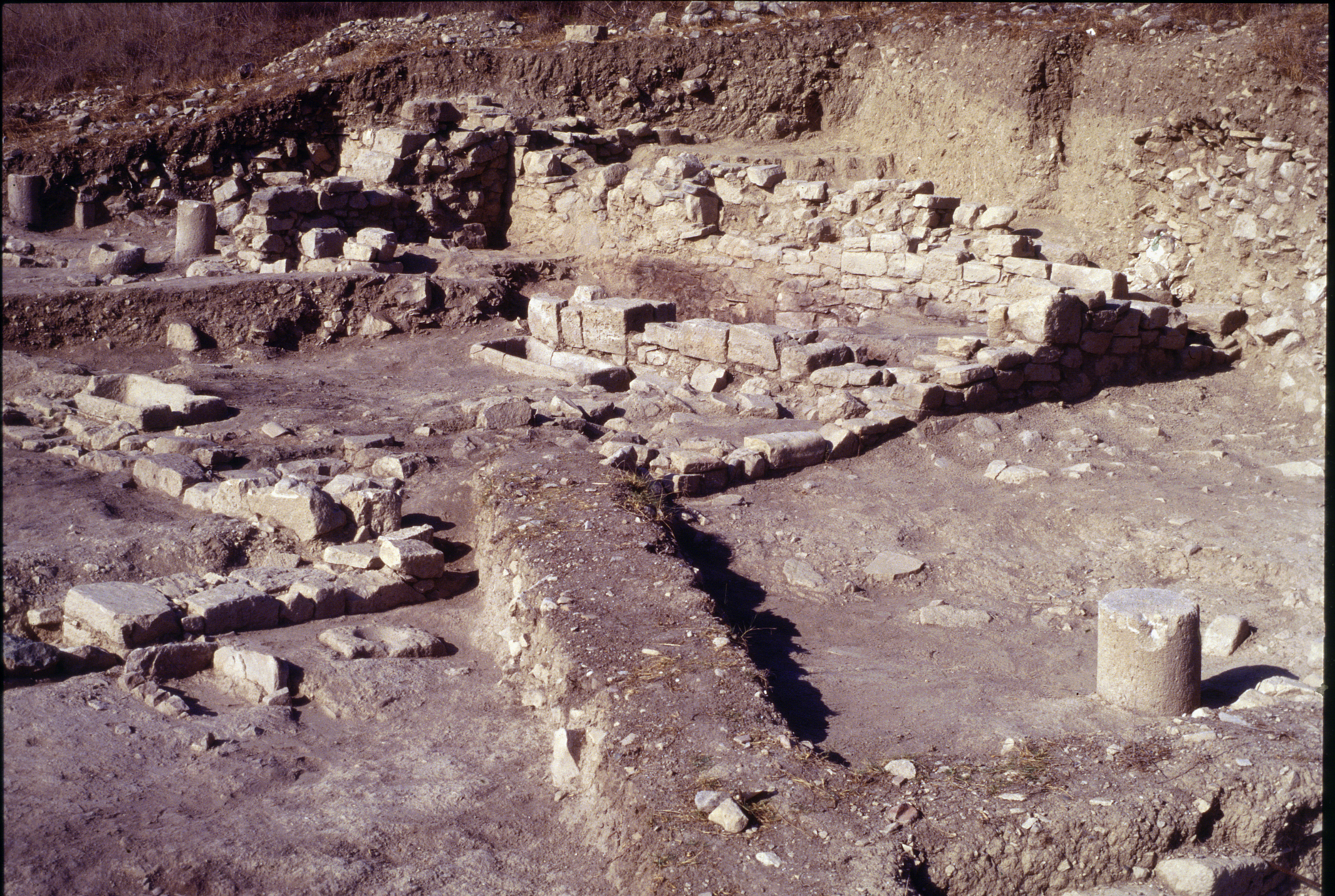
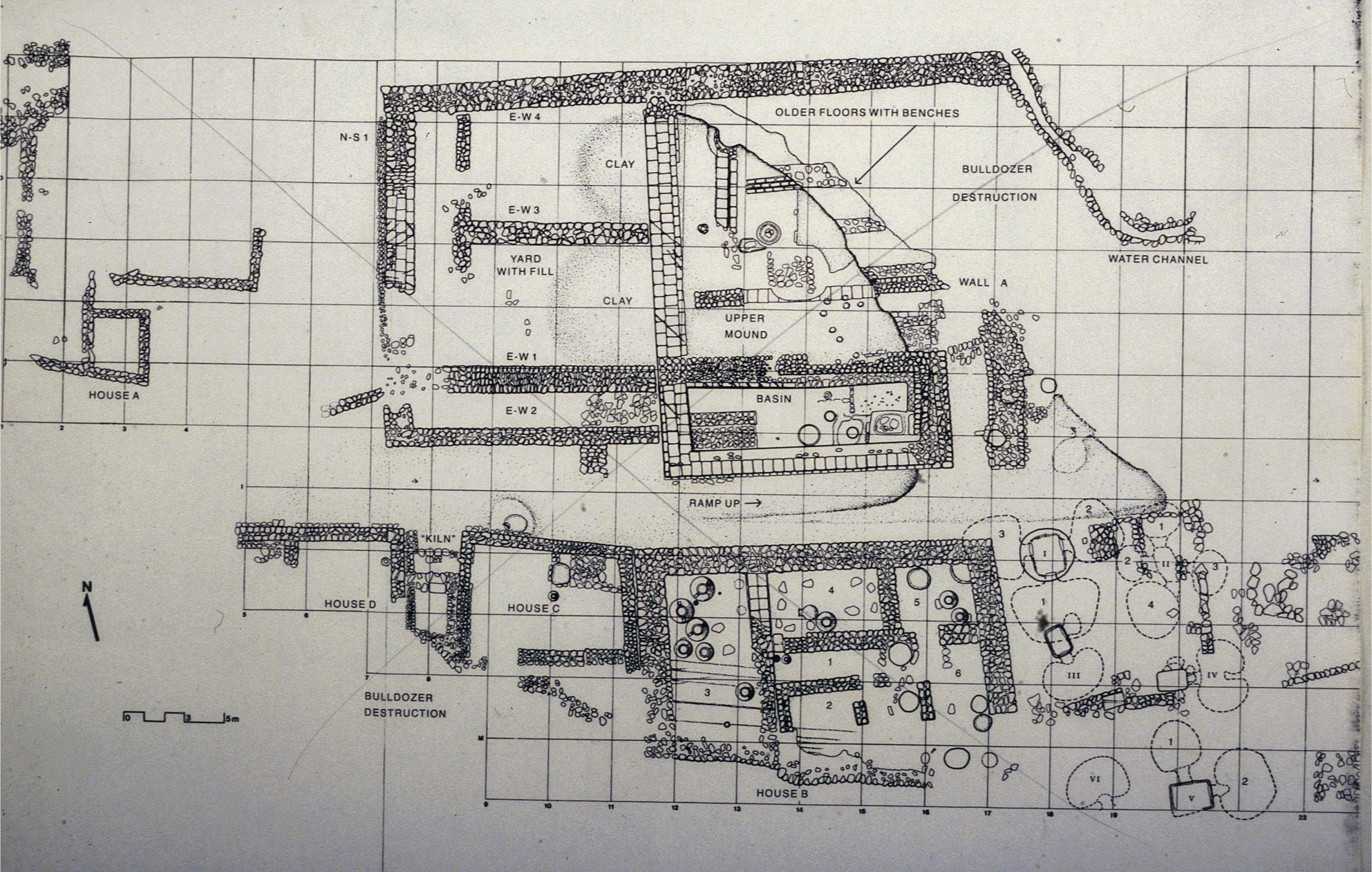
To the southwest, a building complex appears to have administrative purposes consisting of three levels. This complex dates from the 1st to the 7th century AD. The first and lowest level consists of six rooms, some of which were used as storerooms. One room contained a well and some stone basins. A staircase leads to the second level, which features a spacious paved entrance hall and four rooms with benches. From the entrance hall, another staircase leads to the uppermost level, comprising of nine rooms. Excavations on this level uncovered paved floors, various pottery, an amphora, and a bronze vessel. Notably, a pithos was found embedded beneath the paved floor, with its mouth protruding. Some rooms on this level also revealed traces of hearths and two stone basins.
Further to the north, adjacent to the agora, another large complex of houses was uncovered, dating from the 8th century BC to the 7th century AD. In some rooms, mortars have been preserved, with a few featuring decorative designs. Other buildings within the complex retain paved floors, while a structure near the agora preserves the base of an arch that once connected its eastern and western walls.