DESCRIPTION:
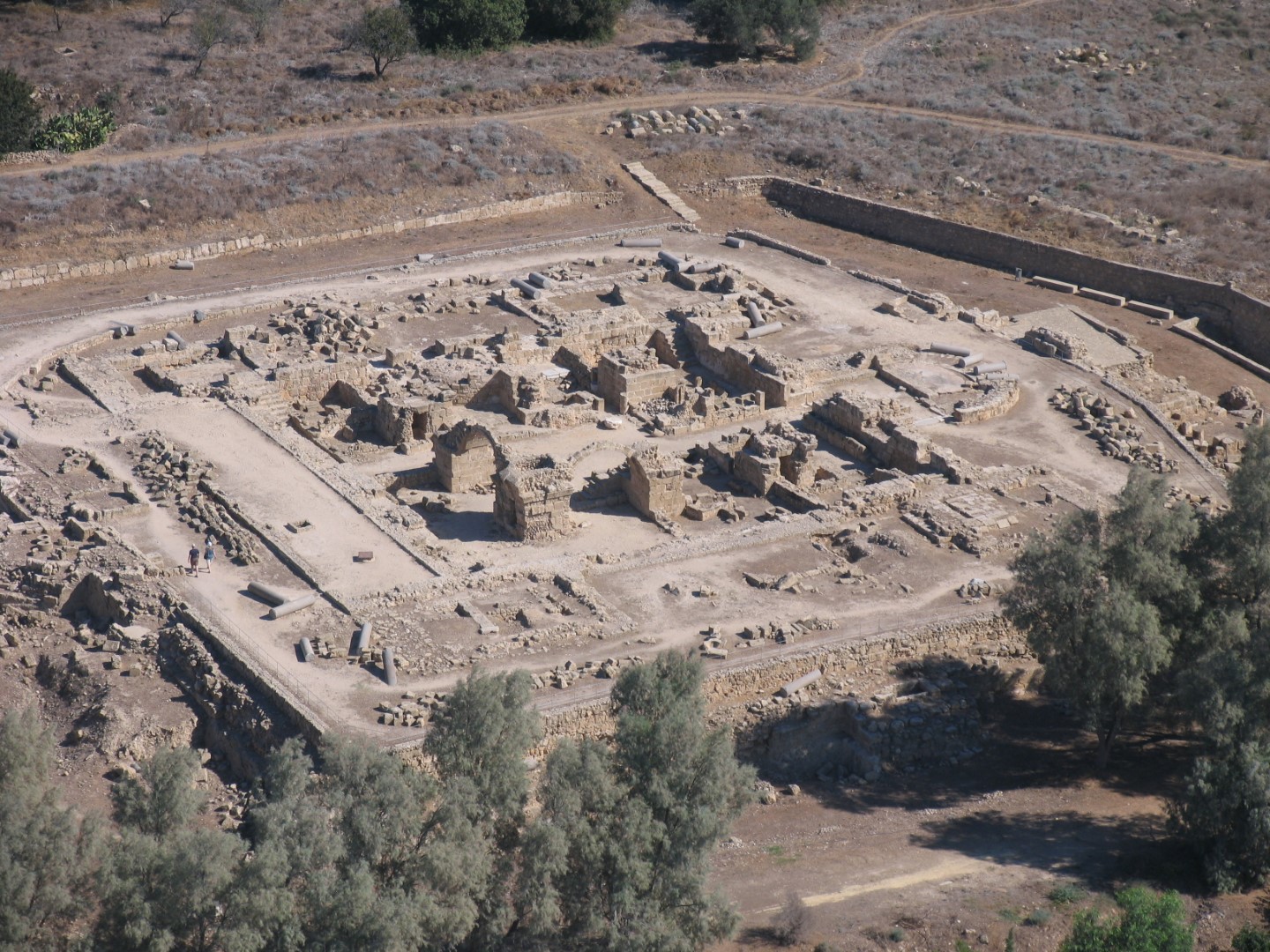
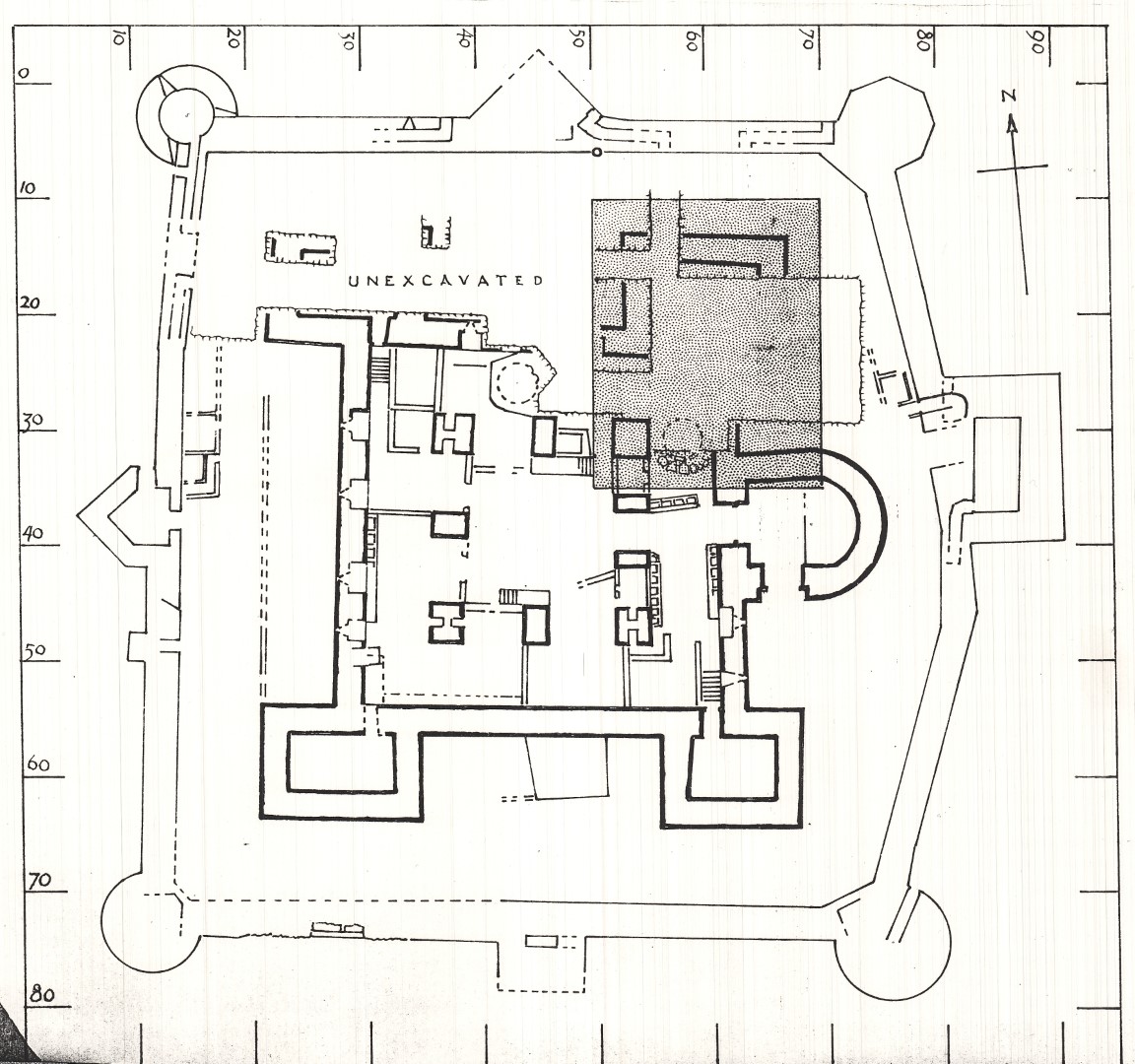
The Byzantine fortress, known as 'Forty Columns,' got its name from the large number of granite columns used to reinforce its walls, which came from various destroyed Roman public buildings. It was built at the end of the 12th century on the ruins of an earlier Byzantine fortress, probably dating to the 7th century AD. It appears that a major earthquake at the end of the 13th century AD caused severe damages to the building, but it continued to be used until its final destruction at an unknown time. A moat and a massive wall with eight towers of various shapes surrounded the central core of the fortress. A series of stairs inside the surrounding wall led down to the moat. The entrance was located in the eastern square tower and was accessible by a wooden bridge that crossed over the moat and was supported by arches. The central core of the fortress was a square building with an open courtyard. It had four square towers at the corners and a horseshoe-shaped tower on the eastern side, which protected the main entrance. Stairs led to the upper floor, which is no longer preserved, and which likely served as a guesthouse. Of particular interest is the good preservation of the large oven and the latrines within the four square towers. At some point, two wine presses and facilities for processing sugar cane were built in the ruined courtyard of the fortress.