DESCRIPTION:
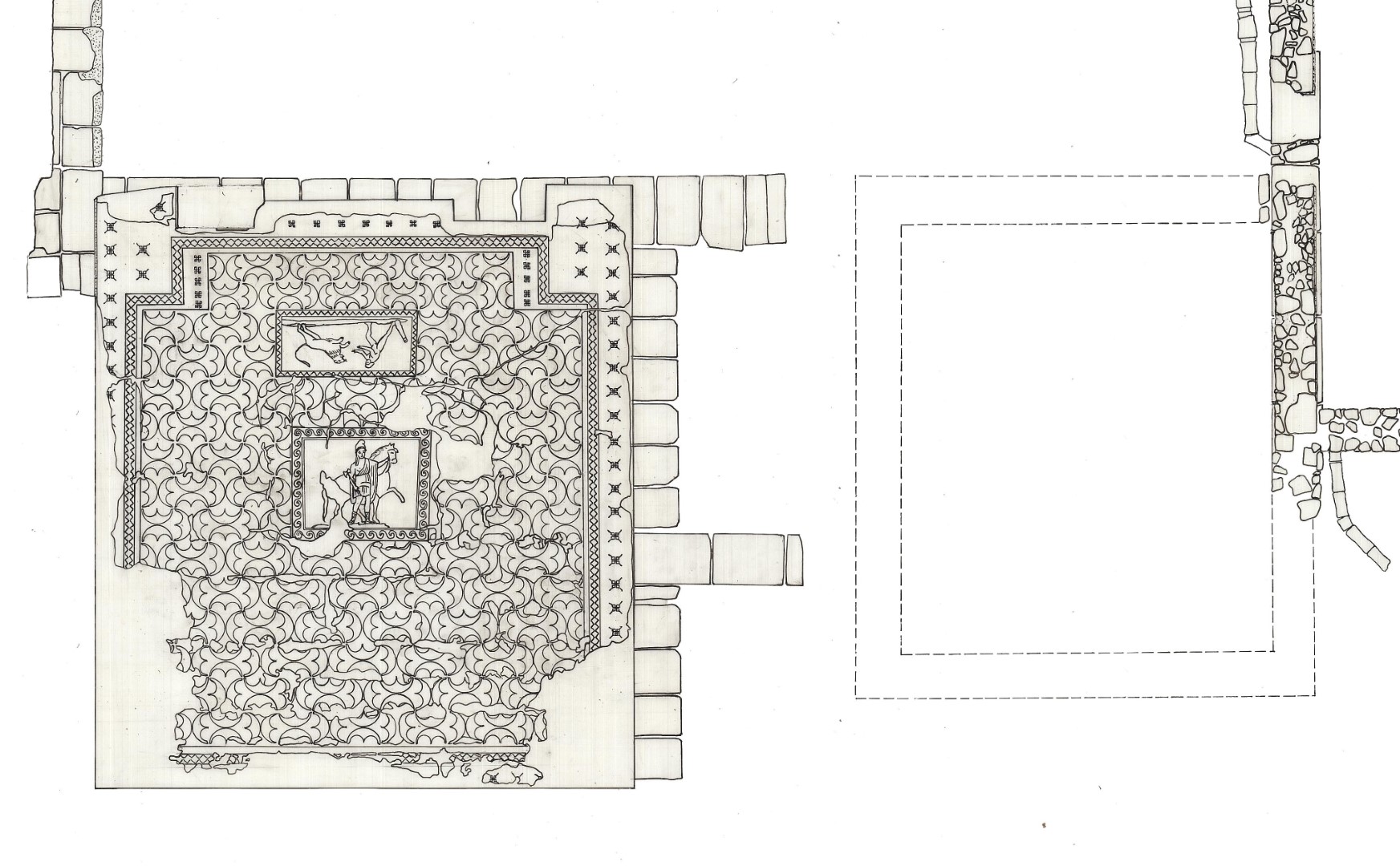
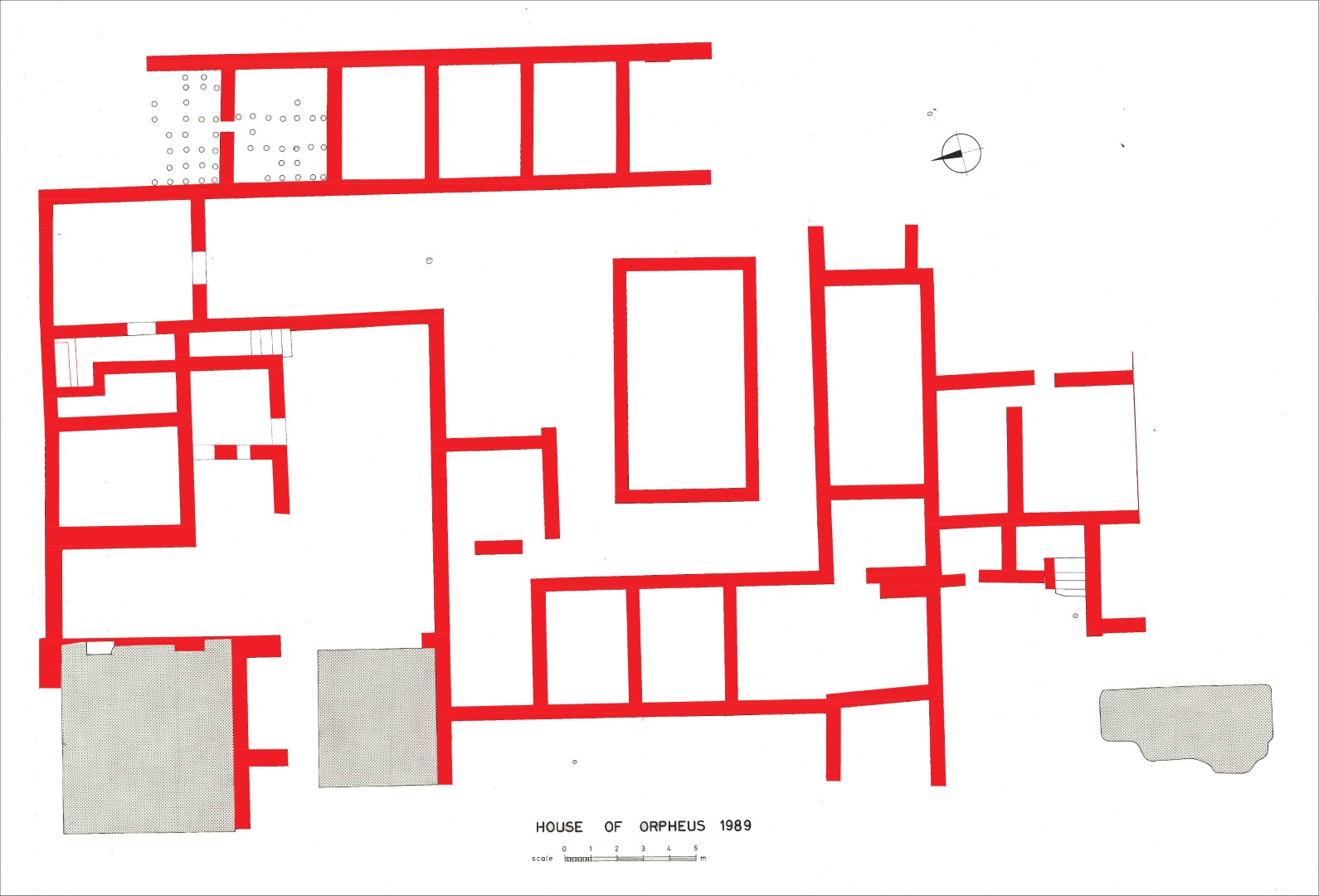
The "House of Orpheus" in its final form dates to the late 2nd to early 3rd century AD. Its excavation, first by the Department of Antiquities and later by the University of Cyprus, has not been completed, so the full extent of the house remains unknown to this day. Additionally, the western side of the house was completely destroyed in the past when the area was cultivated. The house seems to follow the traditional Roman house plan, with rooms organized around a peristyle central courtyard. The most important spaces are located in the northern part of the building and include two reception rooms with elaborate mosaic floors. A bath complex is situated in the northwest corner of the house. This included at least, among other things, a cold room (frigidarium), a warm room (tepidarium), a hot room (caldarium), and restrooms. The raised floor (hypocaust) of the heated rooms has been destroyed, revealing the brick columns that supported it. The warm air beneath the floor passed, through a special construction, behind a false wall and heated the walls of the rooms as well. The mosaics of the house, the numerous fragments of wall paintings, and many valuable objects which were found during the excavations testify to the wealth and prosperity of the house's owner.