DESCRIPTION:
The Agora (Forum) was a central public space in cities where many activities took place. It served as a meeting point for citizens to discuss, trade, and participate in political processes, making it the hub of social, economic, and political life in the city.
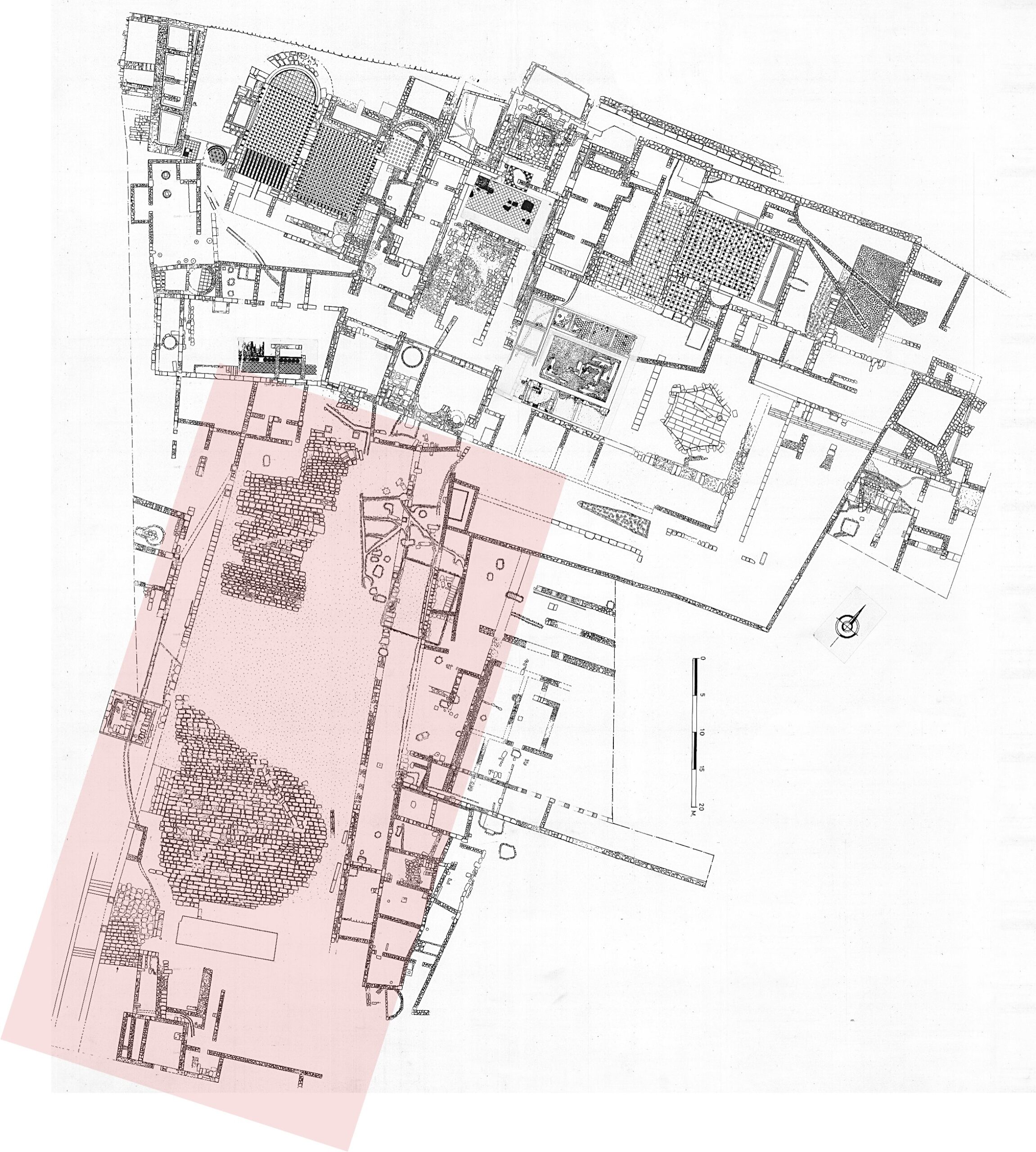
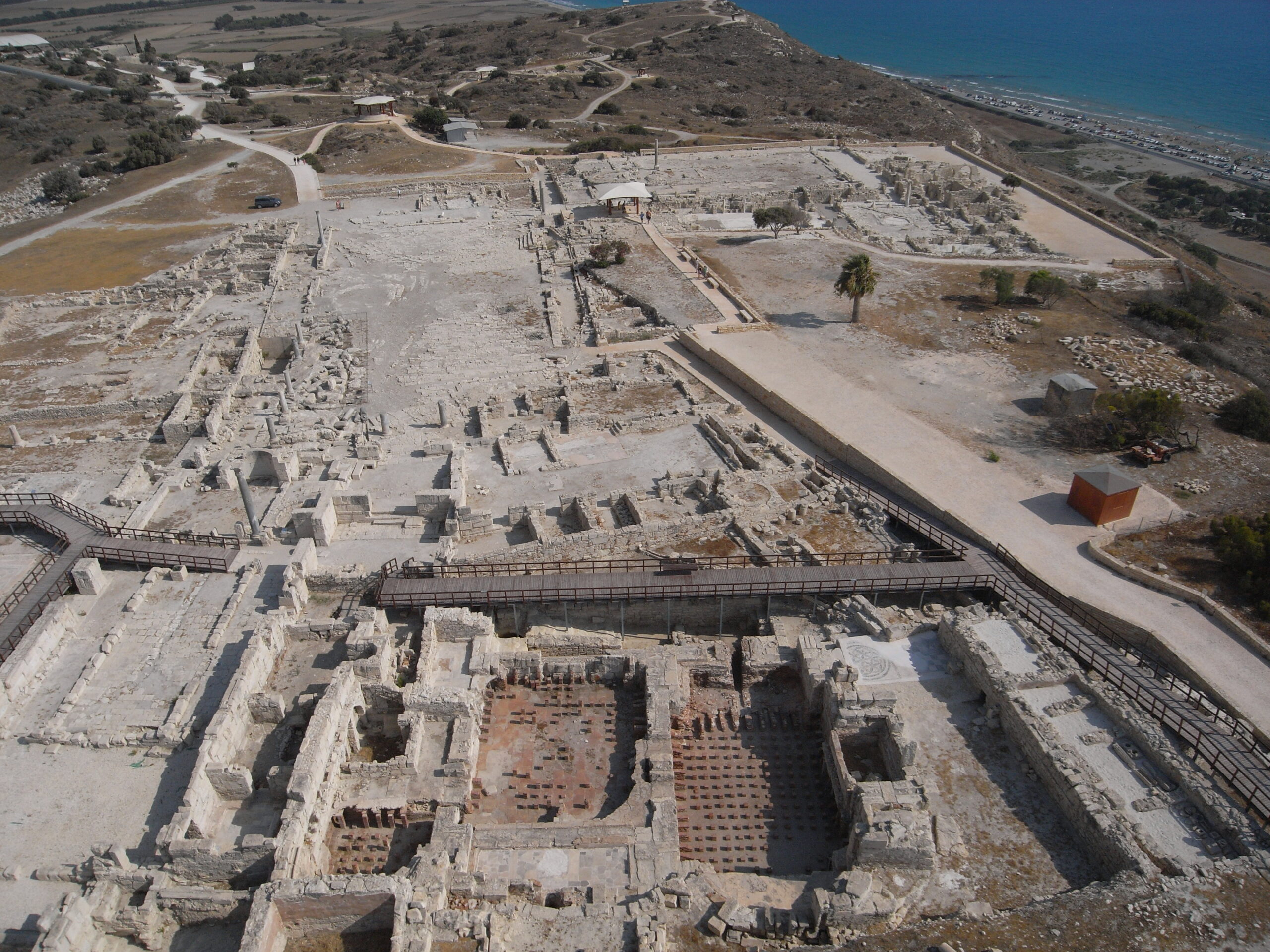
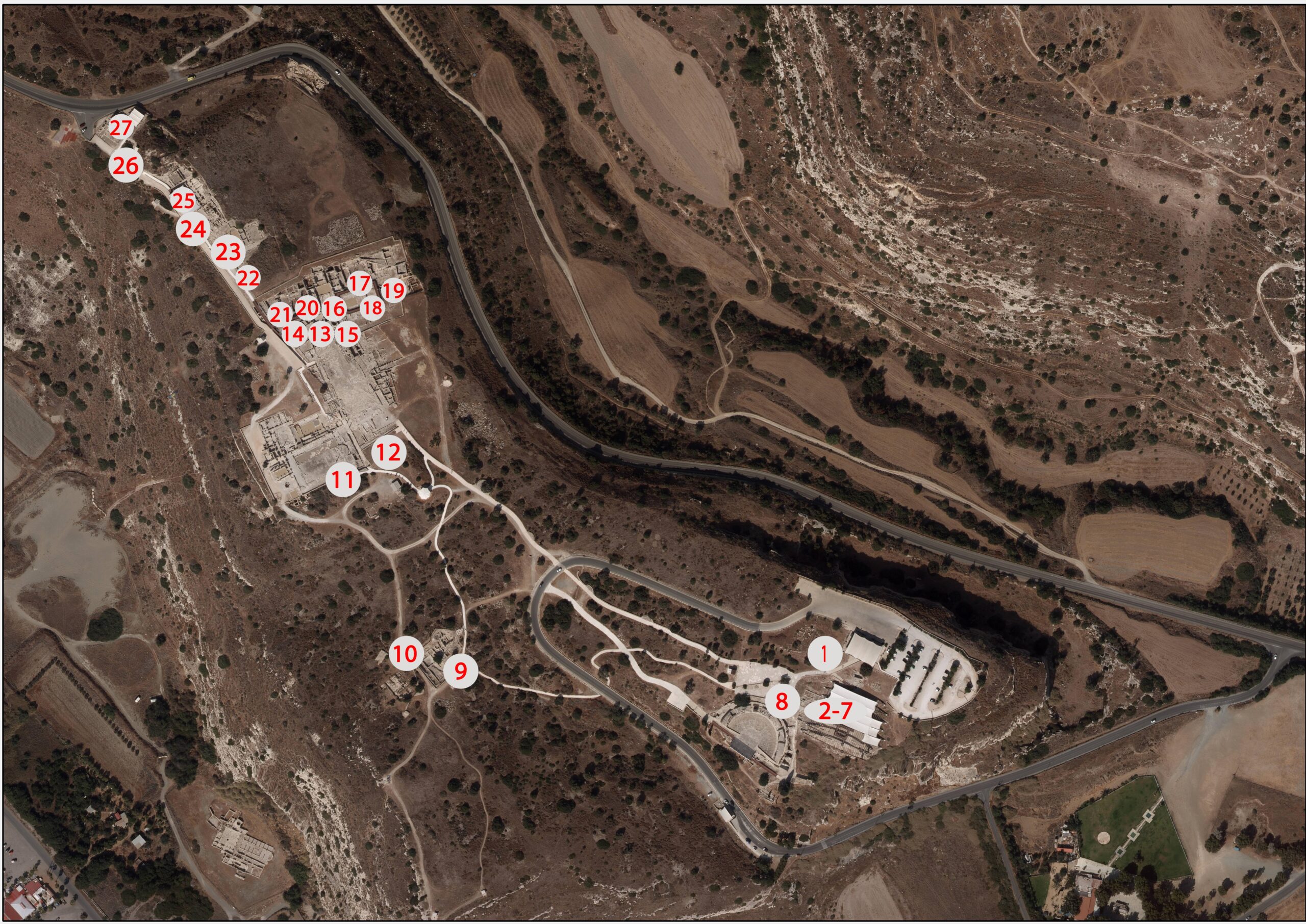
The Agora of Kourion is located at a central part of the city, bordered on the west by the episcopal complex (which occupied the site of a former civic basilica) and to the north by the public baths. It is a monumental, almost rectangular, open-air space, surrounded on the two sides by a colonnaded portico. It was paved with large limestone slabs and measures 68 metres in length, with a maximum width of 30 metres and a minimum of 22 metres.
Approximately in the middle of the western portico, there was a small shrine, measuring 7 metres in length and 6 metres in width, as indicated by a rectangular foundation with steps.
The construction of the Agora dates to the late 2nd and early 3rd centuries AD and it appears to have undergone various modifications and additions over time. It remained in use until the 7th century AD.
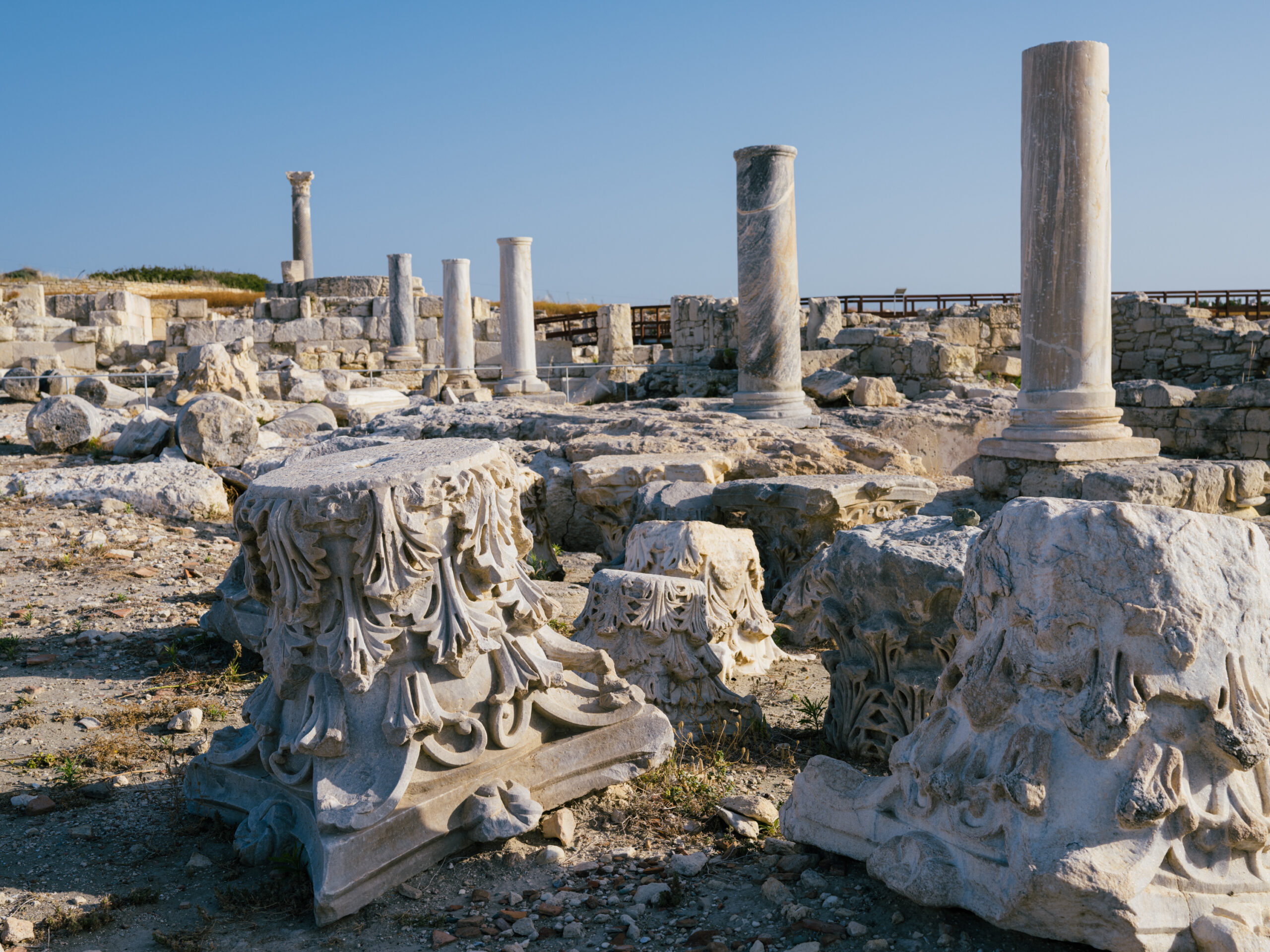
The construction of the Agora dates to the late 2nd and early 3rd centuries AD, and it appears to have undergone various modifications and additions over time. It remained in use until the 7th century AD. The architectural remains visible today in the broader Agora area include monumental public buildings, workshops and commercial spaces, waterworks, lime kilns, and various other smaller structures dating from the late Cypro-Classical period (4th century BC) to the Medieval period (16th century AD).